




























We are currently in one of the fasting periods of the year, so an article on this topic fits especially well! According to tradition, the church year has four fasting periods lasting several weeks: the seven-week fast during Lent, the Apostles' Fast one week after Pentecost, the Dormition Fast in August, and the Advent fast from mid-November until 24 December.
The term "fasting" describes a practice that has been followed for thousands of years in many cultures and religions around the world. There are no synonyms for "fasting". It refers to going without food and/or drinks for a certain period of time. Fasting can be done for different reasons, including spiritual, health-related or cultural ones.
There are many different forms of fasting, and some are more common than others. Some of the most popular types of fasting are fasting during Lent, juice cleanses, intermittent fasting, Buchinger fasting and partial fasting. They differ, for example, in what you eat (or don't).
In this blog article you will find out what fasting actually means and why people do it. We will also introduce the types of fasting mentioned above and show you the pros and cons of fasting.
What does fasting mean?
Fasting describes a practice where you go without food and/or drinks for a certain period of time. A fast can last anywhere from a few hours to several weeks or even months.
Fasting can be done for different reasons, including spiritual, health-related or religious ones. There are many different types, such as juice cleanses, intermittent fasting or partial fasting.
It can be seen as a kind of reset for the body, as it allows it to take a break from digesting food and other harmful substances and to focus on other vital functions.
What happens in our body when we fast?
When we fast, our body switches to a different energy metabolism to keep the energy supply going. In the first hours of fasting, the body's carbohydrate stores, such as glycogen in the liver and muscles, are used up first to produce energy. Once these carbohydrate stores are depleted, the body starts to burn fat stores to produce energy. This state is called ketosis.
During a fast, the hormone levels in the body change too. For example, the hormone glucagon rises, which promotes the breakdown of fat reserves and stabilises blood sugar levels. At the same time, insulin levels drop, which prompts the body to burn fat.
Other physiological changes also occur during fasting, which may have potential health benefits. For example, fasting may reduce inflammatory responses in the body and promote autophagy (the cells' self-cleaning process). There are also indications that fasting may promote the production of stem cells in the body and support the regeneration of tissues and organs.

Why do people fast?
There are many reasons why people fast. Some fast for religious or spiritual reasons, while others do it for health reasons or to manage their weight.
Religious and spiritual fasting
Fasting has a long tradition in many religions and is often seen as a way to practise spiritual discipline and come closer to God or the divine. In general, fasting in the world religions is seen as a practice that helps the body to purify the mind and strengthen the soul.
Islam
In Islam, believers fast every day from sunrise to sunset during the holy month of Ramadan and then celebrate eating like a feast. Fasting during Ramadan is regarded as one of the "five pillars of Islam" and serves to promote spiritual purification and reflection.
Christianity
In Christianity there are different kinds of fasting, including giving up meat or certain types of food during Lent, which usually begins 40 days before Easter, on Ash Wednesday. Fasting is meant to help focus on the meaning of Easter and the resurrection of Jesus Christ and to promote spiritual discipline, and it ends with the breaking of the fast at Easter.
Hinduism
In Hinduism, fasting is often practised as part of religious ceremonies. There are many kinds, from simply going without food and water to going without certain foods or a certain type of food. Fasting is meant to help promote physical and mental purification and strengthen spiritual discipline.
Judaism
In Judaism, people fast on Yom Kippur, the holiest day of the Jewish calendar. Fasting is meant to serve as penance and to focus on spiritual purification.
Fasting for health
Fasting is also increasingly practised for health reasons. A growing number of studies suggest that it can offer a range of health benefits.
Weight loss
Fasting can help you lose weight and manage your body weight. When the body takes in no food, it is forced to burn stored fat reserves to produce energy.
Improved metabolic health
Fasting can lower insulin levels and stabilise blood sugar levels, which may help reduce the risk of diabetes and other metabolic disorders.
Reduced inflammation
Fasting can help reduce inflammation in the body, which is linked to a wide range of health problems, including arthritis, heart disease and cancer.
Improved heart health
Fasting can help lower blood pressure, reduce cholesterol levels and lower the risk of heart disease.
Improved mental health
There are indications that fasting may help improve mental health, possibly by lowering the risk of depression and anxiety.

What types of fasting are there?
There are different types, which can vary depending on goal, duration and level of difficulty. Examples include juice fasting, intermittent fasting, partial fasting, Buchinger fasting or the religious fasting already mentioned as part of people's faith practice.
Juice cleanse
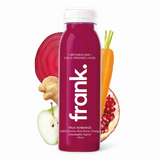
A juice cleanse is a form of fasting in which, for a set period, you only consume freshly pressed juices. These juices are made from fruit and vegetables that are rich in nutrients and antioxidants.
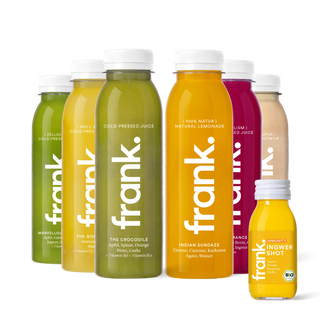
The length of a juice cleanse can vary from a few days to several weeks. At frank. we offer various fasting cleanses, including the 1-day juice cleanse, 3-day juice cleanse, 5-day juice cleanse or the 7-day juice cleanse. It is important to note, however, that longer juice cleanses of more than a week may not be suitable for everyone and should be medically supervised. We also offer the frank. gut cleanse, beauty cleanse and performance cleanse together with our partner BIOGENA.
With frank. juice cleanses, special attention is paid to the quality of the juices. The fruit and vegetables in the juices are sourced as regionally as possible and the juices are made cold-pressed using the HPP process to preserve all the important nutrients as well as possible.
Intermittent fasting
Intermittent fasting is a fasting method in which you regularly spend certain periods without food, followed by periods in which you can eat normally. There are different forms of intermittent fasting, but most are based on a daily fasting period of at least 12 hours, followed by a period in which you eat normally within a set time window. Examples include the
16/8 method
With the 16/8 method, you fast for 16 hours every day and eat within an 8-hour window.
5:2 method
With this method, you eat normally on five days a week and on two days gradually reduce your calorie intake to 500-600 calories per day.
With our 5:2 intermittent fasting programme from frank., this fasting method couldn't be easier. For 2 days a week, you get a mix of juices, ginger shots and soups sent to you, and you can do your fasting cleanse with ease, accompanied by our guide.
Intermittent fasting has proven to be an effective method for weight loss and for improving metabolic health. There are also indications that intermittent fasting has anti-inflammatory and cell-cleaning effects, which can contribute to better health in the long term.

Partial fasting
Partial fasting is a fasting method in which you skip or reduce certain meals or food groups instead of giving up food completely. Unlike other fasting methods, partial fasting is usually less strict and easier to do.
Partial fasting can be done in different ways, for example by skipping one meal a day, reducing carbohydrates or fats in your diet, avoiding snacks or sugary foods between meals, or leaving out certain foods, such as sweets or alcohol.
Partial fasting can help reduce weight, regulate blood sugar levels and blood pressure, and reduce inflammation in the body. It can also lead to improved energy levels and better mental clarity.
Traditional Buchinger fasting
Buchinger fasting was developed by the German doctor Dr. Otto Buchinger. It is a form of juice fasting in which, over a period of one to four weeks, you only take in certain liquids, such as vegetable broth, tea and juices, as well as water and herbal tea. Daily calorie intake is around 200-300 calories.
Buchinger fasting aims to support the body's natural cleansing processes, strengthen the immune system and improve health. It can also help to reduce weight and improve metabolism.
During the fasting period, you should allow yourself plenty of rest and avoid physical exertion. To supply the body with important nutrients, food supplements such as vitamins and minerals can also be taken.
After fasting, you should slowly return to solid food and pay attention to a healthy, balanced diet in order to maintain the benefits you've gained.
Fasting: what are the pros and cons?
Fasting can have various benefits, but also drawbacks or side effects, which can vary from person to person.
Benefits of fasting
-
Fasting can help you lose weight by reducing calorie intake and boosting metabolism.
-
It can also help improve insulin sensitivity, which in turn may reduce the risk of diabetes and other metabolic disorders.
-
Fasting can help reduce inflammation in the body, which is associated with a wide range of health benefits.
-
The immune system can be strengthened and the body's defences improved.
-
Fasting can help improve mental clarity and concentration.
Drawbacks of fasting
-
If you don't take in enough fluid, you can become dehydrated.
-
If you don't take in enough protein and don't move enough, you can lose muscle tissue.
-
If you don't take in enough energy, fasting can lead to tiredness and exhaustion.
-
If you don't take in enough nutrients, it can lead to nutrient deficiency and related health problems.
-
Fasting can be counterproductive for people with eating disorders and have negative effects on their mental health.

Can everyone fast?
In principle, anyone can fast as long as they are physically able to and have no health problems that could be affected by it. However, it is important to consult a doctor before fasting, especially if you already suffer from a condition or take medication. This includes people with diabetes, kidney or liver conditions, cardiovascular disease or eating disorders, among others.
Pregnant and breastfeeding women should not fast either, as they need sufficient nutrients for themselves and their baby.
Overall, it is important that anyone who wants to fast understands what going without food means and how it can be done in order to avoid health problems. It can also help to get advice from an experienced fasting guide or a doctor before you start fasting.


