Updated: October 2026
In short: With alkaline fasting, for a week you eat mainly vegetables, salad, a little fruit, nuts and cold-pressed oils, and go without sugar, grains and animal products. Here you'll find a weekly plan and three recipes with amounts. The method is a dietary concept, not a medically proven procedure: there is no over-acidification in healthy people that would need treating. As of October 2026.
Alkaline fasting is popular because you get to eat. This article describes the method soberly, puts it in critical context and gives you practical recipes.
What is alkaline fasting according to Wacker?
Alkaline fasting is a form of abstinence in which, for a week, you eat mainly "alkaline" foods. It was developed by the naturopath Sabine Wacker, who has described the concept in several books since 1997. A duration of one week is usual, which can be extended individually.
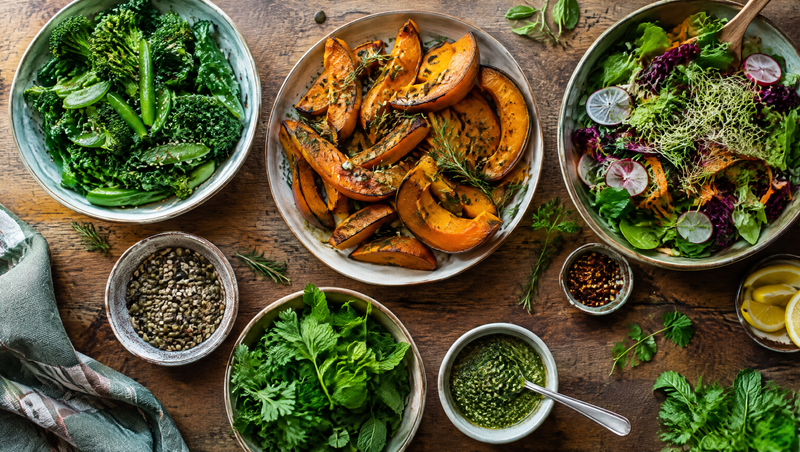
According to this method, vegetables, salads, seasonal fruit (at most 20 percent of the amount according to infranken), nuts and cold-pressed oils are allowed. Animal products, sugar and grains are off limits. You drink two to three litres of water or diluted herbal tea; coffee, alcohol and lemonades are out. Unlike juice or therapeutic fasting, you eat proper meals.
Is alkaline fasting scientifically proven?
No, the basic assumption is not proven. The AOK writes: "A diet-related, acute over-acidification does not occur in healthy people, however." The body keeps its pH value in the range of 7.35 to 7.45 through buffer systems and the kidney. The Verbraucherzentrale also stresses that the promised cleansing effects of fasting cannot be demonstrated, because the liver and kidneys take on this task in healthy people anyway.
According to infranken, the DGE advises against alkaline fasting because scientific evidence for the effect is lacking and, over a longer period, vital nutrients can become too scarce. For one week the risk in healthy adults is low, but you still shouldn't continue it for weeks.
What remains: according to the AOK, a plant-focused week brings more fibre, more micronutrients and less processed food. That is a real advantage, just not because of the pH value.
What does an alkaline fasting weekly plan look like?
Three meals, no counting, lots of vegetables. The plan is a suggestion you can adapt to the season.
| Day | Breakfast | Lunch | Evening |
|---|---|---|---|
| 1 | Fruit salad with almonds | Colourful salad with avocado | Vegetable soup |
| 2 | Chia pudding with berries | Courgette noodles with tomato sauce | Roasted vegetables |
| 3 | Vegetable smoothie | Potato and vegetable stir-fry | Fennel salad |
| 4 | Sprouted muesli with apple | Carrot soup with ginger | Vegetable stir-fry with herbs |
| 5 | Avocado on cucumber slices | Raw vegetable salad with nuts | Pumpkin soup |
| 6 | Fruit salad with walnuts | Stuffed bell peppers with vegetables | Leaf salad with radishes |
| 7 | Vegetable smoothie | Broccoli and potato soup | Roasted vegetables with herbs |
In many alkaline fasting plans, potatoes count as allowed alkaline food. If you follow that, plan vegetables as the main component and fruit only as a small part.
Which vegetable soup recipe suits alkaline fasting?
A creamy carrot and ginger soup: simple, filling and with no dairy. The recipe makes two servings.
- 400 g carrots
- 1 medium potato (approx. 150 g)
- 1 small onion
- 1 piece of ginger (approx. 2 cm)
- 1 tbsp cold-pressed olive oil
- 500 ml vegetable stock without additives
- Salt, pepper, parsley
Finely dice the onion and ginger and sweat them in the oil. Cut the carrots and potato into pieces, fry briefly with them and pour in the stock. Simmer for about 20 minutes, blend, season and serve with parsley. You'll find more ideas in the article Juice Fasting Recipes and Tips.
What's for lunch and breakfast?
A vegetable stir-fry at lunchtime, a fruit salad with nuts or a green smoothie in the morning. Both recipes are ready in 15 minutes, amounts for two servings.
Potato and vegetable stir-fry: 400 g waxy potatoes, 1 courgette, 1 red bell pepper, 1 onion and 2 tbsp cold-pressed oil. Pre-cook the diced potatoes for 10 minutes, then fry with the rest of the vegetables in oil for 8 minutes. Season with herbs and lemon juice.
Green smoothie: 1 handful of spinach, 1 cucumber, 1 pear, 200 ml water, juice of half a lemon and 1 tbsp almond butter. Blend everything. According to the method, fruit should make up only the smaller part of meals, so a smoothie is more of an interim solution. You can read more about the sugar in fruit in the article Is Fruit Sugar Healthy?
What do you need to watch for when shopping?
Plan a list for the whole week, otherwise you'll reach for off-limits products out of convenience. This basic kit is enough for two people:
- Vegetables: carrots, courgette, bell pepper, broccoli, fennel, pumpkin, leaf salad, cucumbers
- Tubers: potatoes, onions, ginger
- Fruit in small amounts: apples, pears, berries, lemons
- Nuts and seeds: almonds, walnuts, chia seeds
- Cold-pressed oil, fresh herbs
- Tea: fennel, chamomile or nettle
For tea, the Happy Stomach Tea with linden blossom, anise, fennel, chamomile, ginger and sage is a good fit, for example. The Verbraucherzentrale recommends drinking at least 2.5 litres of calorie-free drinks daily while fasting. That fits well with Wacker's guideline of two to three litres. It's best to set out a carafe and a flask of tea in the morning, then you don't have to think about it during the day.
How do you get through the first days?
By cutting back beforehand what you'll leave out later. If you go from three cups of coffee and chocolate to zero on the first day, you often get headaches and cravings. The Verbraucherzentrale generally recommends gradually reducing the amount of food two to three days before fasting and slowly building it back up afterwards.
- Cook a big portion of soup ahead the day before.
- When hungry, first drink a large glass of water or a cup of herbal tea.
- Move lightly, for example with walks or yoga, instead of overdoing it.
- Eat slowly at the end of the week too: first steamed vegetables, only then whole grains and protein.
How to rebuild after a week of fasting is in the article Guide to Breaking a Fast.
Who is alkaline fasting not suitable for?
For pregnant and breastfeeding women, children, people with eating disorders and anyone who takes medication or has pre-existing conditions without talking to their doctor first. The Verbraucherzentrale generally recommends getting medical advice before fasting, especially with regular medication, insulin or existing conditions.
With kidney disease, definitely discuss switching to lots of fruit, nuts and potatoes with your doctor beforehand. If you get dizzy, have a racing heart or severe headaches, stop. If you'd rather manage without cooking, you'll find alternatives in the article Types of Fasting: Which One Is Right for Me?
Matching picks from frank.
If cooking gets too much during a fasting week, take a look at the Soup Cleanse: one soup (350 ml) and five juices per day, approx. 650 to 1070 kcal. That's a concept of its own and not alkaline fasting. Which ingredients are in the soups and juices is on the respective product pages; please read them there before buying.
You might also like
- Lifehack: Alkaline Eating in Everyday Life
- Juice Fasting - Recipes & Tips
- Types of Fasting: Which One Is Right for Me?
Frequently asked questions about alkaline fasting recipes
How long does alkaline fasting last?
One week is usual. The cleanse can be extended individually, but without medical supervision we advise against more than a week.
Can I eat potatoes during alkaline fasting?
Yes, potatoes are allowed in many plans. Potatoes are quite filling. Grains, sugar and animal products stay off limits.
Can I lose weight with alkaline fasting?
You will probably lose a little because you take in fewer calories. Part of that is water. Only a changed diet helps in the long term.
Is there such a thing as over-acidification of the body?
Not in healthy people. The body regulates its own pH value through buffer systems and the kidney, according to the AOK.
Can I drink coffee during alkaline fasting?
Not according to the Wacker method, nor black or green tea. Water and diluted herbal tea are allowed.
Note: This article is for general information and is not a substitute for medical or therapeutic advice. If you have complaints, pre-existing conditions, are pregnant or take medication, please talk to your doctor first.