Scientifically developed

Introduction to fasting: everything you need to know about fasting

Made in Germany
Made in Germany
Made in Germany

Definition and meaning

By definition, fasting is the complete or at least partial abstention from all or certain foods, drinks and stimulants for a set time. As a rule, this abstention is practised for one or several days. The first meal after the end of the fast is called breaking the fast.

Woman making tea while fasting.

Historische Perspektiven und kulturelle Aspekte

Die Praxis des Verzichts kann auf eine lange Geschichte zurückblicken, denn schon seit Jahrtausenden wird das Fasten durchgeführt. Aus historischen Aufzeichnungen geht hervor, dass Menschen aus ganz verschiedenen Kulturen unabhängig voneinander intuitiv gemerkt haben, dass der bewusste Verzicht auf Kalorienreiches guttun kann. Hierbei gibt es Aufzeichnungen aus dem antiken Griechenland, Ägypten, Indien und China. Daraus ergibt sich, dass das Fasten von vielen Kulturen und Religionen als spirituelle Praxis verstanden wurde, die dazu diente, Körper und Geist zu reinigen und eine tiefere Verbindung zum Göttlichen herzustellen. Du siehst also: Schon seit Ewigkeiten gehört Heilfasten und Ernährung zusammen!

Different fasting methods

Nowadays there are different kinds of fasting. They differ in their goal, duration and level of difficulty. These include multi-day fasting cleanses, for example the juice cleanse, where you take fruit and vegetable juice, or the soup cleanse, where you may also eat a vegetable soup each day alongside the juice. Buchinger's alkaline fasting also belongs to this method. There are also intermittent fasting methods, where you fast on certain days regularly, as with the 5:2 cleanse, or go without high-calorie food for a set period every day, for example the 16/8 method. Water and tea are allowed everywhere, though! We describe these and other types of fasting in the sections below.

Intermittent fasting

Intermittent fasting is a type of fasting where set periods without food alternate with periods in which you may eat. There are different approaches here: most often the fasting and eating periods alternate within 24 hours. There are also variants where regular fasting days follow completely normal days of eating. Intermittent fasting can be an effective method for weight loss and for optimising metabolism and performance, and it can also lead to more mindful, health-promoting behaviour around your own lifestyle, especially your diet. Studies also suggest that intermittent fasting may have anti-inflammatory and cell-renewing effects. Put generally, intermittent fasting can influence processes in the body and so may contribute to better health in the long term. However, the effects of fasting can vary depending on the exact method and individual constitution, which is why we distance ourselves from blanket statements. The following variants are mainly used for intermittent fasting:

16/8 method

With 16/8 you fast for 16 hours a day. After that there is an 8-hour window in which you may eat normally. The handy thing is that, depending on how long you sleep, you're already fasting 7-9 hours automatically while asleep. So you just have breakfast a bit later and dinner a bit earlier, and you've fasted for 16 hours! Keep in mind that women sometimes react badly to particularly long daily fasting periods because of their sensitive hormone system, so listen to your body and find the fasting method that's best for you! Even "just" 10 or 12 hours of fasting a day can be perfect for you.

5:2 cleanse

The 5:2 cleanse is also a method of intermittent fasting. You eat without time restrictions on five days of the week and fast on two days of the week. The typical approach is to cut calorie intake to 500 to 600 calories. Some people take in no calories at all and only drink vegetable broth and tea. Do you already know our 5:2 intermittent fasting programme? We make it easy for you: for the two cleanse days each week you get a scientifically put-together package delivered straight to your home with juices, ginger shots and soups, so you don't have to worry about anything. Would you rather fast on just one day a week? No problem, the programme simply runs twice as long. With the cleanse guide as your fasting manual, you can read up on lots of tips about the prep days, starting your fast and breaking the fast at the end of your cleanse!

Juice fasting and the frank. juice cleanse

With juice fasting, you mainly take fruit and vegetable juices for a set period, plus vegetable broth, tea and plain water, and go without solid food.

You can do juice fasting by making your own juice at home with a juicer. For that you need the right knowledge of the ideal amounts of fruit and veg, plus fresh, high-quality produce. Since you can't preserve juices at home, you have to press juice at least once a day, and that can take a lot of time!

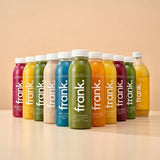
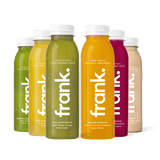
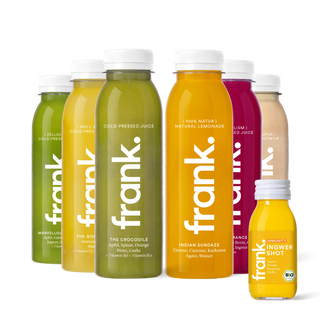
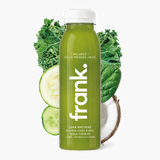
The more convenient option, and a more helpful one especially for beginners, is to use ready-made juices from experts. That's where we at frank. come in! Our juices are vegan, rich in nutrients, cold-pressed and never heated. On top of the individual juices, the cleanses are also developed by nutrition scientists. With the juices from frank. you can do juice fasting over different periods and no longer have to think about it!

The frank. juice cleanses are available as a 3-day, 5-day and 7-day juice cleanse. You get 6 juices for every fasting day, and which flavours you can enjoy depends on the intensity you choose. Here we distinguish between Starter, Medium and Pro. If you know exactly which juices you want, you can also put together your own fasting package using the Mix&Match function.

People often do juice fasting to stimulate the body's natural cleansing, although how effective it is remains hotly debated in science. Terms such as "flushing out waste" and "toxins" are also mentioned in this context, but there is no proof yet in the form of valid studies. A good cleanse is defined by the ideal amount of calories and a balanced ratio of fruit and vegetables.

With partial fasting, your goal is not to give up food completely but to leave out certain meals or food groups. That makes partial fasting easier for some people. You can do partial fasting in different ways. One option is to skip one meal a day, or to cut certain macronutrients, usually carbohydrates or fats, from your meals and eat only selected foods accordingly. Partial fasting can also mean going without snacks, sugary foods, sweets or alcohol between main meals.

Partial fasting can be seen as a form of dieting, which we at frank. do not support. We recommend regular cleanses that you slot in on purpose between your balanced eating, without going without. Permanently strict ways of eating and diets are not good for the mind or the body in most cases!

Buchinger fasting is a form of fasting in which you go without solid food. With therapeutic fasting you only take vegetable broth, fruit juices and water. Daily calorie intake is around 200 to 300 calories. It is claimed that Buchinger therapeutic fasting may support the immune system, promote the body's natural cleansing and contribute to general wellbeing, although meaningful, independent studies are still lacking here too.

When fasting with a focus on alkaline eating, you take mostly vegetables, water and tea. The aim is to support the body's acid-base balance and to eat especially large amounts of alkaline food. If you have a medical condition, speak to your doctor before trying alkaline fasting.

"Fasting-mimicking" combines traditional fasting with specially developed meals. That way you can eat and still benefit from the positive effects of fasting. Have you wanted to try fasting for ages but want something to "chew"? Then we recommend our food cleanse! It comes in 3, 5 or 7 days. Each day you get 3 innovative meals as breakfast, lunch and dinner.

Religious fasting

Fasting has always been a fixed part of all the great religions. Through abstinence, believers are meant to focus on their faith and experience a greater closeness to their God. Here, fasting is seen as a ritual. The different religions have different periods and intensities of fasting.

Ramadan

In Islam, fasting is one of the five pillars of the religion and is regarded as a divine commandment. The fast takes place in the ninth month of the Islamic lunar year, Ramadan. In practice, this means that for 30 days believers are not allowed to eat, drink, smoke or have sex between sunrise and sunset. Going without water, however, has no positive effects on the body and can even become dangerous.

Christian Lent

Christianity (Roman Catholic and Protestant Christians) also knows this form of abstinence. Lent covers the period from Ash Wednesday to Easter. Advent is called the "little" period of fasting. During this time believers are meant to practise abstinence, reflect, repent and in this way find a greater closeness to God again. However, the formerly strict rules for Christian fasting no longer apply. Everyone may decide for themselves whether and how they take part.

Buddhism

Buddha taught the Middle Way, rejected self-mortification, and recommended indulging in neither gluttony nor hunger. However, he saw small meals as a way of making meditation easier, and with it the path to inner peace and enlightenment. In Buddhism, fasting is mainly practised by monks and nuns. As a rule, they take no food at all after twelve noon. There are also fasting days spread across the month that they follow.

The benefits of fasting

Researchers agree that fasting properly for a set period can have many positive effects on body and mind. Losing weight is not the goal here, though! We want to eat in a way that means we don't need diets in the long run. Still, many people who fast like that the big calorie deficit can also make the pounds drop.

Keep in mind, though, that every fasting method can vary in its effects and you may want to try several methods to find the perfect one for you. The effects also depend on your individual constitution. That's why we distance ourselves from blanket statements and are not allowed to make any statements about effects on individual bodies in connection with our products. The findings of science as they stand today can be summarised as follows:

Optimising metabolism

Studies have shown that fasting can have a positive effect on metabolic activity. Insulin sensitivity may be optimised, which in turn may reduce the risk of diabetes and cardiovascular disease.*

Better digestion

During fasting, your digestive system, especially stomach and gut, gets a break so it can recover and regenerate. This may also lower inflammation markers, and a healthy gut flora can be built up through targeted intake of prebiotics and probiotics.*

Anti-ageing: increased cell renewal through autophagy

The cells in your body break down their own unusable and worn-out components and recycle them to build something new or to get energy from them. We call this process autophagy! It runs on an especially large scale in the calorie deficit we have during fasting.*

Positive Effekte des Fastens auf die Psyche

Fasten kann zu einer verbesserten Stimmung, Wachsamkeit und innerer Ruhe bei depressiven Symptomen zwischen Tag 2 und Tag 7 der Fastenkur führen. Erklärungsansätze hinter diesen eurobiologischen Mechanismen liegen in einer Veränderung der Neurotransmitter, der Schlafqualität und der Synthese neurotropher Faktoren.*

Before the question of how to fast properly, a note: this practice is not suitable for everyone. If you have (chronic) conditions, we always advise asking the doctor you trust before fasting. Therapeutic fasting can be sensible and healthy too, but it should be supervised by an expert. Fasting is definitely not recommended for pregnant or breastfeeding women, or for children and teenagers.

Which type of fast and how long you should fast depends on your constitution and your fasting experience. There is a rule of thumb, though: the longer the fasting period was in one go, the longer you should allow yourself a break from fasting afterwards. So while you can fit one or two fasting days into your routine every week, you should only do a 7-day cleanse every quarter or half year, to avoid nutrient deficiencies. If you're unsure, you can always ask your doctor for an individual recommendation here too.

So how do you fast properly? There are a few things to avoid when preparing for one of our fasting cleanses. These include choosing the wrong cleanse or fasting method for you, picking an unfavourable fasting period (for example one where you have lots of appointments) and ignoring our recommendations in the articles in the cleanse guide or fasting manual. This includes, for example, skipping the prep days before and after your fasting cleanse. These days are essential and can decide whether you get side effects such as headaches, tiredness and feeling colder than usual during the first fasting days, making it harder to stick with it.

After fasting, it makes sense to ease back into solid food slowly and to pay attention to a healthy, balanced diet in the long term. Remember: a cleanse is not a diet! After all, we want the positive effects to last longer. You're also welcome to leave out things like alcohol, fizzy drinks and energy drinks after your cleanse, if you've already got used to going without. With our guide we give you plenty of recipes and tips so you can cook something tasty after breaking the fast. Light vegetable stir-fries with potatoes or porridge are good examples.

Woman doing yoga, combining fasting and exercise.

Fasten und Sport: Eine gute Kombination für den Körper?

Auch hierzu widmen wir im Guide Artikel! Beim Fasten solltest Du vor allem auf Deinen Körper hören! Grundsätzlich tut jede Form von Bewegung gut. Das kann auch ein einfacher Spaziergang sein oder leichtes Yoga! Der zusätzliche Energieverbrauch kann Dich schneller in den Fastenzustand, der sog. Ketose, bringen und Nebenwirkungen somit vermeiden. Starte langsam mit einer guten Vorbereitung, um Deinen Körper auf die sportliche Belastung vorzubereiten und Kreislaufschwierigkeiten zu vermeiden.

Summary

Fasting, or therapeutic fasting, has been practised for thousands of years and is enjoying an upswing right now, because many people are thinking about their own health and want to do something active for their body and soul. That's why there are now numerous studies that have looked at the effects of fasting on the body. It's worth mentioning again that the effects can vary depending on individual constitution and how the cleanse is done. Besides the question of whether to fast at all, it's important to read up and keep the right things in mind, so you can get through your cleanse safely and in a good mood.

Want to know more?

Want to read more about fasting? Download a free preview of our frank. fasting guide now and discover even more good-to-know info, tips and tricks for your fasting cleanse.