In short: Yes, oranges are healthy: they provide vitamin C, potassium, folate and fibre for only about 47 kcal per 100 g. One medium orange covers a large part of your daily vitamin C needs. The whole fruit is the better choice than juice because of the fibre, but a glass of freshly squeezed orange juice can replace one portion of fruit. Updated: October 2026.
Who doesn't love it? A freshly squeezed orange juice with breakfast? One glass and you're awake, feel fit and healthy and are ready for the day! But what's the deal with the orange? What's behind this vitamin C bomb, and why does everyone say such good things about it? We'll fill you in on what hides behind that thick peel and why it's so good for your health.
Where do oranges come from?
The orange is a fruit we associate with sun, warmth and southern countries. But did you know the orange originally came to us from China? No?! Look closely at its name and you're on the trail of its secret. Its original German name, Apfelsine, comes from “apple from China”. While its relative, the bitter orange, has been known here for much longer, the sweet orange only reached Europe by sea in the 15th century.
Today the fruit is grown in many countries, including Spain, Brazil, the USA, Mexico, India and Morocco. Growing methods and varieties can differ by region, but in general oranges need warm to temperate climates with plenty of sunshine to thrive. In some countries oranges are even an important part of the economy, as they're used both for eating fresh and for making orange juice and other products.
Which healthy nutrients does orange juice contain?
Orange juice is a drink rich in various nutrients and with a high fruit content, both of which contribute to a healthy diet. The exact nutritional values can vary by brand, preparation and concentration, but in general orange juice contains the following nutrients per 100 ml:
- Calories: about 45-50 kcal
- Carbohydrates: about 9-10 g, of which about 8-9 g are sugar
- Fibre: present in small amounts, mainly in freshly squeezed juice
- Vitamin C: about 30-50 mg, depending on how fresh the juice is
- Folate: about 15-30 µg
- Potassium: about 170-200 mg
- Calcium: about 10-15 mg
- Magnesium: about 10-15 mg
The nutritional values of orange juice can also depend heavily on how it's made. Freshly squeezed orange juice from whole fruit tends to contain more fibre and vitamins than pasteurised or concentrated juice. That's why we recommend always checking the nutrition information on the packaging.

Oranges - the health check
Do you also like to order a freshly squeezed orange juice in the colder months? Yes? Maybe because you want to boost your immune system with that sweet refreshment? Good idea, but there's so much more oranges can do for you!
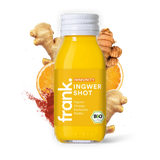
The frank. shot Yellow gives you a natural freshness kick in the morning! Orange juice is also in various juices and the juice cleanses from frank.
Oranges can support your immune system
Oranges contain a very high amount of vitamin C, almost 50 mg per 100 g. That means one orange can cover a large part of your daily vitamin C needs.
But why is vitamin C so important? Just like vitamin E, vitamin C has antioxidant properties. The vitamin, also called ascorbic acid, catches and neutralises cell-damaging free radicals that arise during metabolic and inflammatory reactions.
Vitamin C is known for its supportive effect on your immune system. The vitamin contributes to your body's defences.
Oranges may support regular digestion
Like grapefruits, oranges also contain the secondary plant compound naringin. This flavonoid, a natural substance from the polyphenol group, is responsible for the bitter taste in the fruit and may act as a natural laxative. That's why citrus fruits are said to support regular digestion.
Oranges put you in a good mood
Besides vitamin C, plenty of vitamin B is hiding behind the peel too. That makes the orange your feel-good helper. Vitamin B contributes to normal energy metabolism and to reducing tiredness and fatigue. It also supports psychological function and the normal function of the nervous system. And on the side, it helps lift your mood. Who wouldn't want that?

Oranges supply your bones and teeth
The health-supporting goodness doesn't stop at vitamins B and C! With their magnesium content, oranges can help keep your bones and teeth strong. The mineral contributes to the density and stability of your bones and is used by your body for protein synthesis. Your muscles and heart also draw on your magnesium stores. The mineral is also needed for blood sugar control and blood pressure regulation. It has long been known that magnesium is just as important for your body's functions as calcium!
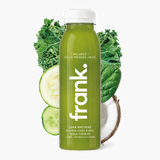
Did you know that pasteurisation destroys the heat-sensitive vitamins in the orange? One reason why our juices are cold-pressed using an elaborate HPP process. High-pressure processing destroys germs and bacteria while vitamins and nutrients are preserved. That includes our Grün Plus, which has a juicy share of orange alongside spinach and cucumber, making it the perfect “on the go snack” for your orange intake!
Oranges can support healthy blood pressure
Okay, that's enough now. Well, almost.. there's one more thing we want to give you to take away! Oranges are a good source of potassium. 100 g of orange contain 164 mg of potassium. An adult's daily potassium requirement is about 2 g. So feel free to reach for a second orange!
That's because potassium helps maintain your acid-base balance and plays a role in transmitting nerve impulses, making it an important helper for muscle contraction, heart function and blood pressure regulation.
Oranges are a great everyday companion
As you can see, oranges are very good for your health and should be your daily companion, and not just in winter!
We discovered the fruit of the day early on and found a way to work it into our routines every day. In our shots you'll find the superfood in the shots Yellow and Red. If you fancy a natural freshness kick in the morning or want to escape your afternoon slump, we recommend checking out our shots. And with our shot routine we show you how to support your immune system with simple habits!
Healthy orange juice: freshly squeezed or from the carton?
Orange juice from a carton can contain fewer vitamins, especially vitamin C, because of pasteurisation and processing. Some types of packaged orange juice may contain added sugar or other additives and don't offer the same quality as freshly squeezed juice.
Freshly squeezed orange juice usually contains more nutrients, including vitamin C and antioxidants, as it comes straight from fresh oranges. It also contains more fibre, because the pulp and fibres of the orange end up in the juice. Freshly squeezed juice also has a more intense taste and a fresh aroma.
Don't want to go to the effort of squeezing oranges yourself every day? Our juices from frank. are cold-pressed from fresh fruit and preserved with the HPP process, so they don't need to be pasteurised and the nutrients are kept as well as possible.
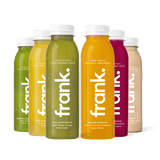
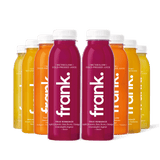
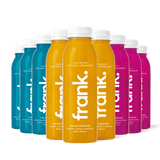
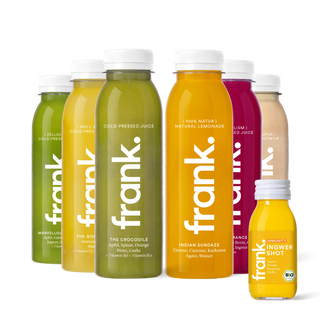
The following juices from frank. contain the tasty fruit juice classic. The Crocodile and True Romance are even part of our popular juice cleanses:
The Crocodile
Is the classic green juice too intense for you, and are you looking for the perfect balance of a tart note and the sweetness of fruit? Then you're making the right choice with our The Crocodile. For us, The Crocodile stands for fruity, sweet pear, apple and orange juice. And despite the fruity note, a third of our The Crocodile is made of vegetables.

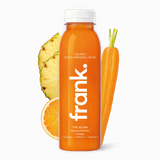
The Glow
ACE becomes AKE. We're revolutionising the traditional ACE juice and in The Glow we go for pineapple, carrot and orange. The classic combination of carrot and citrus fruit is well known and loved - but have you tried it with tropical pineapple? If not: you absolutely have to!

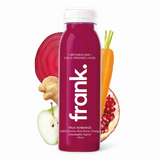
True Romance
More than just another beetroot juice. Our Lady in Red is the flavour explosion you've been waiting for. Grab the enjoyment of beetroot in perfect balance with apple, carrot, orange and pomegranate. Our cold-pressed juice is rounded off with a hint of ginger. If you want to know what makes beetroot juice so special, click the link and find out!

Wake Up Call
Wake Up Call is our classic ginger turmeric shot with pepper, orange and the popular addition of echinacea, giving your body that natural freshness kick! Especially in the cold season, in wind and weather, our Wake Up Call is your friend and rescuer as an essential part of your morning routine.

Fast Lane
Want something natural for the ultimate energy kick? Go for it! Our shot Fast Lane combines the spicy all-time favourite ginger with invigorating guarana and mate, plus the superfoods aronia and passion fruit, against the everyday afternoon slump.

frank. verdict on oranges
Let's sum up - oranges are not only delicious but also extremely healthy! Their high vitamin C content supports the immune system and their vitamin B content brings good mood and energy. They may also support regular digestion and supply bones and teeth with important nutrients such as magnesium. Whether freshly squeezed or as an ingredient in our juices, oranges should be on your menu all year round.
More fruit and veg juices under the microscope: apple juice, carrot juice and 5 a day. Or treat yourself to a juice cleanse.
Frequently asked questions about oranges
Are oranges healthy?
Yes. Oranges provide vitamin C, potassium, folate and fibre and are low in calories. They're a sensible addition to a varied diet.
How many oranges can you eat a day?
For healthy people, one to two oranges a day is no problem. They count as one portion of fruit out of the recommended five portions of fruit and veg.
Which is healthier, oranges or orange juice?
The whole orange, because it contains fibre and keeps you full for longer. Orange juice provides vitamin C and potassium, but more sugar per portion. One glass a day fits well into a balanced diet.
Are oranges good for losing weight?
Oranges are low in calories and filling, and work well as a snack. With juice the calories add up faster, so it's better to stick to one glass.
How much potassium is in oranges?
About 180 mg per 100 g. Orange juice provides a similar amount of potassium per 100 ml.