


























In short: Around 15 to 30 ml of lemon juice a day is a healthy amount, which equals the juice of half to one whole lemon, ideally diluted as lemon water. Lemon juice provides vitamin C and potassium, but it is acidic: very large amounts can wear down tooth enamel and cause heartburn if you have a sensitive stomach. As of: October 2026.
How much lemon juice is healthy, and when does it become too much? Here you'll find the answer, plus nutritional values, the difference to lemon water and some good-to-know facts about lemons.
Should you really drink lemon water every day?
There is no fixed number for how often you should drink lemon juice, as it depends on different factors, like your health, your eating habits and how well you personally tolerate lemon juice.
In general, it is recommended to enjoy lemon juice in moderation and stick to the recommended daily amount.
It's also important to remember that lemon juice should be a natural part of a healthy diet, and not a replacement for other important sources of nutrients like fruit and vegetables, protein and carbohydrates.
How much lemon juice should I drink a day?
In general, it is recommended to have half to one whole lemon a day in the form of lemon juice. That is roughly 15-30 ml of lemon juice, depending on the size of the lemon. So the easiest way is to turn the recommended amount of lemon and water into a glass of lemon water. You can also mix the lemon juice with other fruit juices if you like. Just make sure to use organic lemons to keep pesticide residues and pollutants away from you.
Before you squeeze the lemon, you can finely grate the zest and use it in other recipes, like a lemon cake.
Discover our juice cleanse now!
Can too much lemon juice be harmful?
Yes, in very large amounts lemon juice can cause problems. The citric acid wears down tooth enamel if you drink it undiluted and often. If you have a sensitive stomach or reflux, pure lemon juice can make heartburn worse. These tips help:
- Dilute lemon juice, for example as lemon water.
- Drink it through a straw and rinse your mouth with water afterwards.
- Don't brush your teeth straight after drinking, wait about 30 minutes.
- If you have stomach problems or take medication, ask a doctor if in doubt.
What are lemons?
Lemons are one of the best-known citrus fruits in the world and are prized for their characteristic sour taste and their high vitamin C content. This fruit is a staple ingredient in kitchens in many parts of the world and has numerous uses in the home medicine cabinet.
The lemon belongs to the Rutaceae family and is known botanically as Citrus limon. It is a small, round or oval fruit with a yellow peel and juicy, pale yellow flesh. There are different varieties of lemon, including Eureka, Lisbon, Meyer and Ponderosa, which can differ in size, shape, taste and juiciness.
Lemons are valued in many cultures around the world for their unique taste and versatile uses. They are used in the kitchen to season and refine dishes and can be prepared in different ways. For example, lemons can be sliced or squeezed to add a sour note to many dishes like salads, soups, sauces, drinks and desserts. The lemon peel is also often used in cooking to add flavour, especially in baked goods and desserts.

Where do lemons come from?
The exact origin of the lemon is still unknown, but it is thought to come from the eastern regions of the Himalayas and to be native to China, India and Persia. Over the course of history, the lemon spread across the world and became established in different cultures.
Lemons in Europe and America
The lemon arrived in Europe during the Crusades in the 11th century, when Arab traders brought it to southern Europe. In the 15th century, lemons were grown in Italy and quickly became popular as a medicine and a cooking ingredient. In the 16th century, Spanish explorers brought the lemon to America, and in the 18th century it was grown commercially in California and Florida.
Today the lemon is one of the most widespread and widely grown citrus fruits in the world. The biggest lemon producers are Mexico, India, Argentina, Brazil, Spain, Italy and the USA. The fruits are grown in subtropical and tropical climates and need a humid climate with plenty of sunlight.
How are lemons grown?
Lemons are mainly produced on large plantations and in family-run farms. The fruits are picked by hand, then washed, sorted and packed before they go to market. Most lemons are sold fresh, but there are also many other uses for lemons, such as making juice, jams, lemonades, syrups and oils.
In recent years, sustainable growing methods have also caught on in lemon production, aiming to reduce the impact on the environment. These include using environmentally friendly pesticides, using compost and reusing water.
All in all, lemons have a long and fascinating history and are an important fruit in the global economy today. Lemon production is an important part of agriculture in many parts of the world and contributes to creating jobs and economic development.
Which types of lemon are there?
There are many different types of lemon, and each has its own characteristics that set it apart from the others. There are many more varieties out there, but these are some of the best known. Which variety you choose depends on what you want to use it for, as each one has different properties that may suit different dishes and uses better.
The Eureka lemon
The Eureka lemon is one of the best-known and most widely grown lemon varieties in the world. It originally comes from California, where it was first discovered in the late 19th century. Today, however, it is grown in many regions of the world, including Italy, Spain, Argentina, Australia and South Africa.
The Eureka lemon is known for its thick, rough peel and the juicy flesh underneath. Unlike other lemon varieties, it has no seeds or only very few, which makes it a popular choice for cooking. Its sour taste makes it especially good for making lemonade, but also for cooking and baking.
Another advantage of the Eureka lemon is its long shelf life. Under the right conditions, it can be stored for several weeks to months without losing quality. That is why it is often grown in large quantities and exported.
Discover our juice cleanse now!

The Meyer lemon
The Meyer lemon is a lemon variety named after Frank N. Meyer, a plant explorer who discovered it in the early 20th century. It is a cross between a lemon and an orange, so it has a mild, sweet taste compared to other lemon varieties.
The Meyer lemon is smaller than most other lemon varieties and has a thinner, smoother peel. The peel is often orange or slightly yellow, while the flesh is juicy and pale yellow. Unlike other lemons, the Meyer lemon also has less acidity, which makes it a popular choice for raw dishes and drinks.
The Meyer lemon is often used in Asian cooking. It is also commonly used to prepare desserts like cakes, tarts and sorbets. Thanks to its mild taste and thin peel, it can also be used as a garnish or as a fresh side for salads and other dishes.
The Lisbon lemon
The Lisbon lemon is a lemon variety known for its large, juicy fruits. It is one of the oldest and most widespread lemon varieties and has been grown for many centuries. It originally comes from Portugal, where it was first discovered in the late 19th century.
The Lisbon lemon has a thick, rough peel that is great for grating to get lemon zest for baking and cooking recipes. The flesh is juicy and has a strong, tangy taste, which makes it a popular choice for making lemonade and seasoning dishes.
The Lisbon lemon is grown in many regions of the world, including the USA, Spain, Italy, Israel and Argentina. It is an important crop and is used in the food industry as well as in medicine.
Another advantage of the Lisbon lemon is its long shelf life. Under the right conditions, it can be stored for several weeks or even months without losing quality. This makes it an important lemon variety for export and for use in the food industry.
The nutritional values of lemon
The average nutritional values of a lemon (per 100g) are:
- Calories: 29 kcal
- Carbohydrates: 9 g
- Fibre: 2 g
- Sugar: 2 g
- Fat: 0.3 g
- Protein: 1 g
- Vitamin C: 53 mg
- Potassium: 138 mg
- Calcium: 26 mg
- Iron: 0.6 mg
It's important to note that these values can vary, for example depending on the size and ripeness of the lemon.

No time to make lemon juice yourself? No problem!
At frank. you'll find a huge selection of juices and shots that contain lemon juice: 11 of our 12 juices include the refreshing fruit, and all of our shots contain lemon juice.
What kind of lemon juice effect do we aim for in our juices? We love the slightly sour taste, as it rounds off our products perfectly.
Want the full dose of citrus? Then try these frank. products that everyone loves! With no effort at all, you can have our products delivered quickly and easily to your home.
Mister White
Even our 'banana milk' Mister White can handle a little acidity. With a full 8.5% lemon juice, it is our juice with the second-highest lemon juice content. The lemon rounds off the mix of banana, almond, cinnamon and agave perfectly.
But be warned... it's addictive!

Indian Sundaze
This is where lemon, agave, turmeric and cayenne meet. Our Indian Sundaze is best enjoyed ice cold with ice cubes on hot summer days. Pleasantly mild and yet very complex: you can taste the acidity of the lemon, the sweetness of the agave and the heat of the pepper.
Mister White and Indian Sundaze are part of our frank. juice cleanses. Ease yourself into the concept with the 3 day juice cleanse, or go straight for full power with the 7 day juice cleanse.

The Ocean
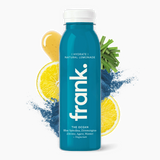
Our blue lemonade The Ocean combines the taste of lemon, lemongrass, agave and the so-called superfood blue spirulina, which also gives it its colour. The Ocean is the perfect cool-down in between meals or during sport!

Wake Up Call
The energy start to your day with our ginger shot Wake Up Call! Our classic ginger and turmeric shot contains plenty to put you in a good mood. With pepper, orange and the much-loved addition of lemon, it gives you a natural fresh kick after getting up!

Lemon juice vs. lemon water
Lemon juice and lemon water are two popular drinks made from lemons that can have similar benefits. There are, however, a few differences between the two.
Lemon juice is made by squeezing the juice out of fresh lemons and removing the pulp and fibres. Lemon juice is usually more concentrated than lemon water and contains more citric acid and vitamin C per volume. Lemon juice can be drunk neat or used in drinks and dishes as a flavour enhancer and acidity regulator.
Lemon water is made by putting fresh lemon slices or pieces into water. The water takes on the taste and nutrients of the lemons and becomes a refreshing drink. Lemon water is usually less concentrated than lemon juice and therefore contains less citric acid and vitamin C per volume.
Another important difference between lemon juice and lemon water is the acidity. Lemon juice is more acidic than lemon water because of its high citric acid content.
All in all, both lemon juice and lemon water make tasty drinks and ingredients for recipes. If lemon juice is too intense for you, try a glass of lemon water. Drinking lemon water can also be the perfect change for anyone who finds plain water boring after a while.
Never miss any news!
Want to stay on top of the latest juice news and get science-based information on nutrition through our Nutrition Newsletter? Then follow this link and become part of our frank. community!
Frequently asked questions about lemon juice
How much lemon juice a day is healthy?
As a rule of thumb, around 15 to 30 ml, so the juice of half to one whole lemon, ideally diluted in a glass of water.
Can you drink too much lemon juice?
Yes. Larger amounts, especially neat, can wear down tooth enamel and cause heartburn if you have a sensitive stomach. Dilute the juice and drink it through a straw.
Which is healthier: lemon juice or lemon water?
Lemon water is milder because it contains less acid per sip. Lemon juice is more concentrated and provides more vitamin C per volume. For a daily routine, diluted juice is the gentler choice.
How much vitamin C is in a lemon?
A lemon contains around 53 mg of vitamin C per 100 g.


