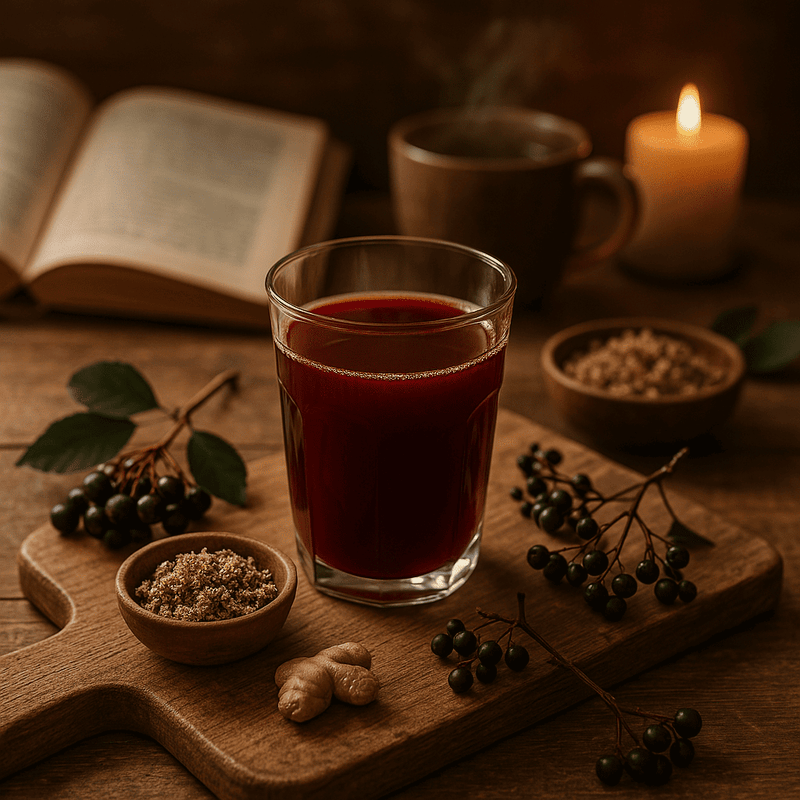
Elderberry juice is not just a tasty drink, it is also a traditional folk remedy. The small dark berries of the elder are rich in nutrients and may have many positive effects on health. Besides anthocyanins, elderberries contain many valuable compounds such as vitamin C and minerals. In this article we look at the history, the nutrients and the health aspects of elderberry juice. Elderberry juice, the flavour booster, contains antioxidants that are traditionally associated with supporting the body during flu and colds, and that may have a positive effect on heart and blood pressure. We also show how to prepare it and what to watch out for.
Key takeaways
-
It contains lots of vitamins, especially vitamin C, which supports your body's defences.
-
The berries have anti-inflammatory and antioxidant properties.
-
Elderberry juice can support digestion and may help with constipation.
-
Raw elderberries are poisonous and should always be cooked before eating.
The history and tradition of elderberry juice
The mythological meaning of the elder
The elder has a magical meaning in many cultures. The ancient Germanic peoples already revered the Holler as a sacred plant and believed that the goddess Holda, or Frau Holle, lived in it. This belief shows how important the elder was, and still is, in mythology.
Historical use as a remedy
Historically, elderberry juice was used as a folk remedy for various ailments. Elderflowers are a versatile ingredient in the kitchen and a traditional home remedy, used in recipes for elderflower syrup, tea and jelly. The berries and flowers were used for colds, fever and even digestive problems. Elderflower tea has a sweat-inducing and mucus-loosening reputation and is valued for supporting the immune system during colds. People have appreciated the soothing properties of the elder for centuries.
Elder in modern natural medicine
In modern natural medicine, elderberry juice is still valued. It is often recommended to support the immune system and is known for its antioxidant properties. Many people use it as a home remedy during colds and flu to help ease discomfort and support recovery.
Elderberry juice is not only delicious, it is also a valued traditional remedy that has been appreciated for generations.
Nutritional profile of elderberry juice
Vitamins and minerals in elderberry juice
Elderberry juice is rich in important nutrients. Worth highlighting in particular:
-
Vitamin C: With up to 36 mg per 100 g, elderberries even beat lemons.
-
B vitamins: These support metabolism and energy production.
-
Minerals: These include iron, potassium and magnesium, which are important for many bodily functions.
Antioxidant properties of elderberries
Elderberries contain many secondary plant compounds, especially anthocyanins. Besides anthocyanins, elderberries also contain many other valuable compounds such as vitamin C, B vitamins and minerals. These act as strong antioxidants and help protect cells from damage caused by free radicals. They can also:
-
Help reduce inflammation
-
Support the immune system
-
Support the health of the cardiovascular system
Differences between juice, syrup and tea
There are different forms in which elder can be consumed:
-
Elderberry juice: Freshly pressed, it contains the most nutrients.
-
Elderberry syrup: Often sweeter and more concentrated, it can be used in drinks.
-
Elderflower tea: Made from the flowers, it also has health benefits, but fewer nutrients than the juice.
Elderberry juice is an excellent addition to a healthy diet and can help support the immune system.
Health aspects of elderberry juice
Supporting the immune system
Elderberry juice is known for supporting the immune system. The vitamins it contains, especially vitamin C, are essential for the body's defences. Drinking elderberry juice as a precaution during cold season may support your general health through its valuable ingredients. A glass of elderberry juice a day can be a nice habit to support your body's defences.
Support during colds and flu
Elderberry juice is traditionally used when you feel a cold coming on. The anthocyanins in the berries are the subject of ongoing research. It is a good idea to drink the juice at the first signs of a cold to help ease discomfort.
Summary of the benefits
-
Supports the immune system thanks to its high vitamin C content.
-
Traditionally used during colds and flu.
-
Positive effects on the cardiovascular system thanks to regulating ingredients.
All in all, elderberry juice is a valuable addition for your health and should not be missing from any healthy diet.
Using and preparing elderberry juice
Homemade elderberry juice: simple recipes
Elderberry juice is not only tasty, it is also easy to make. Here is a step-by-step guide:
-
Wash the elderberries thoroughly. Fresh produce straight from the harvest is healthy and versatile.
-
Remove the berries from the stalks with a fork or your hands. Sort out unripe berries and bits of stalk.
-
Put the berries in a pot and add about one centimetre of water.
-
Let the berries cook for about 15 minutes, until soft.
-
Strain the berries through a kitchen cloth to collect the juice.
-
Preserving elderberry juice: pour the juice into bottles and boil them for 30 minutes to make it last. Elderberry products are healthy and versatile.
Proper storage and shelf life
To keep the quality of the elderberry juice, store it in a cool, dark place. Here are a few tips:
-
Use dark glass bottles.
-
Store the juice in the fridge once opened.
-
Make sure the bottles are tightly closed.
Combining with other medicinal plants
Elderberry juice combines wonderfully with other medicinal plants. Here are some popular combinations:
-
Elder with ginger for a warming feeling.
-
Elder with lemon for a refreshing taste.
-
Elder with mint for a cooling note.
Elderberry juice is a great addition for your health and can easily be built into your daily diet. Get creative and experiment with different combinations!
Elderberry juice in research
Studies on the antiviral effects
Elderberries have been intensively researched, especially regarding their properties during colds. Elderberry juice, the flavour booster, offers numerous health benefits, including the antioxidants it contains. A notable 2016 study with 312 air travellers showed that the group taking elderberry extract had fewer days with cold symptoms and milder symptoms. These results support the use of elderberry juice as a way to support the immune system.
Scientific studies on the antioxidant properties
The polyphenols in elderberries have antioxidant properties that may reduce oxidative stress in the body.
Future research perspectives
Research on elderberry juice is promising, but there are still many questions to answer. Future studies should focus on the exact mechanisms through which elder unfolds its health benefits.
Elderberry juice could be a valuable addition to a healthy diet, especially during cold season.
In summary, elderberry juice is not only used traditionally, it is also backed by modern research. It is important to pay attention to the right dosage, as raw elderberries contain sambunigrin, which can release hydrogen cyanide in the body. So always make sure to prepare elderberries properly to avoid health risks.
Elderberry juice and its role in nutrition
Building it into a healthy diet
Elderberry juice is not only tasty, it is also a healthy addition to your diet. It contains many important nutrients, such as vitamin C, which supports the immune system, and is rich in antioxidants that protect cells. The elderberry juice also comes from the Altes Land, contains no preservatives and is low in calories, ideal for a healthy diet. Here are some benefits:
-
Rich in vitamin C, which supports the immune system.
-
Contains antioxidants that protect cells.
-
Low in calories, ideal for a healthy diet.
Elderberry juice as part of juice cleanses
Elderberry juice can also be used in juice cleanses. These cleanses can support the body's natural detox processes and promote wellbeing. Here are some tips:
-
Mix elderberry juice with other fruit juices for a delicious taste.
-
Drink a glass every day to make the most of the benefits.
-
Make sure to prepare the juice fresh to keep the nutrients.
Comparison with other fruit juices
Compared with other fruit juices, elderberry juice has a few special advantages:
|
Juice type |
Calories per 100 ml |
Vitamin C content |
Antioxidants |
|---|---|---|---|
|
Elderberry juice |
48 |
High |
High |
|
Apple juice |
46 |
Medium |
Low |
|
Orange juice |
45 |
High |
Medium |
Elderberry juice is an excellent choice to support the immune system and promote wellbeing. It is not only tasty, it is also versatile!
Conclusion
In summary, elderberry juice can have many positive effects on our health. It supports the immune system, is traditionally used during colds and has anti-inflammatory properties. The vitamins and minerals it contains are important for our body. When you drink elderberry juice, you are doing yourself a favour. Make sure to prepare it properly so the healthy ingredients are kept. So elderberry juice is not only delicious, it is also a valuable contribution to a healthy lifestyle.
Frequently asked questions
What is elderberry juice and how is it made?
Elderberry juice is made from the berries of the elder bush. The ripe berries are cooked and then pressed to extract the juice.
What health benefits does elderberry juice have?
Elderberry juice can support the immune system and is traditionally used during colds. It contains lots of vitamins, especially vitamin C, which is good for your body's defences.
Is there anything special to know about taking elderberry juice?
As a rule, elderberry juice is safe, but raw elderberries are poisonous and should not be eaten. Always cook them through!
How can I make elderberry juice myself?
To make elderberry juice yourself, collect ripe elderberries, cook them for about 50 minutes and then press them through a sieve.
Can I drink elderberry juice during pregnancy?
There is not much information about elderberry juice during pregnancy. It is better to talk to a doctor first.
How long can I store elderberry juice?
Homemade elderberry juice should be kept in the fridge and lasts about a year if it is tightly closed.