Updated: October 2026
In short: Thyme tea is traditionally drunk for coughs and colds, because thyme contains the essential compound thymol. According to WebMD, there is no good scientific evidence for the tea, but it still has its place in folk medicine. To prepare: 1 to 2 teaspoons of dried leaves, steep covered for 5 to 10 minutes. As of: October 2026.
You know thyme from the kitchen, but also from cough tea. Here you'll learn what's traditionally behind it, how much evidence there is and how to prepare it properly.
What does thyme tea do?
Thyme contains thymol, an essential oil traditionally credited with expectorant, antispasmodic and antibacterial properties. The Swiss health insurer CSS describes it as a home remedy for colds, coughs and bronchitis.
We should be honest about how robust that is: WebMD writes that there is no good scientific evidence for uses such as coughs. Studies mostly look at thyme as an extract, often in combination with other plants such as ivy, not as a tea. So the tea is more a warm home remedy than a treatment.
Thyme has been used in cooking for centuries with meat, vegetables and soups. As a tea, it traditionally appears on the table during cold season. Its popularity doesn't prove an effect, but many people find it pleasant-tasting, and it's easy to prepare.
What's in thyme?
Thyme (Thymus vulgaris) belongs to the mint family. According to WebMD, flowers, leaves and oil are used as a spice and in folk medicine. The best-known compound is thymol, an essential oil with a spicy scent that is credited with antibacterial properties, among others.
| Form | Use | Note |
|---|---|---|
| Tea from leaves | drink, 2 to 3 cups | mildest form, small amount of thymol |
| Seasoning | Kitchen | Amounts as in food |
| Extract, juice | in medicines | Most of the research is here |
| Essential oil | do not drink | may irritate skin |
Important: what applies to extracts in studies can't simply be transferred to a cup of tea. The concentration in an infusion is much lower.
Does thyme tea help with coughs?
Thyme tea is traditionally used for coughs, especially chesty coughs. Part of the effect probably comes simply from the warmth and the fluid, because warm drinks moisten the throat and loosen sticky mucus more easily.
| Type of cough | What you can do |
|---|---|
| Dry, irritating cough | warm drinks, humidify the air, avoid irritants |
| Chesty cough | drink plenty, thyme tea can be part of that |
| Cough lasting longer than 3 weeks | have it checked by a doctor |
| Shortness of breath, fever, blood in phlegm | see a doctor immediately |
Remember: thyme tea doesn't replace treatment. If the cough lasts for weeks, changes or comes with shortness of breath, see a doctor.
How do you prepare thyme tea?
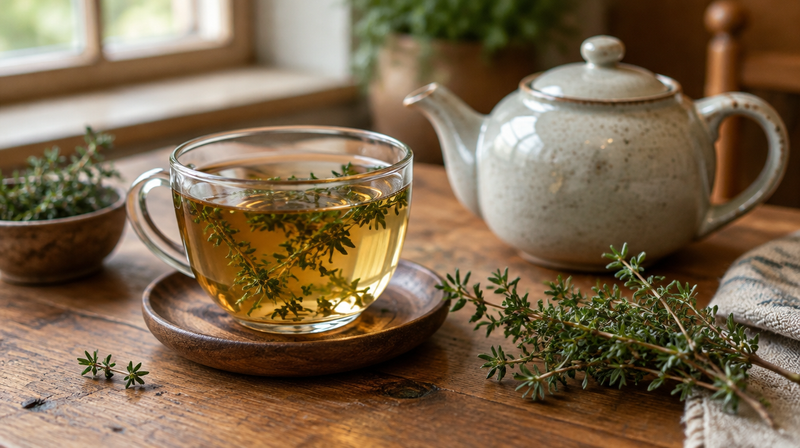
Pour a cup of hot water over 1 to 2 teaspoons of dried thyme leaves and let the tea steep covered for 5 to 10 minutes. According to the CSS, covering is important so the thymol doesn't escape. Then strain.
- Fresh thyme: 3 to 4 sprigs per cup, lightly pressed.
- Taste: lemon or honey pair well; no honey for children under one year old.
- Amount: the CSS cites 2 to 3 cups a day.
Practical tip: thyme is spicy to slightly bitter. If that's too intense for you, use only a small amount and mix it with chamomile, fennel or lemongrass. That changes the taste without you having to give up the herb.
An example for a day with a cold: a cup of thyme tea with lemon in the morning, broth or soup at lunch, tea with ginger in the afternoon, thyme again in the evening. Plus 1.5 to 2 litres of fluid in total, so the mucus stays loose. That's an everyday guide, not medical guidance.
How much thyme tea can you drink?
The CSS cites 2 to 3 cups a day. WebMD classes thyme as possibly safe for short-term medicinal use and lists side effects such as allergic reactions, dizziness and stomach complaints. As a rule of thumb: a few days to a few weeks, not long term in high amounts.
A quick calculation: 1.5 teaspoons of dried leaves are about 1.5 grams. With 3 cups, you get to around 4.5 grams of herb a day, which is a usual order of magnitude for tea preparations, but not a tested upper limit. The sources consulted don't specify exact limits.
Children should only have thyme tea in small amounts and after consulting the paediatrician. Honey is only suitable from the first birthday.
Who should be careful with thyme tea?
According to WebMD, during pregnancy and breastfeeding: only amounts as in food. People with an allergy to oregano can also react to thyme. With hormone-sensitive conditions such as breast cancer or endometriosis, caution is advised because thyme might have oestrogen-like effects. Before operations, you should leave it out at least two weeks beforehand, as it can affect blood clotting.
Interactions are possible with blood thinners, anticholinergic medicines and medicines containing oestrogen. If you take regular medication, ask at the pharmacy. Thyme oil is not for drinking and doesn't belong undiluted on the skin.
You should be especially careful if you already react to other herbs from the mint family, such as oregano, sage or mint. In that case, start with half a cup and watch how you tolerate it.
Which other teas suit cold season and everyday life?
Thyme is just one herb of many. In everyday life, a blend often works better than a single tea, because you keep the amount per herb small and still get variety. Ginger, lemon, chamomile or fennel are typical companions.
You'll find more on tea in nutrition in Tea for Fasting, and on the immune system in the article Secondary Plant Compounds and Their Effects. Your surroundings count too: fresh air, enough sleep and plenty of fluids usually help more with a cold than a single herb.
Handy for stocking up: dried thyme keeps well for a year in a dark, dry place, but loses aroma over time. If it hardly smells any more, the tea will taste weak too. In that case, use fresh thyme from the balcony or the supermarket, which is easy to get anyway.
And if you find you don't like thyme tea: that's not a mistake. Most of the feel-good effects of a cup of tea come from the ritual, from pausing and from the warmth, and you get those with any herbal tea.
Pairs well with frank.
Thyme is in the organic tea Feel Good Tea: olive leaves, rosemary, thyme, cinnamon and lemongrass. Loose, 100 g pack from 15 EUR (as of October 2026), which is about 20 to 33 cups. It's a treat tea and not a cough treatment. If you're pregnant or take medication, check ingredients such as thyme with your doctor beforehand.
You might also like
Frequently asked questions about thyme tea
Is thyme tea good for coughs?
Thyme tea is traditionally drunk for coughs. According to WebMD there is no good scientific evidence for the tea, but the warmth and fluid often feel good.
How long does thyme tea need to steep?
5 to 10 minutes, covered, so the essential thymol stays in the tea.
How often a day can I drink thyme tea?
The CSS cites 2 to 3 cups a day. Don't drink it long term in high amounts.
Can I drink thyme tea during pregnancy?
WebMD advises amounts as in food during pregnancy and breastfeeding. If in doubt, ask your doctor.
Can you drink thyme tea with medication?
Interactions with blood thinners and some other medicines are possible. If you take regular medication, get advice at the pharmacy.
Fresh or dried thyme for tea?
Both work. Dried, you use 1 to 2 teaspoons per cup, fresh 3 to 4 sprigs.
Note: This article is for general information and does not replace medical or therapeutic advice. If you have symptoms or pre-existing conditions, are pregnant or take medication, please speak to your doctor first.