















Iron is a vital mineral that plays a crucial role in the health and wellbeing of our body. As one of the most common trace elements in our organism, iron fulfils a wide range of functions, from supplying our cells with oxygen to supporting the immune system. Yet although iron plays such a central role, many people worldwide suffer from iron deficiency and may not even be aware of how it affects their health.
In this blog post we look at the effect of iron on our body. We'll examine why iron is important and how it is transported in the body. We'll also give you information on improving your iron status and explain which food sources are especially rich in this essential mineral.
Iron is vital for the human body
It's important that your body gets enough iron to maintain numerous functions of the metabolism! Iron deficiency, which can have various causes, can lead to anaemia, in which fewer red blood cells are produced and the oxygen supply to the body is impaired.
The role of iron for your blood
Iron is an essential component of haemoglobin, the red blood pigment that is part of the red blood cells. Haemoglobin's job is to transport oxygen from the lungs to the various tissues and organs in the body. Without enough iron, your body can't produce enough haemoglobin, which leads to a reduced oxygen supply to your organs. This can lead to symptoms such as tiredness, weakness, low energy and anaemia.

Iron is important for the immune system
Iron is necessary for the normal function of your immune cells such as neutrophils, macrophages and lymphocytes. These cells are crucial for defending against pathogens and fighting infections. Iron deficiency can impair the activity and efficiency of these immune cells and weaken your immune defence.
Iron is an essential nutrient for many bacteria, including pathogenic microorganisms. Your body uses this to its advantage by limiting the availability of iron to hold back the growth and multiplication of bacteria. During an infection, your body binds iron to certain proteins to make it inaccessible to bacteria and inhibit their growth.
In the form of iron ions, iron can promote oxidative reactions in cells. An excess of iron, however, can lead to increased oxidative stress, in which harmful free radicals are formed. Free radicals can damage cells and tissue and weaken the immune system.
Iron is also involved in regulating inflammatory responses. Inflammation is a natural defence mechanism of the body that is activated during infections and injuries.
Iron and the muscles
Iron intake is essential for your muscle metabolism! Iron is a component of myoglobin, a protein found in your muscles that is responsible for oxygen transport and storage in the muscle cells. Myoglobin is structurally similar to haemoglobin and allows the muscles to get enough oxygen during muscle contraction. A lack of iron can impair muscle function and lead to tiredness, muscle weakness and a drop in performance.

Iron for concentration and cognitive performance
The brain needs a constant supply of oxygen to work at its best. Iron is an essential component of haemoglobin, which binds oxygen in the red blood cells and transports it to the various tissues, including the brain.
Your brain is a highly energy-intensive organ and needs a lot of energy to maintain its functions, such as thinking, learning, concentration and memory. Iron is a component of various enzymes involved in the metabolic processes that contribute to energy production in the brain.
Neurotransmitters are chemical messengers responsible for communication between nerve cells. Neurotransmitters such as dopamine, serotonin and noradrenaline influence mood, attention, motivation and other cognitive functions. Iron is involved in the formation and proper functioning of these neurotransmitters.
Iron intake is also important for the normal formation and function of myelin. Myelin is a fat-rich substance that surrounds and protects the nerve fibres in the brain and in the peripheral nervous system. It plays a crucial role in the transmission of nerve impulses and in fast signal transmission in the brain.

Iron-rich foods
Did you know that you can improve the absorption of iron from plant sources such as legumes and vegetables by eating foods rich in vitamin C at the same time? Vitamin C promotes the absorption of iron in the body! That's why it can be helpful to combine iron-rich foods with citrus fruits, peppers or tomatoes.
Different foods as sources of iron
There are various foods that are rich in iron. We'll introduce a few of them in the following section.
Meat
Red meat such as beef and lamb contains a lot of iron. Offal such as liver in particular is very rich in iron. Poultry such as chicken and turkey also contains iron, although in smaller amounts than red meat.
Fish and seafood
Fish such as sardines, tuna and mussels are good sources of iron. Oysters and squid also contain iron.
Legumes
Beans, lentils, chickpeas and peas are rich in iron. They are also a good vegetarian or vegan alternative for meeting your iron needs.
Nuts and seeds
Various nuts and seeds contain iron. These include almonds, cashews, pumpkin seeds and sesame seeds.
Dark green leafy vegetables
Vegetables such as spinach, kale, chard and rocket are rich in iron. These vegetables also contain other important nutrients such as vitamin C, which improves iron absorption.
Grains and wholegrain products
Some grains and wholegrain products are fortified with iron. These include rolled oats, quinoa, amaranth and wholegrain bread.
Dried fruit
Raisins, dried apricots, prunes and figs are rich in iron. They are also handy snacks that are easy to take with you.

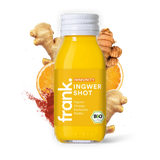
The frank. ginger shot Lavender Skies as a natural source of iron
At frank. we rely on the natural intake of iron, which is why our ginger shot Lavender Skies contains curry leaf extract as a natural source of the trace element iron. Feel the positive effects of curry leaf extract on your body and your cognitive performance.
This ginger shot doesn't just do you good, it also tastes really delicious! See for yourself the fruity, fresh taste with plenty of ginger, blueberry and other natural ingredients.
Our two other ginger shots Fast Lane and Wake Up Call are real flavour explosions too. You can buy the shots individually, as a shot cleanse or as part of your juice cleanse on our site or at the supermarket, for example Rewe.
Conclusion: how good iron is for the body
Iron is undoubtedly a vital mineral that plays a central role in our body and supports numerous important functions. As an essential component of haemoglobin, the red blood pigment, iron is responsible for transporting oxygen to our cells and tissues. It contributes to strengthening our immune system by supporting the activity of important immune cells and limiting the growth of disease-causing bacteria. Iron also plays a crucial role in muscle metabolism and influences our cognitive performance and our concentration.
Iron deficiency can have serious effects on health, including anaemia, weakness, tiredness and a weakened immune defence. Fortunately, there are many natural sources of iron, including meat, fish, legumes, nuts, dark green leafy vegetables, grain products and dried fruit. A clever combination of these foods with vitamin C-rich options can increase iron absorption in the body.
In this context, frank. offers a tasty way to get iron naturally with its ginger shot "Lavender Skies". This shot contains curry leaf extract as a natural source of iron and offers not only health benefits but also a delicious taste.