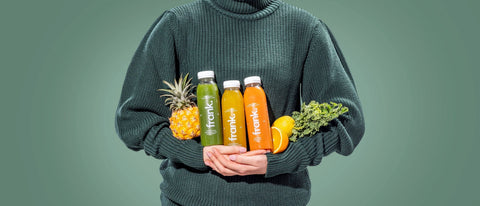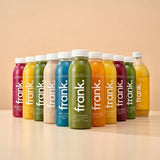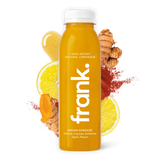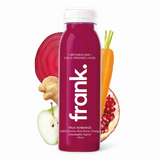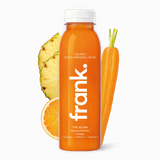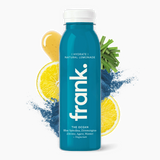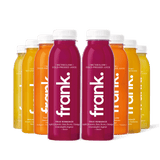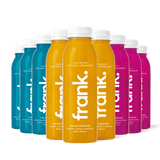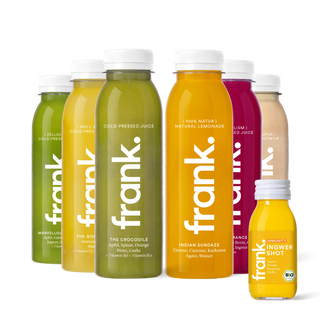
"A juice cleanse is total nonsense, you'll be missing the most important nutrients!" You often have to listen to statements like this when you mention to your friends that you've just ordered your first juice cleanse .
But isn't there a grain of truth in all the cleanse myths? Today we're clearing things up and giving you the answers you've been looking for! That way, at your next coffee chat you can send all the doubters packing with solid arguments!
Cleanse myths we hear a lot
"You don't need a cleanse, you're really slim", "During a juice cleanse I won't have the energy to work", or the popular: "The side effects of juice fasting are a sign that a juice cleanse is unhealthy". Oh yes, how often we hear statements like these when we tell our friends that a juice cleanse is coming up.
But that ends now, because myths like these quickly fall apart when you look into the topic of the juice cleanse a bit longer, and by the time your first fasting phase is successfully behind you, you'll know they are all just rumours!
1. A juice cleanse is not for me, I need to chew something
Often our mouth literally waters at the thought of our favourite food.
And that doesn't just happen figuratively! Chewing isn't the only thing that breaks down your food and helps prevent digestive problems, your saliva also plays an important role in digestion. Besides the moisture that saliva adds to food, so-called amylases, digestive enzymes found in saliva and the pancreas, break carbohydrates down into simple sugars. This makes them easier to digest, and it also helps regulate the insulin level.
During a juice cleanse the chewing process isn't needed, because the nutrients are taken in via the liquid, which is meant to avoid digestive problems and gives your digestive tract a break over the days.
If you still feel the urge to chew something, we recommend chewing gum. A positive effect of sugar-free chewing gum is that the stimulated flow of saliva washes away bacteria, which can help prevent bad breath and tooth decay.
2. I can't fast, my hunger will be too strong
Depending on whether you choose a 3 day juice cleanse, 5 day juice cleanse or even a 7 day juice cleanse , going without solid food gets longer and longer... How is that supposed to work without strong hunger?
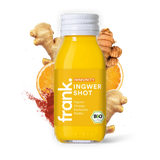
While fasting, you reduce your carbohydrate intake to 500-1000 kcal, which is significantly less than usual. However, instead of three meals a day you drink 6 or 7 fruit and vegetable juices of 330 ml each. That means a tasty, nutrient-rich snack awaits you about every 2 hours. So hunger only rarely comes up. Are you topping up your cleanse with ginger shots or protein powder? Then even more products are waiting for you!
It's also worth knowing that your stomach quickly gets used to the reduced food intake and long since stops asking for the usual amounts. Good preparation will make it even easier to reduce your carbohydrate intake during the fasting days.
If you do happen to suffer from strong hunger, we recommend trying vegetable broths and treating yourself to an herbal tea in between. The warmth will spread through your stomach and drive the hunger away.
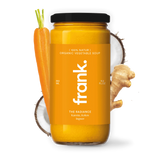
One option we love to fall back on is a soup cleanse. Instead of a juice, you have a tasty warm soup every day. Top it up with a portion of our vegan organic protein powder to keep you feeling full for longer.

3. I'll be missing important nutrients on a juice cleanse
It is often assumed that during a juice cleanse the body lacks important nutrients and that unpleasant fasting symptoms are a sign of a deficiency. We want to clear up this misconception once and for all.
During fasting, the body keeps its electrolyte balance constant through conservation mechanisms. In addition, fasting products such as cold-pressed fruit and vegetable juices supply the body with extra electrolytes.
Well-known fasting symptoms such as lower blood pressure, headaches, dry skin and mucous membranes, bad breath and increased sensitivity to cold are things that can sometimes occur. The reason lies in the unfamiliar switch in metabolism: while carbohydrates are normally used for energy, as fasting goes on the long-term storage depot is tapped: fat is metabolised into energy.
It should be stressed that many people who fast have no complaints at all and report increased physical and mental wellbeing during fasting thanks to a higher release of the happiness hormone serotonin. Did you know there is a term "fasting high"? It describes the high sense of wellbeing that sets in after about 5 days of fasting.
If you'd like to read more about fasting symptoms , we recommend our blog article!
4. I don't need to lose weight, so why should I do juice fasting
It often happens that a juice cleanse is confused with a radical diet aimed at fast weight loss.
But that shouldn't be the goal of a juice cleanse. A juice cleanse is not a radical diet or a way to lose weight sustainably. Rather, a juice cleanse makes it easier to start a future change of diet, because while fasting you deal intensively with your eating and can drop old, unwanted habits.
It can certainly happen that the scale shows a few kilos less over the fasting days. However, this is mainly water retention caused by a high salt content in food, which is flushed out by processes in the body during the cleanse. That is also one of the reasons why you'll visit the toilet more often during a juice cleanse.
If a conscious and healthy weight management is what you want, instead of a 3 day juice cleanse we recommend our intermittent fasting concept . Over several weeks, on 2 days a week you replace your usual food with refreshing ginger shots, cold-pressed juices and tasty organic soups. This trains your metabolism to switch from carbohydrate metabolism to a fat-based metabolism.

5. Fasting harms the body and could even be fatal
Such claims are simply wrong and contradict both scientific findings and decades of experience! Fasting for medical reasons has a long tradition in naturopathy and is becoming more and more popular today alongside conventional treatment methods with medication. Doctors increasingly use fasting in specialised clinics and also on an outpatient basis.
Fasting methods are used in the following ways:
- Primary prevention: healthy people fast to maintain and, where applicable, improve their physical and mental performance
- Secondary prevention: people with risk factors, for example due to genetic predispositions and being overweight, can work towards reducing these through fasting
- Tertiary prevention: people who already have health conditions sometimes look to fasting as a complement to medical care, for example with conditions such as coronary heart disease, type 2 diabetes, rheumatism, asthma, allergies and migraine. Always talk to your doctor first
- Self-discovery: many people fast because of mental and spiritual beliefs
Fasting carried out properly is extremely low-risk and may support your health. Numerous studies on fasting therapy have confirmed that nutritional-physiological parameters stay within the normal range.
Conclusion
As you now know, we can't confirm the grain of truth you may have suspected. Basically, you have to experience fasting yourself to know how you'll deal with the respective worries.
However, we also know that a juice cleanse is not suitable for everyone. Pregnant and breastfeeding mothers in particular should skip a juice cleanse. If you are under medical treatment, it is certainly advisable to discuss your plan with a doctor. We've summed up in detail when a juice cleanse doesn't make sense in this blog article!
If you have any further questions or are unsure, feel free to contact us at any time!