Updated: October 2026
In short: According to the sources we checked, you can't lose weight from the belly alone. Your belly gets smaller when you lose body fat overall: at a moderate pace of 0.5 to 1 kg per week, with regular exercise (150 minutes a week according to the NHS) and balanced nutrition. As a benchmark, the NHS says your waist should be less than half your height.
"How do I get rid of belly fat?" is one of the most common questions around weight loss, and the answers online are loud: belly fat teas, special exercises, miracle drinks. Here's the honest version. We explain why there is no belly fat diet, what the evidence says brings the most for visceral fat, how to measure your waist, how long it takes and what a doable weekly plan looks like.
Can you lose weight from the belly specifically?
No, there is no basis for that in the sources we checked. The recommendations of the NHS and the Verbraucherzentrale always refer to overall weight: a moderate pace, balanced nutrition and exercise. If you lose body fat overall, your belly usually gets smaller too, just not necessarily first and not equally fast for everyone.
That applies to all versions of the question, whether you want to lose weight from the upper belly, lower belly, waist or just the belly. Ab exercises strengthen the muscles and improve posture, but don't replace an overall deficit. You'll find instructions in the article Ab Exercises.
What is visceral fat and why does it matter?
In research, a distinction is made between fat directly under the skin (subcutaneous) and visceral fat tissue, which lies in the abdominal cavity. The NHS describes that excess belly fat (abdominal obesity) is linked to type 2 diabetes, heart disease, stroke and high blood pressure. Your waist measurement is therefore more than a matter of looks.
The good news from research: even a moderate weight loss of 5 to 10 percent of body weight can noticeably improve health, according to the NHS. So you don't have to work towards an ideal image for something to be worthwhile.
What waist measurement is healthy and how do you measure it?
The NHS recommends keeping your waist circumference under half your height. That is easier to judge than BMI, which doesn't distinguish between muscle and fat. Measure with a tape measure at navel level, relaxed and after breathing out, once a week at the same time of day.
| Height | Waist should be under |
|---|---|
| 160 cm | 80 cm |
| 170 cm | 85 cm |
| 180 cm | 90 cm |
| 190 cm | 95 cm |
With our BMI calculator, you can also put your BMI in context. If your waist measurement falls even though the scale barely reacts, you may have built muscle. That's a good sign.
Which diet helps with losing weight around the belly?
The one with which you can keep a moderate deficit without being constantly hungry. The NHS recommends swapping sugary drinks for water, not skipping meals (otherwise you're more likely to snack more), reading labels and eating five portions of fruit and vegetables a day. The DGE adds whole grains, legumes and around 1.5 litres of calorie-free drinks per day.
- Vegetables as the base of every meal, plus a protein source and fibre
- Replace sugary drinks first, as that often saves many calories
- Eat regularly and don't wait until you're ravenous
- Don't finish your plate when you're full (NHS)
The article Meal Plan for Weight Loss gives concrete ideas. According to our sources, there is no special "belly fat diet".
Which exercises and sports help most against belly fat?
An analysis of 84 randomised studies with 4,836 participants with overweight found: endurance training of at least moderate intensity, strength training, the combination of both and high-intensity interval training (HIIT) all reduce visceral fat tissue. High-intensity endurance training and HIIT performed best, strength training alone the weakest. In women and in people with a high body fat percentage, strength training alone did not improve visceral fat in this analysis.
| Type of training | Effect on visceral fat according to the analysis |
|---|---|
| Endurance (at least moderate) | Reduces it |
| High-intensity endurance | Highest probability of the best effect |
| HIIT | Highest probability of the best effect |
| Endurance plus strength | Reduces it |
| Strength training alone | Effective, weakest in comparison |
For everyday life that means: the NHS recommends at least 150 minutes of moderate activity a week or 75 minutes of intense activity, plus strengthening the major muscle groups on at least two days. If you're short on time, you'll find ideas in Losing Weight Without Exercise.
How quickly do you lose belly fat, and can it be done in a week?
As a steady pace, the NHS gives 0.5 to 1 kg per week. How quickly the belly shrinks in the process is individual and can't be predicted. "Lose belly fat fast in a week" or "lose belly fat quickly" are therefore promises we can't make. With low-carb diets, the first 2 to 3 kilograms are mainly water, according to the Verbraucherzentrale. With crash diets, the Verbraucherzentrale says a yo-yo effect is virtually guaranteed because eating behaviour doesn't change.
Plan in weeks and months instead. You'll find a detailed assessment in the article How Do I Lose Weight Quickly?
Belly fat in men and women: are there differences?
The basic principles are the same: overall weight, diet, exercise. In the analysis mentioned above, a difference showed up with strength training: on its own, it improved visceral fat in men but not in women. Endurance and combined training worked for both. Whether and how strongly hormones play a role, for example during menopause, we can't answer with certainty from the sources we checked. More in the article Losing Weight During Menopause.
What does a weekly plan against belly fat look like?
A plan that fits into everyday life works better than a perfect one you give up after two weeks. This example has about 150 minutes of exercise and can be adapted.
| Day | Nutrition | Exercise |
|---|---|---|
| Monday | Oats with fruit, vegetable soup, roasted vegetables | 30 minutes brisk walking |
| Tuesday | Wholemeal bread with quark, salad with lentils | 20 minutes strength exercises |
| Wednesday | Vegetable stir-fry with rice, fruit as a snack | 30 minutes cycling or walking |
| Thursday | Scrambled egg with vegetables, soup, yoghurt with nuts | Rest, take the stairs |
| Friday | Sugar-free muesli, bowl with chickpeas | 30 minutes brisk walking |
| Saturday | Brunch to appetite, light dinner | Hike or dancing |
| Sunday | Meal prep for the week | Walk, stretching |
Sleep counts too: according to the NHS, people who sleep badly are more likely to reach for high-calorie food and are too tired to move. More in Sleep Deprivation and Body Weight and Stress and Overweight.
What to make of belly fat teas, juices and pills?
If someone promises to lose belly fat specifically with them, scepticism is warranted. An unsweetened tea is a drink with no calories; it isn't a fat burner. In detail: Tea for Weight Loss. A Juice Cleanse isn't a belly fat cleanse either, but a short time out with a fixed plan.
Get medical advice if your belly suddenly gets noticeably bigger, you have pain or digestive problems, gain a lot of weight for no obvious reason or suspect an eating disorder. With overweight and accompanying conditions too, the NHS recommends talking to your GP.
Matching picks from frank.
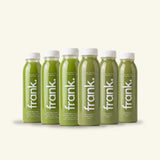
If you're looking for a start to new habits: frank. Juice Cleanses come in 3, 5 and 7 days. Whether and how they help with weight loss is covered in the article Can I Lose Weight With a Juice Cleanse?
You might also like
- Basic Rules of Weight Loss
- How Many Calories Do You Need Per Day to Lose Weight Healthily?
- Losing Weight Healthily: Nutrition, Tips & Recipes
Frequently asked questions about losing belly fat
How long does it take to lose belly fat?
It can't be said across the board. The NHS gives 0.5 to 1 kg per week as a steady pace for overall weight loss. How quickly your waist measurement falls is individual.
Does ab training help against belly fat?
It strengthens the muscles but doesn't burn fat from the belly specifically. For fat, the overall deficit and exercise in general count.
What is a healthy waist measurement?
As a rule of thumb, the NHS says your waist should be under half your height, for example under 85 cm at a height of 170 cm.
Which sport helps best against visceral fat?
In an analysis of 84 studies, high-intensity endurance training and HIIT performed best, strength training alone the weakest. What matters is what you can stick to long term.
Can you lose belly fat in a week?
On the scale maybe, but then it's not just fat. The Verbraucherzentrale and NHS advise against quick crash diets.
Note: This article is for general information and is not a substitute for medical or therapeutic advice. If you have complaints, pre-existing conditions, are pregnant or take medication, please talk to your doctor first.