Updated: October 2026
In short: A good meal plan for weight loss keeps a moderate calorie deficit of about 300 to 500 kcal a day, relies on protein, vegetables, wholegrain and legumes and can be kept up in everyday life. Realistic is 0.5 to 1 kg of weight loss per week. Below you'll find a 7-day sample plan with around 1,600 to 1,800 kcal a day for guidance. As of: October 2026.
A plan helps because you don't have to decide anew every day what goes on your plate. What's important is that it fits your daily life and your needs.
How many calories can you eat to lose weight?
That depends on age, height, weight, sex and activity. As a rough guide, total needs for many women are between 1,800 and 2,300 kcal, for many men between 2,200 and 2,800 kcal a day.
To lose weight, a deficit of 300 to 500 kcal a day is enough. You can estimate your personal figure with the calorie calculator, and your BMI as a starting point with the BMI calculator. A detailed explanation is in How many calories do you need per day to lose weight healthily?.
Don't go permanently below about 1,200 kcal (women) or 1,500 kcal (men), except under medical supervision.
What principles does a good meal plan have?
The principles are simple but effective. This applies regardless of diet names and trends.
- Moderate deficit: Radical diets often lead to the yo-yo effect.
- Protein at every meal: Quark, skyr, eggs, legumes, fish, tofu or poultry fill you up and help preserve muscle mass.
- Lots of vegetables: Half the plate, voluminous and low in calories.
- Wholegrain and fibre: keep you full longer than white flour.
- Healthy fats in small amounts: Olive oil, nuts, avocado.
- Fluids: 1.5 to 2 litres of water or unsweetened tea daily.
- Hardly any liquid calories: Soft drinks, alcohol and juices count too.
You'll find more basics in Basic rules for losing weight and Losing weight healthily: nutrition, tips and recipes.
What does a 7-day meal plan for weight loss look like?
The plan is an example for about 1,600 to 1,800 kcal. Adjust the portion sizes to your needs: smaller for lower, bigger for higher needs. Meals can be swapped as you like.
| Day | Breakfast | Lunch | Dinner | Snack |
|---|---|---|---|---|
| Mon | Oats with berries and yoghurt | Lentil and vegetable stew | Oven-roasted vegetables with feta and wholegrain bread | Apple and almonds |
| Tue | Wholegrain bread, scrambled egg, tomato | Quinoa bowl with vegetables and chickpeas | Vegetable soup with bread | Carrots with hummus |
| Wed | Skyr with nuts and fruit | Wholewheat pasta with tomato sauce and chicken | Salad with egg and avocado | Orange |
| Thu | Overnight oats with banana | Rice with vegetable stir-fry and tofu | Sweet potato with quark and herbs | Yoghurt with berries |
| Fri | Wholegrain bread with cottage cheese and cucumber | Vegetable wrap with beans | Salmon with broccoli and potatoes | Vegetable sticks |
| Sat | Scrambled egg with spinach, 1 slice of bread | Pumpkin soup with bread | Pizza with wholegrain base, lots of vegetables and salad | Banana |
| Sun | Pancakes made from oats and banana | Colourful salad with lentils | Chicken soup or vegetable soup | Nuts and fruit |
Drink water or unsweetened tea with it. A piece of chocolate or a glass of wine now and then is okay if it fits your calorie budget.
What do you buy for the meal plan?
A shopping list saves money and prevents impulse buys. Plan the week before you go, and don't shop hungry.
- Protein: Skyr, quark, eggs, cottage cheese, lentils, chickpeas, tofu, chicken, fish
- Vegetables: Carrots, broccoli, spinach, peppers, courgette, tomatoes, pumpkin (depending on season)
- Fruit: Apples, berries (fresh or frozen), bananas, oranges
- Filling sides: Oats, wholegrain bread, brown rice, wholewheat pasta, potatoes, quinoa
- Fats: Olive oil, nuts, seeds, avocado
Prepare meals ahead if possible. How that works is in How does meal prep work?. Frozen vegetables are an inexpensive and nutrient-rich alternative to fresh.
How much can you realistically lose per week?
Healthy and realistic is 0.5 to 1 kg per week. In the first days you often lose more, which is mostly water.
As a rule of thumb, one kilo of body fat corresponds roughly to 7,000 to 7,700 kcal. With a deficit of 500 kcal a day that is about 3,500 kcal a week, so around half a kilo. The body does adapt, though, and weight fluctuates by one to two kilos daily. So don't weigh yourself daily, but once or twice a week under the same conditions and look at the trend.
- If your weight stays constant for 3 to 4 weeks, check portion sizes and exercise.
- Add everyday movement (steps) and strength training twice a week.
- Sleep and stress influence appetite. More on this in How lack of sleep can affect your body weight.
Can a juice cleanse help with a fresh start?
It isn't necessary for a long-term plan, but possible as a short fresh start: some people interrupt their routines with a juice cleanse before starting a meal plan. Weight loss is not the goal here.
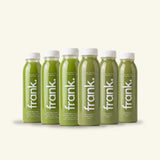
At frank., a cleanse day of the 3, 5 and 7 day cleanses consists of 6 cold-pressed juices of 330 ml with no added sugar. Depending on the variant that is about 680 to 930 kcal, so considerably less than the sample plan above. The sugar comes from fruit and vegetables themselves, but the amount shouldn't be underestimated.
| Variant | Energy per cleanse day | Carbohydrates (of which sugar) | Protein |
|---|---|---|---|
| Starter | 934 kcal | 174 g (160 g) | 17 g |
| Medium | 799 kcal | 137 g (124 g) | 21 g |
| Pro | 680 kcal | 108 g (97 g) | 23 g |
The brand recommends additionally drinking at least 1 litre of still water and/or herbal tea. A juice cleanse is not suitable for pregnant or breastfeeding women, children and people with a weakened immune system. If you want to try it, a 3 Day Juice Cleanse is a manageable start, after which you carry on with light, balanced food. If you have pre-existing conditions, eating disorders or take medication, talk to your doctor first.
What mistakes should you avoid?
The most common stumbling blocks are surprisingly everyday and can be avoided with a bit of planning.
- Too big a deficit: leads to cravings, tiredness and muscle loss.
- Skipping meals and overeating in the evening.
- Too little protein and fibre, so you're hungry again quickly.
- Forgetting drinks: juices, lattes and alcohol add up.
- All-or-nothing thinking: a slip-up is not failure, just carry on with the next meal.
If eating is mainly emotionally driven, Stopping emotional eating can help. If you suspect an eating disorder, please seek professional help.
Matching from frank.
All variants and the ingredients of the individual juices are in the Juice Cleanse collection. A cleanse does not replace a long-term meal plan and is not suitable for everyone.
You might also be interested in
- How many calories do you need per day to lose weight healthily?
- Losing weight healthily: nutrition, tips & recipes
- Basic rules for losing weight
Frequently asked questions about meal plan for weight loss
How many meals a day make sense?
Three main meals, with one or two snacks if needed, work well for many. More important than the number is that total calories and protein share fit.
Do I have to count calories?
Not necessarily, but in the first weeks it helps to get a feel for portions. Whether that makes sense for you is covered in our article on calorie counting.
May I eat carbohydrates when losing weight?
Yes, ideally in the form of wholegrain, legumes, potatoes and fruit. What matters is total energy, not giving up a nutrient group.
How quickly do you see results?
On the scale usually after 2 to 3 weeks, visible in the mirror often after 4 to 8 weeks. That depends on starting weight and consistency.
Is losing weight possible without sport?
Yes, diet is the most important lever. But exercise supports health, mood and preserving muscle and is helpful for long-term weight stability.
Note: This article is for general information and does not replace medical or therapeutic advice. If you have complaints, pre-existing conditions, are pregnant or take medication, please talk to your doctor first.