





























You've probably often heard that you should cut out fat. But honestly: fat is not the enemy! There are actually different types of fat that play different roles in your body. In this article, we clear up the differences between the various kinds of fat so you know what you can do for your body.
Fat: what is it, actually?
Let's bring in a little chemistry: fat, also known as "triglyceride", consists of glycerol bound to three fatty acids. Fatty acids get their name from a special acid group in their structure. The structure of these fatty acids determines what kind of fat it is. Saturated fatty acids have no double bonds in their structure, while unsaturated fatty acids have one or more of these double bonds. If there is only one double bond, they are called monounsaturated fatty acids. With several double bonds, they are polyunsaturated fatty acids.
What are trans fats?
And what about trans fats? Trans fats are a special type of unsaturated fatty acid in which the double bonds occur in a so-called "trans" position. This structure can arise through natural processes or during food processing. Trans fats are often found in processed foods and are considered less healthy.
Animal vs. plant fats
Then there's the difference between animal and plant fats. Animal fats come from meat, fish, dairy products and eggs. They are often rich in saturated fatty acids. Plant fats, on the other hand, come from seeds, grains, oil fruits like olives and avocados, and nuts. These are mostly rich in unsaturated fatty acids, which are considered healthier. So if you want to do your body some good, pay attention to which fats you eat.
Fat is an important part of our diet, as long as you choose the right sources and keep a balance.
Fat: what do we need it for?
Alongside carbohydrates and proteins, fat is one of the three basic building blocks of our diet, the so-called macronutrients. But what do we actually need it for? Fat is not only an important component of many types of tissue in our body, it also fulfils a number of vital functions. Your brain, for example, is largely made up of fat. Fat also protects our organs like soft padding against bumps and injuries. And think of cold winter days: fat helps our body regulate its temperature and keep us warm.
Fat is also the ultimate energy store. 1 kilogram of body fat can store around 7,000 kilocalories. That's a lot of energy for times when our body needs more of it. But that's not all: fat also helps with absorbing important vitamins like A, D, E and K, which can only be used properly in combination with fat. And it plays a key role in producing hormones that regulate our body.
Saturated fatty acids: the unhealthy fats?
Saturated fatty acids often have a reputation for being unhealthy. Many experts believe they increase the risk of cardiovascular disease because they can raise the "bad" LDL cholesterol in the blood. That can lead to atherosclerosis, a narrowing and hardening of the arteries. That's why it's often recommended to limit consumption of saturated fats, found in foods like red meat, butter, cheese, eggs and coconut oil, to a maximum of 10% of daily calories.
But lately there's more and more discussion about whether saturated fatty acids are really as bad as was long thought. Some scientists argue that the evidence for the harmful effects of saturated fatty acids isn't as clear-cut as it seems. There are over 20 different types of saturated fatty acids, and lumping them all together might be too simplistic. Either way, the debate goes on, and it'll be exciting to see what science finds out in future.
How healthy are unsaturated fatty acids?
Unsaturated fatty acids have a decisive advantage: their chemical structure makes them more flexible and healthier for your body. What exactly does that mean? Well, unsaturated fatty acids have at least one double bond in their molecular structure, which gives them the name "omega". When this double bond is at the third position, they are called omega-3 fatty acids. That's the simple logic behind names like omega-3, omega-6 and omega-9.
Omega-9 fatty acids, which you find in olive oil, rapeseed oil, avocados and nuts, are known for lowering the "bad" LDL cholesterol level and promoting the "good" HDL. That helps keep your heart healthy and can lower your risk of cardiovascular disease. Omega-3 and omega-6 fatty acids, found in foods like chia seeds, hemp oil and fish, are also extremely important. Fatty fish like salmon or mackerel in particular are an excellent source.
What's special about omega-3 and omega-6 fatty acids is that your body can't make them itself. That means you have to make sure you get enough of them through your diet. They play an important role in regulating inflammation in the body and may help reduce the risk of inflammatory conditions such as rheumatism.
So unsaturated fatty acids are real all-rounders in your diet. They contribute to general health and can also offer specific benefits, such as supporting heart health and promoting a healthy cholesterol level. So it's worth making sure you include enough unsaturated fatty acids in your daily meals.

How healthy are trans fats?
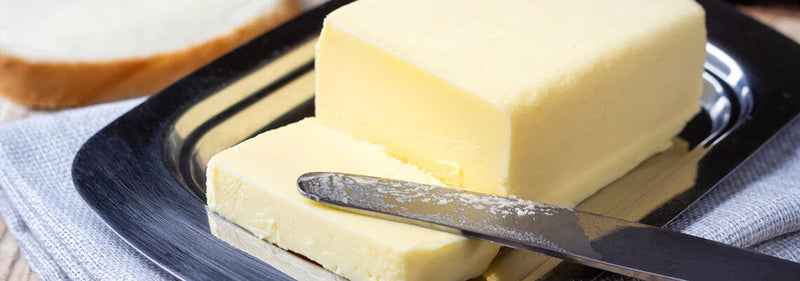
Trans fats are a special type of unsaturated fatty acid with a so-called "trans position". They often arise during the industrial hardening of otherwise healthy vegetable oils, a process that makes these oils solid and longer-lasting. That's why you find trans fats in products like butter and margarine. Trans fats can also form when vegetable oils are heated strongly, for example when deep-frying. That's why they're often found in highly processed foods like fast food, baked goods and snacks.
Trans fats are particularly problematic for your health. They can negatively affect your blood cholesterol levels by raising the "bad" LDL cholesterol and lowering the "good" HDL cholesterol. That significantly increases the risk of cardiovascular disease.
So you should try to avoid trans fats as much as you can. That means eating less highly processed food and more unprocessed, natural fat sources like avocados, nuts and seeds. That way, you make sure your body gets the healthiest fats it needs to work at its best.
Fats, yes, but in moderation
Pay attention! Food is very complex and can't be sorted into healthy and unhealthy. That applies to fat content too. Only the holistic effect of all the ingredients has a positive or negative effect on our health. With fats too, the dose makes the poison. A ratio of 1:2 between saturated and unsaturated fatty acids is recommended. Still, it's important to internalise that 9 kcal per gram is more than twice as energy-dense as proteins and carbohydrates. That means you can easily overdo fat. A high-fat diet can raise the risk of excess weight and cardiovascular disease. If you want to save calories, it can help to swap high-fat snacks for low-fat ones.
If, on the other hand, you want to change your whole diet for the long term and cut down on highly processed, high-fat foods, we recommend our juice cleanse as a kick-start, to break old habits and establish new routines.
The juice cleanses from frank. are tailored to all your needs. Choose a 1 day juice cleanse, or go for the 7 day juice cleanse instead. You can also extend our cleanses with BIOGENA food supplements into a gut cleanse, beauty cleanse or energy cleanse.
Fats, yes, but in moderation
When it comes to fats, as with many things in life, the amount is what counts. Food can't simply be sorted into "healthy" or "unhealthy", and that applies especially to fats. It's the overall effect of all the ingredients in a food that determines how it affects your health. For fats, a ratio of 1:2 between saturated and unsaturated fatty acids is recommended. That means you should eat twice as much unsaturated fatty acids. But be careful: at 9 kcal per gram, fats provide more than twice as much energy as proteins or carbohydrates. So it can easily happen that you eat more fat than your body needs. A high-fat diet can raise the risk of excess weight and cardiovascular disease.
If you want to save calories, it often helps to swap high-fat snacks for lower-fat alternatives. In the long run, you should aim to cut down on highly processed, high-fat foods. If you want to change your diet fundamentally, a juice cleanse can be a good start to break old habits and establish new routines.
Our juice cleanses at frank. are designed precisely to support you with this fresh start. Whether you choose a 3 day juice cleanse or a longer 7 day version, every cleanse is tailored to your needs. You can also combine them with BIOGENA food supplements to extend your cleanse into a gut cleanse, beauty cleanse or performance cleanse.


