Updated: October 2026
In short: Green juice usually consists of cucumber, apple, leafy greens like spinach and a splash of lemon. A basic recipe makes about 400 ml from 1 cucumber, 2 apples, a handful of spinach and 1/2 lemon. The NHS advises limiting juices and smoothies to 150 ml per day because pressing releases sugar. A green juice complements vegetables but doesn't replace them. As of October 2026.
Green juice looks healthy and often is, if you look at the ingredients. Here you'll find a recipe, the logic behind it and an honest assessment.
How do you make green juice yourself?
With a juicer you press the ingredients through the machine. Without a juicer, you blend everything with 100 ml of water in a blender and strain it through a fine sieve or cloth. The basic recipe makes approx. 400 ml.
| Ingredient | Amount | Role in the juice |
|---|---|---|
| Cucumber | 1 medium | Water, mild taste |
| Apple | 2 | Sweetness, acidity |
| Spinach | 1 handful (approx. 30 g) | Colour, leafy greens |
| Lemon | 1/2, peeled | Freshness, brightens |
| Ginger (optional) | 1 cm | Heat |
Order in the juicer: apple first, then spinach between pieces of cucumber, and the lemon last. That way the spinach doesn't get stuck in the chute.
The effort is manageable: washing and cutting takes about ten minutes, and cleaning the juicer a few more minutes. That's why many people stop after a few weeks. So plan realistically how often you'll press, and buy only as many vegetables as you use in your week.
Which ingredients belong in a green juice?
The base is water-rich vegetables, with fruit added for sweetness. The more vegetables, the less sugar, but the grassier the taste. Many people start with more apple and then gradually change over.
| Ingredient | Effect on taste | Note |
|---|---|---|
| Cucumber | mild, fresh | good base |
| Celery | tart, salty | use sparingly |
| Spinach | neutral to grassy | young leaves are milder |
| Kale | strong, bitter | balance with apple |
| Parsley, mint | aromatic | a small amount is enough |
| Apple, pear, pineapple | sweet | brings sugar |
You can read more about individual vegetable juices in the articles Cucumber Juice and Celery Juice.
How much green juice per day makes sense?
A small glass. The NHS limits fruit juice, vegetable juice and smoothies together to 150 ml per day. All of these drinks together count as only one portion of the 5 a day, no matter how much you drink.
The reason is sugar: pressing releases sugar from the cells, which can harm teeth. That's why the NHS advises drinking juice with meals. The basic recipe of 400 ml is therefore meant more for several people. Halve the amounts if you're pressing for yourself, and drink small glasses.
Worked example: 400 ml divided by 150 ml gives about 2.7 portions. If you drink two glasses, you're already over the recommendation.
What about the nutritional values of green juice?
Exact figures depend on variety, ripeness and ratio, which is why we give no invented calorie value for the homemade recipe. As a guide: the apple share provides most of the sugar, while cucumber and spinach mainly bring water and vitamins. Fibre is largely lost in juicing.
The NHS explains that fruit and vegetables are an important source of fibre, which helps keep the gut healthy and prevent constipation. In juice they are greatly reduced. If you want fibre, the blender without a sieve remains an alternative.
| Method | Fibre | Consistency |
|---|---|---|
| Juicer | greatly reduced | thin, clear |
| Blender without sieve | retained | thick, like a smoothie |
| Blender with sieve | reduced | medium |
More in the article Fibre: Why Eat a High-Fibre Diet.
A rule of thumb for comparison: half vegetables and half fruit is a good start, and later you can lower the fruit share bit by bit.
Which 3 variations will you try next?
Once the basic recipe is down, a change is worthwhile. Each variation changes the taste and the sugar level.
| Variation | Ingredients | Character |
|---|---|---|
| Mild | 2 apples, 1 cucumber, 1 handful of spinach, lemon | fruity, sweeter |
| Fresh and tart | 1 cucumber, 2 sticks of celery, 1 apple, parsley, lemon | little sugar, strong |
| Tropical | 1 cucumber, 1/4 pineapple, mint, lime | sweet, refreshing |
In the tropical version, the pineapple brings extra fruit sugar. You can read more about the nutritional values of pineapple juice in the article Pineapple Juice Effects.
Note down the variation you like best and keep the ratio. That gives you consistency without guessing every time.
How do you avoid the grassy taste?
With acidity and sweetness in the right ratio. Lemon, apple and a little ginger mask grassiness. Cool ingredients taste fresher.
- Start with more apple and less green, then increase.
- Press cold ingredients, drink the juice chilled.
- Use young spinach leaves, as they taste less bitter.
- A squeeze of lemon brightens and keeps the colour.
- Don't use too many types of cabbage at once.
Practical tip: press a bigger batch once a week, freeze the juice in portions and thaw it as needed. That's a kitchen tip, not a study result.
Who is green juice not suitable for?
Green juice is unproblematic for most people. Caution applies with diabetes because of the fruit sugar, with a sensitive stomach because of the acidity and with medications that are affected by diet. In that case, ask your doctor or pharmacist before you regularly drink large amounts of green leafy vegetables in juice form.
It also applies that a juice doesn't replace vegetables on your plate. The NHS recommends at least 400 g of fruit and vegetables a day, which is 5 portions of 80 g each. You'll find an overview of portions in the article 5 a Day: How to Eat More Fruit and Veg. How juice relates to whole fruit, you can read in Eating Fruit vs. Drinking Juice.
In practice that means for your day: a small glass of green juice at breakfast, with bread or oats, and vegetables on your plate at lunch and dinner. That way you use the juice as a supplement. If you travel a lot or have little time, reaching for a ready-made juice now and then is no step backwards.
Also make sure you drink enough water. Juice is no replacement for drinking water but an extra you enjoy consciously.
Matching picks from frank.
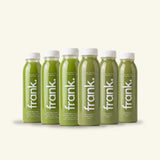
Don't feel like pressing? frank.'s Marvellous Greens combines apple, cucumber and spinach, among other things. Cold-pressed and high-pressure treated (HPP), vegan, no added sugar, 330 ml. A box of 8 costs €36 (as of October 2026), with a shelf life of about 14 days after delivery when chilled.
You might also like
- How Healthy Is Cucumber Juice - What Effects or Side Effects Can It Have?
- The Real Effect of Celery Juice That Makes It So Healthy
- Eating Fruit vs. Drinking Juice - Which Is Healthier?
Frequently asked questions about green juice
What goes into green juice?
Usually cucumber, apple, spinach and lemon, plus celery, ginger or herbs depending on taste.
Can I make green juice without a juicer?
Yes, with a blender and sieve. Blend everything with a little water and pour it through a fine sieve or cloth.
How much green juice can I drink per day?
The NHS recommends limiting juices and smoothies together to 150 ml per day.
Does green juice replace vegetables?
No. According to the NHS, all juices count as only one portion of the 5 a day, and fibre is largely lost in juicing.
How long does homemade green juice keep?
It tastes best freshly pressed. Store it airtight and chilled and drink it promptly, ideally on the same day.
Note: This article is for general information and is not a substitute for medical or therapeutic advice. If you have complaints, pre-existing conditions, are pregnant or take medication, please talk to your doctor first.