

















The cucumber is a refreshing vegetable that is popular in kitchens all over the world. It stands out for its high water content as well as its vitamins and minerals. Cucumber water and cucumber juice are also becoming more and more popular as refreshing drinks. But how healthy is cucumber really, and does it have side effects too?
In this article we take a detailed look at the nutrients in cucumber juice and also cover potential side effects. We'll also tell you which of our frank. juices contain cucumber.
What makes cucumbers so healthy?
Let's take a look at the ingredients and nutritional values of cucumber juice. Can the refreshing drink enrich our diet? And do the positive effects apply regardless of the type of cucumber? Are the nutritional values of the cucumber the same as in the juice?
Cucumbers contain a wide range of important nutrients. Besides minerals such as potassium and magnesium, they also contain vitamins. Freshly harvested cucumbers are a natural source of vitamin K and vitamin C. However, vitamin K is sensitive to light and oxygen, which means that the nutrient content in cucumber juice can decrease over time. That's why at frank. we take special care to process fresh cucumbers straight after harvest, and we use the gentle HPP process to minimise nutrient loss.
Cucumbers also contain secondary plant compounds that can play a role in your diet. Cucumber juice from organic farming is particularly rich in these valuable substances. For example, cucumbers contain flavonoids, which are found mainly in the skin. These compounds are known for their antioxidant properties.
Cucumbers are also an excellent source of fibre, especially when eaten whole. Fibre is important for your gut and helps support a healthy gut flora. The pectin in cucumbers is one such fibre, which is water-soluble and is broken down in the large intestine.

What side effects can cucumber juice have?
Cucumber juice can be a very easy-to-digest drink, but if you drink too much of it, it can also have some side effects. In some cases, excessive consumption of cucumber juice can lead to digestive problems such as bloating, diarrhoea or stomach cramps.
People with an allergy to cucumbers or other members of the gourd family, such as melons or zucchini, can react allergically to cucumber juice. For them, drinking it can cause symptoms such as itching, skin rash or breathing difficulties.
Cucumbers that are not grown organically can also contain pesticide residues. We recommend using organic cucumbers or washing cucumbers thoroughly to remove any pesticides. By the way: at frank. we only use organically grown and, wherever possible, regional fruit and vegetables!
Cucumber juice vs. cucumber water - what's the difference?
Cucumber juice and cucumber water are both made from cucumbers, but they differ in how they are prepared and in their properties.
Cucumber juice is made by juicing cucumbers and can contain more nutrients and fibre. The juice is usually filtered to remove the pulp and the solid parts of the cucumber, so that it is clear and liquid. Cucumber juice is often used as an ingredient in smoothies, cocktails and soups or simply drunk as a refreshing drink.
Cucumber water, on the other hand, is made by soaking cucumber slices in water and has a mild cucumber flavour. It is often used as a refreshing drink or as a base for salad dressings, marinades and sauces. It tends to contain fewer nutrients than cucumber juice, but it is low in calories and can help keep your body hydrated.
Overall, both drinks have their own advantages and can be enjoyed as part of a balanced diet. Cucumber juice can be richer in nutrients and fibre and may help support blood pressure, cholesterol levels and digestion.
How cucumber juice and co. are made
Which cucumbers are actually used to make cucumber juice, and how is it generally made? What are its nutritional values, and how much and how often should you drink cucumber juice? We'll answer these questions in the next section.
Which cucumber is used to make cucumber juice?
In principle, any cucumber can be used to make cucumber juice. However, it is important to use ripe, fresh and juicy cucumbers to get the best taste and the most nutrients. You should make sure to use organically grown cucumbers to reduce the level of any pesticide residues.
In the commercial production of cucumber juice, special salad cucumbers are often used, as they can have fewer seeds and a less bitter taste than other types of cucumber. But other types such as snake cucumbers or pickling cucumbers can also be used to make cucumber juice.

How is cucumber juice made?
Cucumber juice can be made in different ways, but in general there are two main methods: with a juicer or with a blender.
To make cucumber juice with a juicer, you need ripe, fresh and juicy cucumbers, ideally organic ones. Cut the cucumbers into pieces that fit into the juicer, then feed them in one after another. The juicer separates the pulp from the liquid and collects the juice in a container.
To make cucumber juice with a blender, you of course also need cucumbers. Cut them into smaller pieces and put them in the blender. Depending on your taste, you can add water or other ingredients, then blend everything thoroughly until it has a liquid consistency. Finally, you just need to strain the blended juice through a fine sieve to remove solid parts and cucumber seeds.
Whichever method you use, the juice can be refined with other ingredients such as lemon juice, mint or ginger. You can drink freshly made cucumber juice straight away, or keep it in a sealed container in the fridge for several days.
If you don't want to go to the trouble of making cucumber juice yourself, or you don't have the right tools, you can look out for our cold-pressed juices with cucumber juice either at selected supermarkets near you or in our online shop.
These are the nutritional values of cucumber juice
Cucumber juice can be an excellent source of various nutrients, including vitamins, minerals, antioxidants and fibre. The exact nutritional values of cucumber juice can vary depending on the method of preparation and additives, but here are the average nutritional values per 100 ml of cucumber juice:
- Calories: 10 kcal
- Carbohydrates: 2.2 g
- Protein: 0.5 g
- Fat: 0.1 g
- Fibre: 0.5 g
- Vitamin K: 16 mcg (20% of the recommended daily intake)
- Vitamin C: 1.2 mg (2% of the recommended daily intake)
- Magnesium: 14 mg (4% of the recommended daily intake)
- Potassium: 147 mg (3% of the recommended daily intake)
How much and how often should I drink cucumber juice?
There is no exact recommendation for how much cucumber juice to drink, as this depends on various factors, such as individual nutrient needs, state of health and weight.
In general, it is recommended to have a balanced diet made up of a variety of fresh fruit and vegetables, and cucumber juice can be part of that diet. A glass (approx. 250 ml) of cucumber juice a day can be beneficial as part of a balanced diet.
Cucumber juice in frank. products
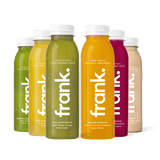
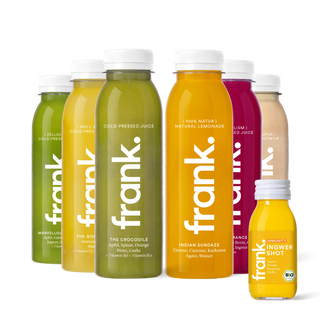
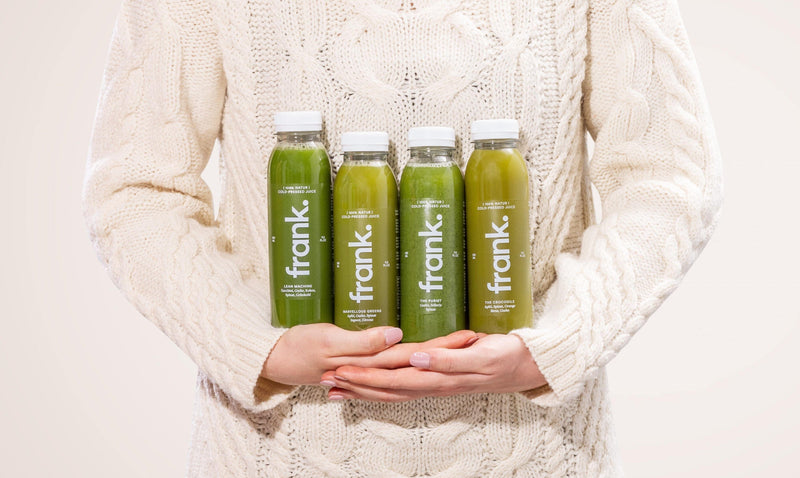
Here is an overview of the green juices from frank. that you can buy in our online shop. All green juices are also part of our various juice cleanses.
The Crocodile
The Crocodile is our fruity answer to classic green juices. Here the green components spinach and cucumber meet the fruity components apple, orange and pear. This juice is perfect for all fruit lovers who don't want to miss out on the benefits of green juices.

Marvellous Greens
Are green juices totally your thing? Then you'll love our juice Marvellous Greens! Every one of our bottles contains almost 2 kilos of greens. Alongside a vegetable content of 50%, made up of cucumber juice and spinach juice, apple, ginger and lemon round off our cold-pressed juice perfectly.

The Purist
The Purist is our first purely green juice and contains celery and spinach alongside the popular cucumber juice. This juice is an insider tip for anyone who needs even more variety during their juice cleanse and wants to add a savoury, non-fruity juice to their cleanse.

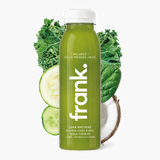
Lean Machine
This juice is our newest addition to the frank. family and to the juice cleanses, for example the 3 day one. Like The Purist, it is a purely green juice. This time, though, we dared to try new ingredients that you won't find in any other juice. Zucchini, cucumber, coconut water, spinach and kale come together in the juice Lean Machine for a very special taste experience!


