Updated: October 2026
In short: Sugar withdrawal can bring headaches, cravings, tiredness and digestive complaints, usually lasting a few days up to about two weeks. How strong it is varies from person to person. The WHO recommends limiting free sugars to under 10 percent of energy, which is about 50 grams at 2,000 kcal. Nobody has to live completely sugar-free; eating less is the core idea. As of: October 2026.
Sugar-free sounds strict. In everyday life, it usually means: significantly fewer free sugars. Here's what you can expect when you switch, what is documented and what is only anecdotal.
What does sugar-free actually mean?
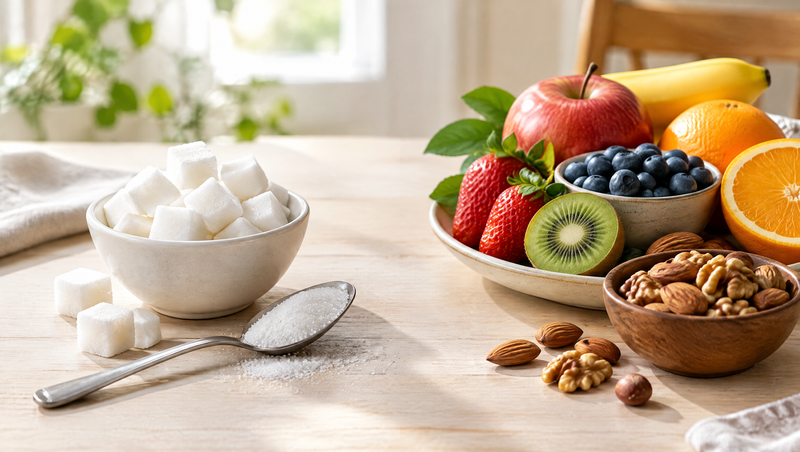
It usually means cutting out free sugars. These include sugar that manufacturers or you add yourself, as well as sugar in honey, syrup and fruit juices. Sugar in whole fruit, vegetables and milk doesn't count. That's how both the NHS and the WHO define it.
This matters for juices too: even a juice with no added sugar contains fruit sugar, which counts as a free sugar under this definition. The NHS advises limiting juice to 150 ml a day. You can read more about the differences in Sugar Is Not Just Sugar.
How much sugar a day is okay?
The WHO recommends limiting free sugars to less than 10 percent of energy intake, which is about 50 grams at 2,000 kcal. According to the WHO, less than 5 percent may bring additional benefit. The NHS gives a maximum of 30 grams for adults, which is about 7 cubes.
| Source | Limit for free sugars | At 2,000 kcal |
|---|---|---|
| WHO, recommendation | under 10% of energy | approx. 50 g |
| WHO, additional benefit | 5% or less | approx. 25 g |
| NHS (adults) | maximum 5% | 30 g |
For context: a single sweetened drink can make up a large part of this limit. The sum adds up quickly when you read labels.
A worked example: if you eat two pieces of cake, a glass of juice and a fruit yoghurt every day, you quickly exceed the NHS limit. If you only swap the yoghurt for plain yoghurt with fresh fruit, you already save a noticeable amount.
What symptoms does sugar withdrawal have?
Headaches, stomach complaints and changed digestion are often mentioned. Dietitian Samantha Coogan of UNLV also describes that symptoms usually last a few days to two weeks. According to anecdotal reports, cravings, tiredness, irritability and concentration problems are added to that.
Important for context: a clearly defined "sugar withdrawal syndrome" isn't conclusively proven in humans. Whether sugar is addictive in the strict sense is debated among experts. The symptoms probably also arise because habits, blood sugar patterns and eating behaviour all change at once. That doesn't make them any less real, but they are temporary.
In practice, it helps not to fight the symptoms but to accompany them: drink enough, eat regularly, go to bed early. In this phase, headaches can be linked to too little fluid or skipped meals, so drinking enough may help.
How does sugar withdrawal go day by day?
There is no fixed, scientifically proven timeline. The table summarises typical experiences, based on the UNLV information (a few days to two weeks) and common reports. For you, it may come sooner or later.
| Period | What many people report (anecdotal) |
|---|---|
| Day 1 to 3 | Cravings, headaches, irritability, tiredness. According to UNLV, taste can start to adjust within the first 3 days. |
| Day 4 to 7 | Cravings become more muted, energy still fluctuates |
| Week 2 | Symptoms fade for most people, fruit tastes sweeter |
| From week 3 to 4 | Habit established, cravings less frequent |
That's not a guarantee. If you ate a lot of sugar beforehand and stop abruptly, you usually feel it more than someone who cuts down gradually.
It makes sense not to schedule your first attempt in a stressful week. Prepare the first few days with fruit, nuts and unsweetened tea so you aren't improvising in front of the fridge at the moment of craving. Once you've played it through, you usually find your rhythm faster.
What helps against cravings when giving up sugar?
UNLV advises more water and substitutes such as fresh fruit. There are also tips that have proven themselves in everyday life.
- Eat regularly and combine protein and fibre so your blood sugar stays steady.
- Replace soft drinks with water or unsweetened tea. The NHS recommends exactly that.
- Read labels: sugar hides in sauces, muesli and yoghurt.
- Get enough sleep, because tiredness increases the desire for sweet things.
- Reduce step by step if going cold turkey doesn't work.
The WHO also points out that sugar shouldn't simply be replaced with sweeteners. Some experts suspect that sweeteners maintain the habituation to intense sweetness.
You'll find more on dealing with cravings in the article Cravings While Fasting: What Now?
What benefits does less sugar bring?
The NHS links high sugar consumption to weight gain, tooth decay and a higher risk of type 2 diabetes and cardiovascular disease. For teeth, it helps to limit sweet things to mealtimes.
Reports also mention better energy, sleep and skin. Those are experiences, and how much of it is documented varies. A realistic goal is: after a few weeks you notice that your need for sweet things falls. The effect is very visible when you change your drinks, because that's often where most of the sugar is.
At the same time: you don't have to be perfect. A piece of birthday cake won't throw you off. What counts is the average over weeks, not the single day. If you see every exception as failure, you rarely stick with it.
When should you seek medical advice about cutting out sugar?
If you have diabetes or take medication that lowers blood sugar, discuss any major change with your doctor beforehand. Medical advice also makes sense with eating disorders, pregnancy or severe symptoms such as persistent dizziness.
And please: sugar-free doesn't mean carbohydrate-free. Wholegrain, legumes, fruit and vegetables stay on the plate. Many people do best with an "almost sugar-free" rule, such as under 25 grams of free sugar per day, rather than absolute strictness.
Pairs well with frank.
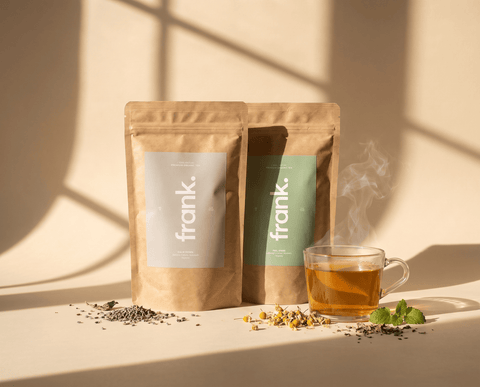
Herbal and fruit teas make an unsweetened alternative to soft drinks. In our collection Organic Teas you'll find loose teas from 15 EUR per 100 g (as of October 2026), which is about 20 to 33 cups depending on the variety. They can be drunk hot and cold without sugar; lemon or fresh mint rounds off the flavour.
You might also like
Frequently asked questions about living sugar-free
How long does sugar withdrawal last?
Usually a few days up to about two weeks. How long and how strong depends on how much sugar you ate beforehand and whether you cut down abruptly or gradually.
What are typical symptoms of sugar withdrawal?
Headaches, stomach complaints, changed digestion, cravings, tiredness and irritability are mentioned. A clearly defined withdrawal syndrome isn't conclusively proven in humans.
How much sugar can I eat per day?
The WHO recommends less than 10 percent of energy from free sugars, about 50 grams at 2,000 kcal, with additional benefit at 5 percent. The NHS gives a maximum of 30 grams for adults.
Does sugar in fruit count too?
Sugar in whole fruit doesn't count as free sugar. In fruit juice, honey and syrup, it does.
Are sweeteners a good alternative?
The WHO advises reducing free sugars without using sweeteners. The taste for sweetness then stays.
Is cutting out sugar safe without a doctor?
For healthy adults, usually yes. With diabetes, medication, pregnancy or an eating disorder, you should seek medical advice first.
Note: This article is for general information and does not replace medical or therapeutic advice. If you have symptoms or pre-existing conditions, are pregnant or take medication, please speak to your doctor first.