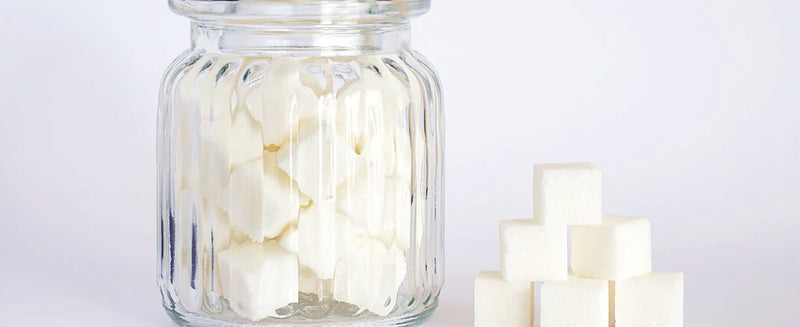
When people talk about sugar, many think of the classic white sugar we all have at home. But sugar comes in many different forms and so can have different effects on our body. We explain the differences between the various types of sugar and what effects they can have on your health.
What is sugar?
Sugar is simply another word for carbohydrates, and so one of the most important energy suppliers in our body. Without sugar, we wouldn't have the energy for bodily processes like breathing or our heartbeat, and our brain and muscles wouldn't have enough energy to keep building up either.
Types of sugar
Simple sugars
Simple sugar, also called a monosaccharide, consists of just one molecule and is the basis for double and multiple sugars. A characteristic of simple sugar is that the taste is very intense and sweet. Glucose, fructose and mucilage sugar are monosaccharides and are found in fruit and sweet drinks.
Simple sugar: fructose
Double sugars
Double sugar, known in technical language as a disaccharide, is similar to simple sugar in taste. You find it in household sugar, in milk sugar and in malt sugar. These types of sugar each consist of two simple sugar molecules.
Double sugar is also the basic building block of starch.
Multiple sugars
Polysaccharides, also called multiple sugars, have the least sweet taste and are found as starch in potatoes and grains, and as storage carbohydrate in the human and animal liver and in the muscles. The body is busiest with multiple sugar, because it first has to be broken down into its simple sugar building blocks. That's why it keeps you full for longer and doesn't need much insulin. In the long run that's also healthier, as it takes pressure off the pancreas.
Fructose vs. household sugar
Fructose
Fructose depends on insulin, because otherwise it can't be broken down. When consumed in large amounts, fructose can lead to bloating, stomach ache and diarrhoea. Many people also suffer from fructose intolerance. Fructose goes straight to the liver, where it is converted into fat. It also inhibits the satiety hormone leptin, which means the feeling of fullness is missing. Fructose is found mainly in fruit. Raisins and bananas in particular have a high fructose content. That doesn't mean you should stop eating fruit from now on, but as so often, the amount is what matters.
Household sugar
Household sugar is beet sugar that consists of 50% glucose and 50% fructose. During digestion it is broken down into its individual components and processed further. Household sugar is the normal sugar you can buy in the supermarket. It comes in brown, white and refined varieties.
Consequences of consuming too much sugar
The consequences of consuming too much sugar can include health problems such as diabetes or non-alcoholic fatty liver. It can also lead to gut problems, as an imbalance arises between the good and bad gut bacteria. Besides the physical consequences, too much sugar leads, through the rapid rise and fall of blood sugar levels, to concentration problems and cravings, which in the long run can lead to excess weight.
Alternatives to sugar
If you don't want to give up a certain sweetness in your tea, coffee or cake, you have various alternatives to choose from. For example, you can reach for honey or agave syrup. Dates, which you can blend into a purée, are also very popular.
When people talk about sugar, many think of the classic white sugar we all have at home. But sugar can take many different forms and so have different effects on our body. We explain the differences between the various types of sugar and what effects they can have on your health.
What is sugar?
Sugar is simply another word for carbohydrates and so one of the most important energy suppliers in our body. Without sugar we wouldn't have energy for bodily processes such as breathing or the heartbeat, and our brain and muscles wouldn't have enough energy to keep building up either.
Types of sugar
Simple sugars
Simple sugar, also called a monosaccharide, consists of just one molecule and forms the basis for double and multiple sugars. A feature of simple sugar is that the taste is very intense and sweet. Glucose, fructose and galactose are monosaccharides and are found in fruit and sweet drinks.

Simple sugar: fructose
Double sugars
Double sugar, called a disaccharide in technical language, is similar to simple sugar in taste. You find it in household sugar, milk sugar and malt sugar. These types of sugar each consist of two simple sugar molecules.
Double sugar is also the basic building block of starch.
Multiple sugars
Polysaccharides, also called multiple sugars, have the least sweet taste and are found as starch in potatoes and grain, and as a storage carbohydrate in human and animal livers and in muscles. The body is busiest with multiple sugars, since it first has to break them down into their simple sugar building blocks. That is why they keep you full for longer and don't need much insulin. In the long run that is also healthier, because it takes the strain off the pancreas.
Fructose vs. household sugar
Fructose
Fructose depends on insulin, because otherwise it cannot be broken down. When consumed in large amounts, fructose can lead to bloating, stomach ache and diarrhoea. Many people also suffer from fructose intolerance. Fructose is carried straight to the liver, where it is converted into fat. It also inhibits the satiety hormone leptin, which means the feeling of fullness is missing. Fructose is found mainly in fruit. Raisins and bananas in particular have a high fructose content. That doesn't mean you should stop eating fruit from now on, but, as so often, the amount is what counts.
Household sugar
Household sugar is beet sugar consisting of 50% glucose and 50% fructose. During digestion it is broken down into its individual components and used further. Household sugar is known as the normal sugar you can buy in the supermarket. It comes in brown, white and refined varieties.
Consequences of consuming too much sugar
The consequences of too high a sugar intake can include health problems such as diabetes or non-alcoholic fatty liver. It can also lead to gut problems, because an imbalance arises between the good and bad gut bacteria. Besides the physical consequences, too much sugar, through the rapid rise and fall of blood sugar levels, leads to difficulty concentrating and food cravings, which in the long run can lead to being overweight.
Alternatives to sugar
If you don't want to go without a certain sweetness in tea, coffee or cake, there are various alternatives to choose from. For example, you can reach for honey or agave syrup. Dates, which you can blend, are also very popular.