Updated: October 2026
In short: Pineapple juice contains bromelain, a group of enzymes that studies examine in connection with digestion and inflammation. According to Healthline, one cup (250 g) provides about 132 kcal, 25 g of sugar and plenty of vitamin C. At the same time, pineapple juice has little fibre, which is why a small glass makes more sense than a large one. As of October 2026.
Pineapple juice tastes sweet and tropical. Here you'll see what's in it, what bromelain really is and why the amount counts.
What's in pineapple juice?
Pineapple juice mainly provides water, fruit sugar and vitamin C, plus minerals such as manganese and copper. Healthline gives the following values for one cup (250 g).
| Nutrient | per cup (250 g) |
|---|---|
| Calories | 132 kcal |
| Carbohydrates | 32 g, of which 25 g sugar |
| Vitamin C | 122% of the daily requirement |
| Manganese | 55% of the daily requirement |
| Copper | 19% of the daily requirement |
Worked example: 25 g of sugar equals about eight sugar cubes, even though it's sugar from the fruit. A small glass of 150 ml correspondingly has less, calculated at around 15 g.
For context: the values apply to shop-bought juice and vary by variety, ripeness and production. Juice from concentrate can differ from not-from-concentrate juice. The percentages refer to the daily requirement by US standards, as Healthline gives them.
Good to know: vitamin C is sensitive to heat and light. Freshly pressed and stored cool, more of it is retained than after standing for a long time. That applies to all fruit juices, not just pineapple.
What is bromelain and what can it do?
Bromelain is a group of enzymes found in pineapple. Healthline describes that bromelain is linked with benefits such as less inflammation, better digestion and stronger immunity, and that research in humans is still limited. Studies examine these effects; much of it comes from lab and animal experiments.
Important for putting it in context: studies often use bromelain supplements, not a glass of juice. How much bromelain reaches the juice depends on variety, processing and heating. Enzymes are generally sensitive to heat. We don't give a fixed figure because we have no verified source for it.
Does pineapple juice help digestion?
Bromelain can break down proteins, which is why many assume it helps with heavy food. Healthline lists digestion among the benefits studied. For juice in everyday life, little is proven. If you eat a bit of pineapple after a rich protein meal, you may be doing yourself some good, but it doesn't replace a balanced diet.
If you want to support digestion, fibre, fluid and exercise help much more reliably. You can read more in the article Fibre: Why Eat a High-Fibre Diet.
In practice that means: enjoy pineapple juice for the taste, not for an enzyme promise. If you have digestive problems that last longer, they belong in a doctor's hands.
How do you use pineapple juice sensibly in everyday life?
As an ingredient rather than a thirst quencher. Pineapple brings sweetness and acidity to drinks and dishes without needing much. A splash of pineapple juice in water with mint is a fresh option that brings less sugar than a full glass neat.
| Idea | Amount | Why it works |
|---|---|---|
| Spritzer with water and mint | 50 ml juice to 200 ml water | less sugar per glass |
| Marinade for vegetables or tofu | 2 to 3 tablespoons | acidity and sweetness in the flavour |
| At breakfast with oats | a small glass with the meal | sugar together with fibre |
| After sport | small glass with food | fluid and carbohydrates |
The trick behind it: when juice comes with a meal, it is less harmful to teeth than between meals, according to the NHS. And with fibre from oats or wholemeal bread, the amount is better tolerated.
Practical tip: buy juice with no added sugar and look at the ingredient list. With not-from-concentrate juice, only pineapple is listed; with nectar, often water and sugar. You can read what a nectar is in the article What Is Nectar Juice?
What side effects can pineapple juice have?
For most people, pineapple juice is unproblematic. Healthline points out that it contains little fibre and lots of sugar and that high consumption may increase the risk of illness. Then there's acidity: with a sensitive stomach, heartburn or reflux, pineapple juice can be bothersome.
- High sugar content: limit the amount, especially with diabetes.
- Acidity: with heartburn, drink it with a meal or dilute it.
- Teeth: the NHS says juice sugar can damage teeth, so only with meals.
- Allergies: if you are allergic to pineapple, avoid pineapple juice.
If you take medication, especially blood thinners or antibiotics, ask at the pharmacy first. We have no verified source on bromelain interactions, so we make no statement here.
If you have diabetes or watch your blood sugar, always discuss juice with your doctor, because fruit sugar from juice also raises blood sugar. The same goes for children: for them the amount is set even smaller. And if you want to lose weight, you save more calories with the whole fruit or with water than with juice, without giving up flavour.
An example for one day: a small glass at breakfast, otherwise water and unsweetened tea. That way you stay within the recommendation and enjoy the juice consciously.
How much pineapple juice per day is okay?
A small glass is enough. Healthline advises limiting juice to at most 5 ounces (about 150 ml) a day. The NHS gives 150 ml per day as the overall upper limit for fruit juice, vegetable juice and smoothies combined. So both sources fit together.
| Amount | approximate amount of sugar | Assessment |
|---|---|---|
| 150 ml | approx. 15 g (derived from 25 g per 250 ml) | one portion |
| 250 ml (cup) | 25 g | well above the recommendation |
Buying tip: choose juice with no added sugar, as Healthline recommends, and look at the ingredient list.
Pineapple juice or fresh pineapple: which is better?
The whole fruit has more fibre, keeps you full longer and provides less sugar per portion. The NHS explains that pressing releases sugar, which harms teeth more than the sugar in whole fruit. A glass of juice therefore doesn't replace a portion of fruit in the full sense: all juices and smoothies together count as only one portion of the 5 a day.
You can read more on the comparison in the article Eating Fruit vs. Drinking Juice.
Matching picks from frank.
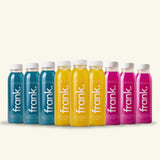
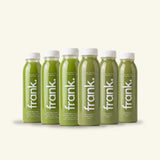
If you like pineapple in your juice: frank.'s The Good Life combines mint and pineapple. Cold-pressed and high-pressure treated (HPP), vegan, no added sugar, 330 ml. A box of 8 costs €36 (as of October 2026), with a shelf life of about 14 days after delivery when chilled. At 330 ml, the bottle is bigger than the 150 ml daily recommendation, so feel free to split it.
You might also like
- Eating Fruit vs. Drinking Juice - Which Is Healthier?
- The Ultimate Juice Guide: Everything You Need to Know About Fresh Juices!
- What Does HPP Juice Mean and How Does the Process Work?
Frequently asked questions about pineapple juice effects
Is pineapple juice healthy?
In small amounts yes, it provides vitamin C and manganese. But it contains little fibre and lots of sugar, so you should limit the amount.
How much sugar does pineapple juice have?
According to Healthline, about 25 g per cup (250 g). At 150 ml it works out at around 15 g.
What is bromelain?
A group of enzymes from pineapple. Studies look at effects on digestion and inflammation; research in humans is limited.
What side effects does pineapple juice have?
Possible complaints are heartburn from the acidity, a tingling mouth and strain on teeth from the sugar. Avoid if you are allergic to pineapple.
How much pineapple juice can I drink per day?
Healthline and the NHS both name about 150 ml per day as a sensible upper limit.
Note: This article is for general information and is not a substitute for medical or therapeutic advice. If you have complaints, pre-existing conditions, are pregnant or take medication, please talk to your doctor first.