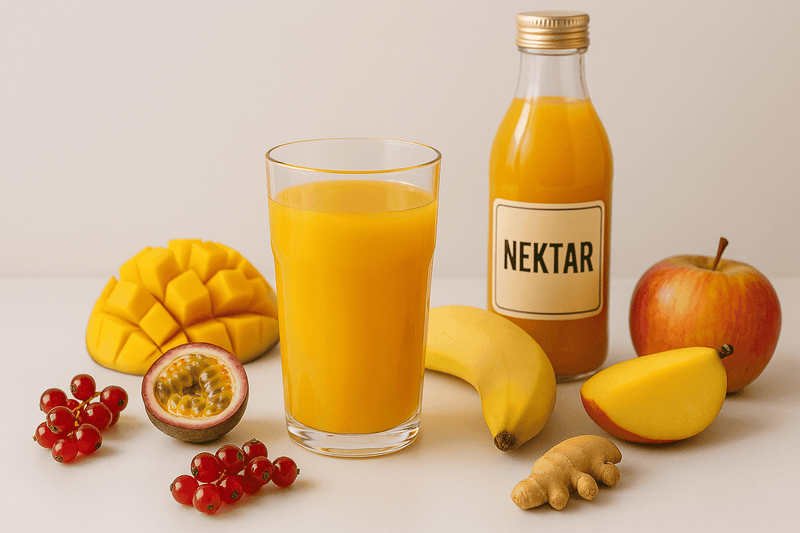
Nectar juice is a popular drink made from various fruits. There are lots of questions about how it's made, its fruit content and its health aspects. Fruit juices, which nectar juice is often grouped with, are made up of 100% fruit and come in different types such as not-from-concentrate juice and fruit juice concentrate, each subject to different legal requirements. In this article we'll sum up the most important information about nectar juice.
Key takeaways
-
Nectar juice contains between 25% and 50% fruit, depending on the type of fruit.
-
Added sugar is allowed, up to 20%, to improve the taste.
-
Nectar is often made from fruits with a lot of pulp or high acidity.
-
The fruit content of nectar is regulated by law and varies by fruit.
-
Nectar juice is a good alternative to pure juice, especially for fruits that are hard to enjoy on their own.
Definition and production of nectar juice
What is nectar juice?
Nectar juice is a fruit juice drink made from a mixture of fruit juice, water and sugar. It usually contains between 25% and 50% fruit, depending on the fruit used. Nectar is often made from fruits that are either very sour or contain a lot of pulp, which makes it hard to produce pure juice.
How is nectar juice made?
Nectar juice is made in several steps:
-
Selecting the fruit: Only certain fruits, such as apples or mangoes, are used for nectar production. Juices can be made from both fruit and vegetables, and they must consist 100 percent of the pulp or juice of the fruit or vegetables in question.
-
Pressing: The fruit is pressed to extract the juice.
-
Mixing: The extracted juice is mixed with water and sugar to reach the desired taste.
-
Bottling: The nectar is filled into bottles and is ready for sale.
Differences between nectar and juice
The main difference between nectar and juice is the fruit content. While fruit juice always has 100% fruit, nectar can have a minimum share of just 25% to 50%. Nectar may also contain up to 20% sugar, which makes it sweeter than pure juice.
|
Drink |
Fruit content |
Added sugar |
Water share |
|---|---|---|---|
|
Fruit juice |
100% |
0% |
0% |
|
Nectar |
25-50% |
up to 20% |
The rest |
Fruit content and ingredients in nectar juice
Minimum fruit content in nectar juice
The minimum fruit content in nectar is regulated by law and varies by fruit. Here are the key points:
-
Fruits with high juice content (e.g. apples, oranges): at least 50% fruit content.
-
Acidic fruits (e.g. limes, blackberries): between 25% and 50% fruit content.
-
Fruits with a lot of pulp (e.g. bananas, mangoes): at least 25% fruit content.
|
Type of fruit |
Minimum fruit content |
|---|---|
|
High juice content (apples) |
50% |
|
Acidic fruits |
25% - 50% |
|
Pulpy fruits |
25% |
Added sugar and other ingredients
Nectar can contain up to 20% sugar. Different types of sugar, such as glucose, fructose and sucrose, can be added to nectar juice. In addition, ingredients such as citric acid or ascorbic acid may be added to improve the taste. What matters is that all ingredients are clearly declared.
Legal regulations in Germany
In Germany there are strict rules governing the fruit content and ingredients of nectar. These rules make sure consumers know exactly what they're drinking.
"Quality and fruit content are decisive for the enjoyment of nectar."
One example is the Vaihingen passion fruit nectar, which has a fruit content of at least 25% and is known for its delicious taste.
In summary, nectar is a mixture of fruit, water and sugar with different minimum contents depending on the type of fruit. The legal rules help ensure quality and transparency for consumers.
Why is nectar made from certain fruits?
Fruits with high acidity
One reason why nectar is made from certain fruits is acidity. Fruits such as redcurrants or wild blueberries are very sour and not directly enjoyable. To get a pleasant taste, the juice is diluted with water. That makes nectar a tasty alternative.
Fruits with a lot of pulp
Another reason is that some fruits contain a lot of pulp, such as mangoes and bananas. These fruits don't yield enough juice to be sold as pure juice. So nectar is made here too, to improve the consistency and optimise the taste.
Examples of typical nectar fruits
Here are some examples of fruits that nectar is often made from:
-
Currants: High acidity, so often made into nectar.
-
Mangoes: Lots of pulp, which makes the juice thick.
-
Bananas: Low liquid content, so nectar here too.
These fruits fall into the category of those that, thanks to their ideal acid-sugar balance, are particularly well suited to juice production.
|
Fruit |
Minimum fruit content |
Reason for making nectar |
|---|---|---|
|
Currants |
25-50% |
High acidity |
|
Mangoes |
25% |
Lots of pulp |
|
Bananas |
25% |
Low liquid content |
|
Nectar is a good way to enjoy the flavour variety of fruits that aren't suitable as pure juice. |
|
|
|
By making nectar, we can expand the variety of fruit drinks and boost enjoyment for consumers at the same time. |
|
|
Nectar juice compared to other fruit drinks
Nectar vs. fruit juice drink
Nectar and fruit juice drinks are two different kinds of fruit drinks. The main difference is the fruit content. While fruit juice always contains 100% fruit, nectar consists of 25% to 50% fruit, water and up to 20% sugar. This often makes nectar sweeter and less intense in flavour than pure fruit juice.
Nectar vs. not-from-concentrate juice
Not-from-concentrate juice is pressed directly from fresh fruit and contains no additives. In contrast, nectar contains water as well as fruit juice and may have up to 20 percent sugar added to round off the taste. This is why nectar is often seen as less healthy, even though in many cases it's a tasty alternative.
Quality differences and taste
The quality of nectar can vary a lot. Here are some points to keep in mind:
-
Fruit content: The higher the fruit content, the better the quality.
-
Added sugar: Check how much sugar has been added.
-
Additives: Some nectars contain extra flavourings or preservatives.
|
Drink |
Fruit content |
Added sugar |
Additives |
|---|---|---|---|
|
Not-from-concentrate juice |
100% |
0% |
None |
|
Nectar |
25-50% |
Up to 20% |
Possible flavourings |
|
Fruit juice drink |
Variable |
Up to 10% |
Possible flavourings |
Nectar is a popular choice, especially when the fruits are very sour or contain a lot of pulp.
Overall, it's important to check the ingredients when buying nectar so you can make an informed decision. The choice between nectar and other fruit juices often depends on personal preference and the taste you want.
Health aspects of nectar juice
Nutrients in nectar juice
Nectar juice contains many important nutrients that are good for our body. It provides vitamins and minerals that can contribute to health. Here are some of the most common nutrients in nectar:
-
Vitamin C
-
Potassium
-
Antioxidants
Calorie content and sugar
The calorie content of nectar juice can vary, depending on the fruit and added sugar. On average, nectar contains around 50-70 calories per 100 ml. It's important to note that nectar often contains added sugar, which raises the calorie content. According to one study, both orange juice and apple juice have similarly high sugar contents, at around 10 grams of sugar per 100 grams.
Nectar juice in a balanced diet
Nectar can be part of a balanced diet, but should be consumed in moderation. Here are a few tips:
-
Pay attention to the fruit content.
-
Choose nectar without added sugar.
-
Combine nectar with water or other drinks to reduce the sugar content.
Nectar juice can be a tasty addition to your diet, but excessive consumption can lead to a high sugar intake. It's important to watch the amount and enjoy nectar as part of a varied diet.
Tips for buying and consuming nectar juice
What to look for when buying
There are a few important points to keep in mind when buying nectar juice:
-
Fruit content: Make sure the nectar has a minimum fruit content of 25 to 50 percent, depending on the type of fruit.
-
Added sugar: Check the ingredients list for added sugar. Nectar can contain up to 20% sugar, which can affect the taste.
-
Labelling: Look at the labelling to make sure no unwanted additives are included.
Storage and shelf life
To keep nectar juice at its best quality, keep the following tips in mind:
-
Store cool: Keep nectar juice in the fridge to preserve freshness.
-
After opening: After opening, nectar should be consumed within 3-5 days.
-
Packaging: Make sure the packaging is undamaged to ensure a long shelf life.
Combinations and recipes with nectar juice
Nectar juice can be used in many ways. Here are a few ideas:
-
Smoothies: Blend nectar with yoghurt and fresh fruit for a tasty smoothie.
-
Cocktails: Use nectar as a base for fruity cocktails.
-
Spritzers: Mix nectar with sparkling water for a refreshing spritzer.
Nectar juice isn't just tasty, it's also a healthy addition to your diet. Enjoy it in moderation and vary how you use it!
Popular nectar juice varieties and what makes them special
Orange and apple nectar
Orange and apple nectar are two of the best-known nectar varieties. Orange nectar is made from fresh oranges and has a fruity taste that appeals to many people. Apple nectar, on the other hand, is sweet and refreshing, ideal for everyday enjoyment. Both nectars contain at least 50% fruit content, which makes them a popular choice.
Exotic nectar varieties
Exotic nectar varieties such as mango and passion fruit nectar are also very popular. Passion fruit juice is made from passion fruits and is known for its sweet yet pleasantly sour taste. These nectars offer a varied taste experience and are perfect for special occasions or as a refreshing drink on hot days.
Regional specialities
In Germany there are also many regional nectar varieties, often made from local fruit. They include:
-
Currant nectar
-
Raspberry nectar
-
Pear nectar
These nectars aren't just tasty, they also support local farming.
Nectar is a great way to enjoy the variety of fruit while also making use of the benefits of fruit juices.
Overall, nectars offer a wide range of flavours and are an excellent choice for anyone who loves fruity drinks!
Conclusion on nectar juice
In summary, nectar is a tasty and versatile drink choice made from various fruits. Unlike pure fruit juice, nectar contains less fruit and often sugar or water to improve the taste. This makes it especially suitable for fruits that are naturally very sour or thick. Nectar is a good way to enjoy different fruit flavours, even if it doesn't have the same purity as 100% juice. So if you're looking for a fruity drink, nectar is a tasty option you should try.
Frequently asked questions
What is nectar juice?
Nectar juice is a drink made from fruit pulp, water and often sugar. It contains less fruit than pure juice.
How is nectar juice made?
Nectar juice is made by mixing fruit pulp with water and sugar. This helps improve the taste and change the consistency.
What minimum fruit content applies to nectar?
The minimum fruit content for nectar is between 25% and 50%, depending on the fruit. That means nectar isn't made purely from fruit.
What are the differences between nectar and not-from-concentrate juice?
Nectar contains water and sugar, while not-from-concentrate juice is 100% fruit. Not-from-concentrate juice is pressed straight after harvest.
Why is nectar made from certain fruits?
Some fruits are very sour or have a lot of pulp, which makes them hard to enjoy as pure juice. Nectar makes them tastier.
How can I best store nectar juice?
Nectar juice should be stored cool and dark. After opening, it should be kept in the fridge and used up within a few days.