Updated: October 2026
In short: In everyday life, you can mainly influence your testosterone level indirectly: enough sleep, strength training, a healthy body weight and little alcohol are the best-supported factors. Zinc and vitamin D only help if a deficiency has been confirmed. So-called booster supplements are mostly unproven. If you suspect a deficiency, a doctor can clarify this with a blood test. As of October 2026.
There are lots of promises circulating around testosterone. Here's what holds up to scrutiny and when it's better to get it checked by a doctor.
What does testosterone do in the body?
Testosterone is the main male sex hormone, but it also occurs in smaller amounts in women. It influences muscle mass, bone density, body hair, libido, mood and the production of red blood cells. The level fluctuates over the course of the day and is highest in the morning.
With age, the level usually falls slowly. This is normal and doesn't automatically lead to symptoms. Which values count as normal is defined differently by different labs, and a single value on its own says little.
Important for putting it in context: it's not the absolute value that counts, but whether symptoms are present and whether the value is repeatedly well below the reference range. Many men with a value at the lower end of normal have no problems at all.
How can you boost testosterone naturally?
In everyday life, you can't achieve a strong increase beyond your own normal range. But you can create conditions that prevent a low level. These factors are the best studied:
| Factor | What is known | Practical tip |
|---|---|---|
| Sleep | Long-term lack of sleep lowers the level | 7 to 9 hours, regular times |
| Strength training | Works in the short term, in the long term mainly through muscle building | 2 to 3 sessions a week |
| Body weight | Excess weight is linked to a lower level | Lose weight slowly, no crash |
| Alcohol | High consumption can lower the level | Only occasionally |
| Chronic stress | Raised cortisol can have an unfavourable effect | Breaks, exercise, recovery |
In strength training, basic exercises such as squats, deadlifts, bench press and rows count. Give yourself at least one day off between sessions and increase the weights slowly. Too much volume without recovery brings no advantage. Excess weight has an effect through fat tissue, which converts some testosterone into oestrogen. If you lose weight slowly, you often improve your level too. You'll find guidance in the article Basic Rules of Weight Loss.
How important are sleep and stress?
Very important: in controlled studies, the testosterone level of healthy men dropped noticeably after a few nights of only five hours of sleep. A large part of daily hormone production takes place during sleep. You can read more in the article Sleep: The Effect of Sleep on Your Body and in Sleep Deprivation and Body Weight.
Ongoing stress plays a part too. You'll find tips for reducing it in the article Stress Symptoms: 5 Tips to Reduce Stress.
In practice: go to bed at the same time if possible, keep the bedroom cool and dark and keep screens off for an hour beforehand. If you snore or are very tired during the day, sleep apnoea may be behind it, which also disrupts hormone levels and should be checked by a doctor.
Do zinc, vitamin D and other nutrients help?
Only if there is actually a deficiency. Zinc is involved in hormone metabolism, and vitamin D is linked to the hormone system. In people without a deficiency, additional intake showed no reliable effect on testosterone levels in studies. So have your blood values checked beforehand.
- Zinc: found in pumpkin seeds, oats, legumes, meat and cheese. Doses that are too high interfere with copper absorption.
- Vitamin D: sunlight, oily fish, and in the dark season possibly a supplement based on your blood value. Read more in the article The Sunshine Vitamin D.
- Protein and healthy fats: An adequate intake supports training and hormone production. Extreme diets with very little fat can lower the level.
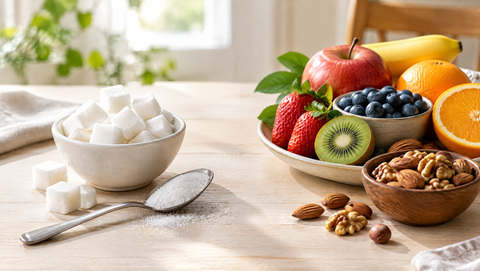
A varied diet with lots of vegetables, whole grains, legumes, nuts and fish usually covers the need for these nutrients. If you eat mostly plant-based, pay particular attention to zinc and vitamin B12 and have your levels checked occasionally.
What myths are there around testosterone boosters?
Many products advertise tribulus, fenugreek, maca or D-aspartic acid. For these substances there are only a few, contradictory studies, and a reliable rise in testosterone in healthy men has not been shown. Over-the-counter boosters therefore often don't deliver what the advertising promises.
The same applies here: more training is not automatically better. Extreme endurance load and too little recovery can lower the level instead. Anabolic steroids and self-bought hormones are risky: they can suppress your own production permanently and impair fertility.
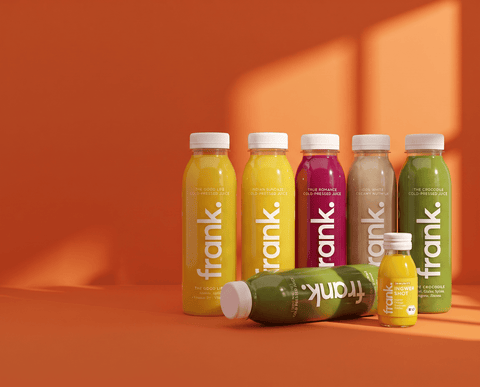
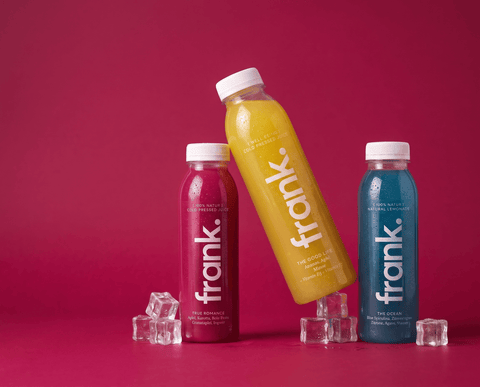
Better to rely on the foundation of sleep, training and food. If you'd like to get fruit and vegetables into your day more easily, juices are also an option.
When should you see a doctor?
See a doctor if you've had persistent tiredness, clearly reduced desire, erection problems, low moods, muscle loss or sleep problems for a while. These complaints have many causes, and a testosterone deficiency is only one of them.
The diagnosis relies on typical symptoms and at least two blood values measured fasting in the morning. Treatment with hormones belongs in medical hands.
Also go if you notice testicular pain, lumps, sudden hair loss or breast growth. It's best to bring a list of your symptoms and name all medications you take. Some medications, such as opioids or steroids, lower the level.
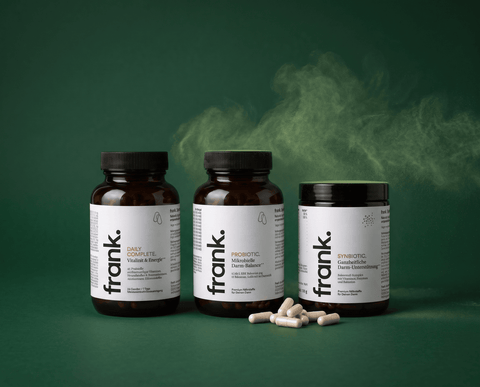
Matching picks from frank.
A balanced diet with plenty of vegetables is the basis for energy and a healthy body weight. If you want to top up vegetables and fruit in your day without fuss, take a look at our cold-pressed juices. That is a practical addition, not a means of influencing hormones.
You might also like
- Sleep - The Effect of Sleep on Your Body
- How Sleep Deprivation Can Affect Your Body Weight
- Stress Symptoms - 5 Tips to Reduce Stress
Frequently asked questions about boosting testosterone
How high should the testosterone level be?
Reference ranges differ by lab and age. More important than a single value is an assessment by a doctor together with your symptoms.
Which foods increase testosterone?
No single food demonstrably raises the level. A balanced diet with enough protein, zinc and healthy fats does, however, support normal production.
Does alcohol lower testosterone levels?
Regular, high consumption can lower the level. Occasional, low consumption plays a smaller role.
Can I boost testosterone as a woman?
Women have much less testosterone, and a deficiency is rare. With symptoms such as cycle disturbances, a gynaecologist should check hormone levels.
How long does it take for sleep or training to work?
Improvements usually only show in symptoms and levels after several weeks. Expect two to three months.
Note: This article is for general information and is not a substitute for medical or therapeutic advice. If you have complaints, pre-existing conditions, are pregnant or take medication, please talk to your doctor first.