













By Anna Gellert, M.Sc., nutrition scientist · Medically and technically reviewed
In short: Beetroot juice is rich in folate, potassium, iron and natural nitrates as well as betanin, the deep red pigment. It is considered a popular drink around sport and circulation. For most people, about one glass (200 to 250 ml) a day is a good guideline; if you are prone to kidney stones, you should keep an eye on the oxalate content.
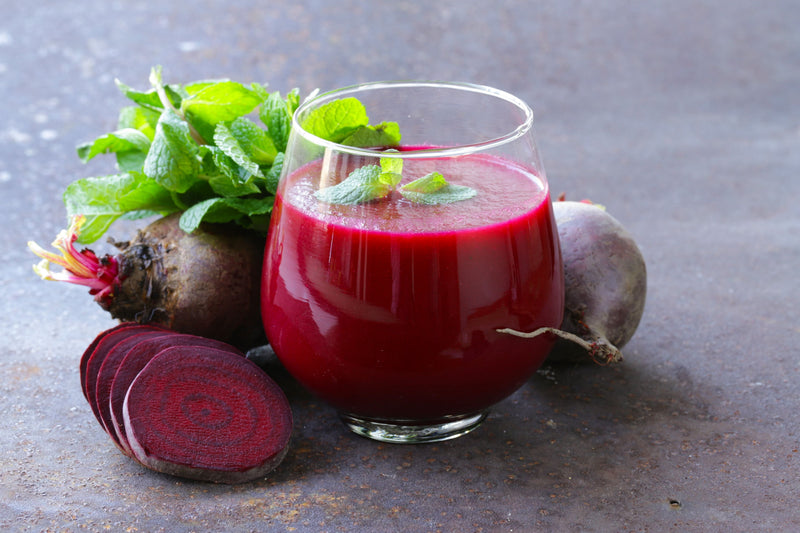
What looks like a clump of earth on the outside, is deep red to pink on the inside and stains everything it touches? We're talking about beetroot, of course! Whether as juice, as a whole bulb, as a salad or as a natural colouring: the red root is versatile and shows its colour and effect wherever it is used. By now there are many foods that contain beetroot, and beetroot is also very often used as a natural colouring. And in the end, the winter vegetable has won our hearts too.
If beetroot is a root and therefore a vegetable, it must be healthy, right? In this article we give you the answer to that question, looking not only at the ingredients of the red beet but at everything around the topic of beetroot juice. Spoiler: we can't tell you, unfortunately, whether "rote Bete" or "rote Beete" is the more popular spelling in German - so in the following article we only use one variant and, for clarity, drop the spelling "rote Beete".
Besides the answer to how to make beetroot juice, you'll also find out when and how much of the juice you should drink, the positive and negative effects of the juice, and two recipes with the red bulb.
So let's dive in: what makes beetroot juice healthy?

Why is beetroot juice healthy?
Short and sweet: every vegetable, whatever the variety, is good for you! Beyond that, you should vary the types, so that ideally you work several different vegetables into your meals every day. It's also a lot more fun to eat more of them when the varieties keep changing. As well as whole vegetables, the pressed version in the form of juice is also suitable for daily consumption. We'll go into the benefits of juice in more detail later in the article. The nutrients in the vegetable are comparable to those in cold-pressed, unheated juice. We have to clearly separate these from smoothies, because heat was involved there, so fewer nutrients are retained in the juice. Back to the roots: beetroot juice contains many nutrients and antioxidants that can have a positive effect on your health and your body.
Beetroot juice is very nutrient-rich
Let's take a look at what's in the red root (and therefore in the cold-pressed, unheated juice). The root contains essential micronutrients with a low calorie count (41 kcal per 100 g)! These include vitamins B and C and beta-carotene, a precursor of vitamin A. Minerals such as potassium, calcium, sodium, magnesium, iron and zinc are in the roots too. A glass of beetroot juice a day can be part of a balanced diet, which can help supply the body with important nutrients and support healthy metabolic function.
Beetroot and cardiovascular health
Did you know that beetroot contains nitrates, which are converted into nitric oxide in the body? This gas may improve blood flow and support healthy blood pressure, which can be good for the health of the cardiovascular system. A quick detour on blood pressure: it is the pressure of the blood in a blood vessel and depends on vascular resistance and cardiac output. It is highest in the aorta and keeps dropping the further out in the periphery you measure. The good thing about blood pressure: in a healthy body it regulates itself. If it's too high, the causes are mostly an unhealthy diet and too little exercise. Blood pressure is mostly given in mmHg. But back to our roots and their juice! In conclusion, beetroot juice has especially good properties for the heart, the blood vessels and healthy blood pressure.
The effect of beetroot on circulation
Besides important micronutrients, beetroot juice also contains secondary plant compounds such as flavonoids, which are known as antioxidants. These compounds may possibly help reduce inflammation in the body and protect the brain.
Beetroot supports the liver
The liver is our number 1 metabolic organ! This is where important proteins are produced, food components are processed, bile is produced, and metabolic products, medications and harmful substances are broken down. Nutrients absorbed from the gut reach the liver via the portal vein and are released again as needed. This cycle is called the "enterohepatic circulation". That's why it's worth protecting the liver and eating healthily. Now back to our roots:
It is assumed that beetroot may reduce inflammation and possibly support the regeneration process of liver cells, which may help support the health of the liver.
Antioxidants:
Besides flavonoids, beetroot juice also contains the secondary plant compound betanin. This is a compound that supports liver function and helps our bodies by neutralising free radicals and preventing oxidative damage. Besides the health benefits, this secondary plant compound is also responsible for the red colour of the roots.
Other liver functions related to beetroot
Beetroot also contains inositol, which can support your liver in regulating cholesterol, fat metabolism and insulin function.
Adding beetroot to your diet has many benefits
Some studies have shown that beetroot juice can improve physical performance and increase oxygen uptake.
Beetroot is a low-calorie, nutrient-rich option for a healthy diet. Together with regular exercise, it can play a supporting role in weight loss.
To save yourself the effort of preparing fresh roots in a busy everyday life, you can simply reach for cold-pressed, unheated beetroot juice. That way the roots offer you a wealth of health benefits, and it's a great addition to any healthy diet thanks to its many nutrients, such as vitamins, minerals and secondary plant compounds.
How is beetroot juice made?
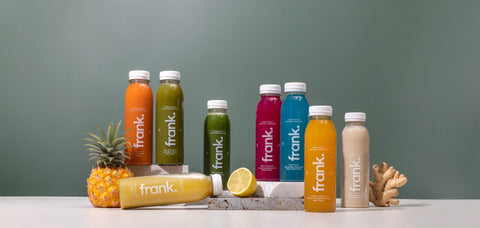
You can buy beetroot juice neat or as a blend. We also distinguish cold-pressed, unheated juices from pasteurised juices, which we don't recommend. Unfortunately, heat treatment destroys nutrients! Do you already know our products from frank.? We have incomparably tasty blends with beetroot - so you can slowly get used to the sometimes quite bitter taste of the roots. Besides buying ready-made juice, the safe option is making your own with a juicer. But that's relatively time-consuming - which is why we're big fans of ready-made, unheated, cold-pressed juices. If you decide to buy ready-pressed beetroot juice, you should look out for the following points.
Shop-bought beetroot juice
Check the ingredient list carefully to make sure the beetroot juice is made from 100% beetroot and contains no additional ingredients. Other kinds of vegetables and fruit are perfectly fine and give the juice a tasty flavour. It's also important to know that shop-bought beetroot juice often contains sugar and additives, which can reduce the benefits and effects of the juice for your health. So check the ingredient list carefully and choose a beetroot juice with as few additives as possible.
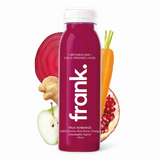
Fancy beetroot juice without juicing it yourself? Try True Romance, our cold-pressed beetroot juice with ginger. Delivered chilled, with no added sugar.
What does the science say? The research on beetroot juice
Beetroot juice is one of the few foods whose effects have actually been studied in controlled trials, mainly because of its nitrate content, which the body converts into vessel-widening nitric oxide (NO).
Blood pressure
In a much-cited study in the journal Hypertension, a serving of about 500 ml of beetroot juice clearly lowered blood pressure in healthy participants around three hours after drinking (by about 10/8 mmHg on average), in parallel with a rise in nitrite levels in the blood.1 Systematic reviews confirm an on-average moderate, temporary blood-pressure-lowering effect.4 Important: beetroot juice does not replace therapy prescribed by a doctor.
Endurance & sport
Bailey and colleagues showed in 2009 that nitrate from beetroot juice lowers oxygen demand during submaximal exercise and increases exercise tolerance.2 Lansley confirmed in 2011 that the juice reduces the O₂ cost of walking and running.3 A dose-response study found that around 6 to 8 mmol of nitrate (roughly 400 to 500 ml of commercially available juice) are needed for the performance effect, ideally drunk 2 to 3 hours before exercise.5
Put honestly: the effects are real, but mostly moderate and temporary. You benefit most when you work beetroot juice regularly in moderate amounts into a balanced diet.

Beetroot juice from frank.
We at frank. are big fans of beetroot. The gentle sweetness, the wealth of vitamins and minerals, especially vitamin C and iron, which are important nutrients for the body and come with many health-supporting properties, such as supporting healthy blood pressure, and so on and so on... The benefits for the human body just keep going, which is why we dedicated a whole juice to it.
Whether morning, noon or night, during sport or in between. This juice always works!
Like all our juices, the beetroot juice is cold-pressed using the HPP process. Our products should be as easy to take with you as possible and still keep all the important nutrients and vitamins. We simply don't want to compromise here!
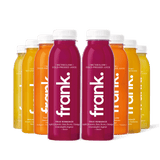
This juice goes straight to the heart! Our Lady in Red 'True Romance' is the flavour explosion you've been waiting so long for. Grab beetroot in perfect balance with apple, carrot, orange and pomegranate. Our cold-pressed juice is rounded off with a hint of ginger. But our beetroot juice is also part of some of our juice cleanses. For example, go for a 3-day juice cleanse at Starter intensity and you get the deep red juice three times for your cleanse.
Make your own beetroot juice
Beetroot juice is made from fresh roots straight from the field. With these steps you can make the juice yourself from a recipe and fully enjoy the juice of the red root.
Wash the beetroot a little, peel the roots and cut them into small pieces. Put the beetroot pieces in a juicer or high-speed blender and press the root. Finally, pour the juice through a sieve or a linen cloth to get rid of any leftover bits. And just like that, you've made plenty of tasty beetroot juice yourself.
It's best to store the juice in a bottle, ideally a glass one that you've washed in hot water beforehand. This helps the juice keep for longer. Then put the juice in the fridge and drink it soon. It's important to know that beetroot juice has a strong colour that can easily transfer to clothes and surfaces. So it's a good idea to wear gloves and an apron when making beetroot juice, to avoid stains.
The effects of beetroot
How are the root and its juice best metabolised in your body? When should you drink the juice? And how much beetroot juice should you work into your diet? You'll find the answers to these questions now.
What is beetroot juice good for?
As mentioned above, the red root contains some nutrients that can do something good for your health. Some studies suggest that the red root could have positive effects on health, e.g. improved circulation, increased energy and support for the liver.
This raises the question of whether you're better off eating the root whole or drinking it as juice. Both options have their pros and cons, which you can read about here in one of our older blog articles.
In short, it depends on how the juice was made. The reason you reach for fruit also plays an important role in the decision. If you eat a beetroot as a snack in between meals, it makes more sense to eat it whole.
But if you want to add more nutrients and vitamins on top of your diet, a cold-pressed juice can help you keep going through your day with enough power. On top of that, it's a lot easier to pack a bottle in your bag and take it with you than to eat beetroot on the go - it has to be prepared and can easily stain your clothes. That's why cutlery is a must if you want to eat beetroot whole.
As well as the ingredients, your body also takes in fluid from the beetroot, so your body gets hydrated.
How much beetroot juice should I drink daily?
Beetroot juice also contains fruit sugar, which is why it's important to drink it in moderation. In addition, drinking too much of the juice of the red root can lead to unwanted effects, which are described further down in the article. A recommended daily amount is one glass up to half a litre of beetroot juice.

When is beetroot juice healthy? When is the best time to drink it?
Beetroot juice can be healthy at any time. So you can drink it at any time of day. That said, there are certain times when it can be especially beneficial.
A morning treat
You could work beetroot juice into your morning routine and have a glass of fresh juice with your porridge or yoghurt. That way you won't forget it and you get a portion of vegetables as early as breakfast. Of course, you benefit from the many positive effects of beetroot in the morning too.
Cleanse
Beetroot juice contains antioxidants, secondary plant compounds that can act as antioxidants. Antioxidants can help support your cells against oxidative stress. For this you can drink the juice on an empty stomach, but during or after breakfast is perfectly fine too.
Metabolism
Not a big breakfast person? Then drinking beetroot juice in the morning makes sense too. It gets your metabolism going without putting too much strain on your digestive tract. The juice also makes sense before sport, so you don't go into your workout completely on an empty stomach.
Circulation
Beetroot juice contains nitrate, which is converted in the body and may improve blood flow and support healthy blood pressure, which can give you more energy and stamina for the whole day.
Before your workout
Here we explain exactly why it might make sense for you to drink beetroot juice before your workout.
Energy and stamina
Before a workout, too: beetroot juice contains nitrate, which is converted in your body and may improve blood flow and support healthy blood pressure, which can give you more energy and stamina for your workout.
Physical performance
Drinking a glass of beetroot juice may also improve your circulation and boost your physical performance during exercise. Important: don't forget to drink enough water during your workout to stay hydrated!
After your workout
Now we explain why the juice can also make sense after your workout.
Recovery
Beetroot juice contains antioxidants, which may support you well in recovering after exercise. Exercise puts stress on your body. That's why you benefit from an extra portion of antioxidants right after a workout.
Muscle soreness
Beetroot juice contains nitrate, which contributes to normal metabolism and a normal nervous system. It is converted in your body and may improve blood flow. A higher nitric oxide level may help reduce muscle soreness after exercise.
Nutrient replenishment
If you sweat a lot during exercise, you can lose important electrolytes such as potassium and magnesium. Beetroot juice is a good source of these nutrients and can help you replace these losses.
Before bed
Unusual, but why not: there are indications that beetroot before bed may also help you get a good night's rest.
Recovery
Beetroot juice may help your body get rid of waste products that build up during the day, and so support your liver in its regeneration overnight.
Sleep quality
Beetroot juice contains antioxidants, which may help ease stress and tension and allow you a deeper, more restful sleep.
The bottom line: it's important to remember that everyone is different, and the best time to drink beetroot juice can vary depending on your individual metabolism, your goals and your preferences.

Beetroot side effects
Beetroot juice normally has only a few mild negative effects, which usually only show up with excessive consumption.
Beetroot juice can colour your stool and urine
It's important to know that beetroot juice has a strong colour and can colour your stool and urine. It's completely normal for the juice's colour to show up like this in the body, especially when you drink large amounts of beetroot juice. That said, you shouldn't drink too much of it, and if strong discolouration persists, see a doctor.
Constipation and diarrhoea from too much beetroot juice
Beetroot juice can lead to constipation or diarrhoea in some people, because beetroot is a high-fibre and fermentable food. That means it is only broken down slowly in our gut, which attracts a large amount of gas-producing bacteria, and these can then lead to bloating, constipation or diarrhoea.
Headaches and allergic reactions from beetroot juice
Beetroot juice can cause headaches in some people. This can be down to an allergic reaction or an intolerance to beetroot. It can also be down to a change in blood flow and a rise in the nitrate level in the blood, which can cause blood vessels in the head and neck to widen and cause headaches. Allergic reactions to beetroot can also show up in other forms, for example skin rashes, itching and difficulty breathing.
Beetroot juice and medication
Beetroot juice can affect how well medications work, especially blood thinners. If you take a medication like this, it's important to talk to a doctor before drinking beetroot juice, to rule out possible interactions with the juice of the red root.
Overall, the negative effects of beetroot juice are minor and can easily be avoided by drinking it in moderate amounts and paying attention to your individual needs and sensitivities.
You know best how much of the juice you can tolerate and what feels good. As a rule of thumb, remember not to drink more than half a litre per day.
Recipe 1: beetroot salad
Need a break from beetroot juice and wondering how else you can get beetroot into your day? We have the answer! Two super simple recipes will bring you closer to beetroot.
Why not try our idea for this tasty salad with walnuts, rocket, carrots and beetroot.

Ingredients for two portions:
-
2 fresh beetroots
-
4 carrots
-
200 g rocket
-
1 handful of walnuts
-
1 tbsp vinegar
-
2 tbsp olive oil
-
Salt
-
Pepper
-
Juice of 1/4 lemon
-
1 tsp agave syrup
Method:
Wash and peel the beetroot and the carrots, then grate them into thin, long strips.
Next, wash the rocket and put it in a bowl together with the beetroot and the carrots.
Chop the walnuts roughly and add them to the beetroot mixture too.
Finally, add the remaining ingredients and season the salad to taste.
Depending on your taste, you can finish the salad with other ingredients, such as feta or lots of spring onions. Maybe you'll think of a few more yourself.
Enjoy, and have fun making it!
Recipe 2: beetroot spread
Forget butter and cream cheese and try something different on your bread. With the second of our recipes, you get the instructions for a simple, tasty beetroot spread.

Ingredients:
-
1 beetroot
-
100 g chickpeas
-
1 tbsp olive oil
-
10 coriander leaves
-
5 mint leaves
-
1 squeeze of lemon
-
1/2 tsp cumin
-
Salt
-
Pepper
-
Chilli flakes
Method:
Simmer the chickpeas on a low heat for a good hour, then put them in a blender together with the olive oil.
Wash and peel the beetroot, cut it into small pieces and add the pieces to the chickpea purée in the blender.
Wash the coriander and mint leaves, chop them roughly and blend them into the chickpea and beetroot mixture.
Add the squeeze of lemon juice at the same time.
Finally, season the spread with salt, pepper, cumin and chilli flakes.
Myth check: what's really true?
Myth: "Beetroot juice gets rid of high blood pressure." Fact: Studies show a temporary, moderate reduction, not a permanent fix. It can support a healthy lifestyle, but doesn't replace therapy.1
Myth: "The more, the better." Fact: The effect has a saturation threshold at around 6 to 8 mmol of nitrate; more than ~500 ml brings hardly any extra benefit, but more sugar and oxalate.5
Myth: "Red urine is a warning sign." Fact: This so-called beeturia is harmless and goes away on its own.
Is beetroot healthy?
In short: yes. Beetroot is one of the most nutrient-rich vegetables and supplies plenty of folate, fibre, potassium and the red plant pigments betalains, which have been described as antioxidants in research. Especially well known is its high content of natural nitrate: the body converts it into nitric oxide, a molecule that relaxes the blood vessels and, in studies with athletes, was able to improve endurance performance. Whether as a whole root, in a salad or as cold-pressed beetroot juice, the vegetable is an easy way to upgrade your menu.
Is beetroot dangerous?
For healthy people, beetroot is safe. Two things are good to know. First, beeturia, a harmless red colouring of urine and stool after eating it, which comes from the pigments and goes away on its own. Second, the natural oxalic acid content, which is why people prone to kidney stones are best off enjoying larger amounts after talking to a doctor. If you take blood-pressure-lowering medication, also briefly discuss regular consumption with your doctor. For everyone else: beetroot is a healthy everyday vegetable.
Beetroot nutritional values (per 100 g)
| Nutrient | per 100 g (raw) |
|---|---|
| Calories | approx. 43 kcal |
| Carbohydrates | approx. 10 g |
| of which fibre | approx. 2.8 g |
| Protein | approx. 1.6 g |
| Folate | approx. 109 µg |
| Potassium | approx. 325 mg |
| Nitrate | naturally high |
Values vary depending on the variety and preparation. In cold-pressed beetroot juice, the water-soluble nutrients are largely retained, while the fibre from the pomace is reduced.
Frequently asked questions about beetroot juice
How much beetroot juice should you drink a day?
For healthy adults, one glass up to about half a litre a day is typical. The blood pressure and endurance effect shown in studies needs the higher amount (approx. 400 to 500 ml). Beginners start with a small glass and build up slowly.
When does beetroot juice work best?
The nitrite level in the blood peaks about 2 to 3 hours after drinking. Before sport or for the blood pressure effect, this window is the best.
Is red urine after beetroot juice dangerous?
No. This so-called beeturia is harmless and goes away on its own. It simply shows that the pigments are being excreted.
Does beetroot juice really lower blood pressure?
Studies show a temporary, moderate reduction thanks to the nitrate it contains. The juice can support a healthy lifestyle, but doesn't replace medical treatment.
Who is beetroot juice not suitable for?
Caution or talking to a doctor is advisable if you are prone to kidney stones (oxalate), during pregnancy, with low blood pressure or if you take blood pressure medication.
How long does freshly pressed beetroot juice keep?
Home-pressed, a maximum of 24 hours in the fridge. Cold-pressed, HPP-treated juices keep for several weeks unopened.
Sources
- Webb A. et al. (2008). Acute Blood Pressure Lowering… Hypertension. Link
- Bailey S.J. et al. (2009). Dietary nitrate supplementation reduces the O₂ cost of exercise. J Appl Physiol. Link
- Lansley K.E. et al. (2011). Dietary nitrate reduces the O₂ cost of walking and running. J Appl Physiol. Link
- Systematic Review & Meta-Analysis (2022). Blood Pressure-Lowering Effect of Beetroot Juice. Advances in Nutrition. Link
- Wylie L.J. et al. (2013). Beetroot juice and exercise: dose-response. J Appl Physiol. Link

Nutrition scientist and certified nutrition consultant (focus on personalised nutrition & sports nutrition). B.Sc. Weihenstephan-Triesdorf University of Applied Sciences, M.Sc. TU Munich. Content Developer Nutrition since 2021.
LinkedIn · annagellert.de
Scientifically grounded. This article is for information and does not replace medical advice. These are not authorised health claims under EU Regulation (EC) No 1924/2006.