

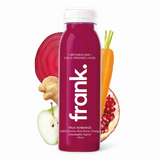
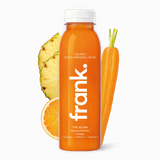
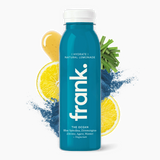












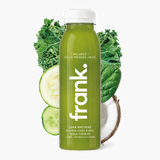

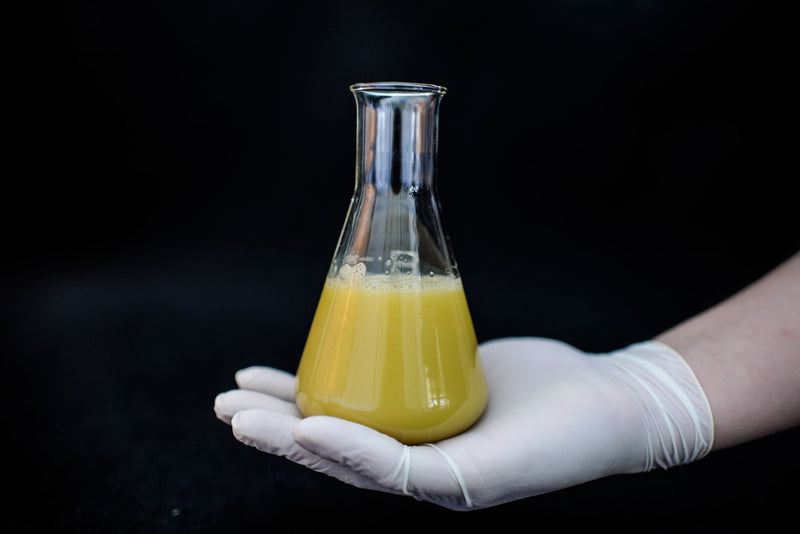
A fresh juice in the morning, full of flavour and healthy nutrients, can start the day in a refreshing way. But have you ever heard of HPP juice? HPP stands for High Pressure Processing, and it is an innovative technology that has revolutionised the way we make and enjoy juice.
In this article we take a closer look at what HPP juice is and how this process works. You'll be surprised how this modern technology is changing the juice industry and bringing healthier, fresher juices to our tables. We'll also tell you how the juices from frank. are made.
High-pressure treatment of juices
High-pressure treatment of juices, also known as high pressure processing (HPP) or pascalisation, is an innovative technology for preserving juices and other foods. This process uses extremely high pressures to eliminate germs, bacteria, yeasts, moulds and other harmful microorganisms in food, without impairing the quality or nutritional value of the products.

History of the HPP process
The high pressure processing method was first discovered in the 1890s, when researchers noticed that food placed under extremely high pressure stayed fresh longer. It took a while, though, for the technology to really take off. Only in recent decades has HPP developed into a popular method for keeping food fresh without using heat or preservatives. Today you find HPP in many products, from our cold-pressed juices to guacamole or meat products. The HPP process has revolutionised the way we make and consume food.
The HPP process - how it works
First the juice is made, as in conventional processes. That means fresh fruit is pressed and the juice extracted.
The juice is then placed in a special high-pressure chamber designed to apply enormous pressure. Typically pressures of up to 6,000 bar (around 87,000 psi) are used.
The juice is placed under this extreme pressure, normally for a few minutes up to a few dozen minutes. During this time, harmful microorganisms, enzymes and bacteria are killed.

The unique thing about HPP is that it leaves the structure and taste of the juice largely unchanged. Unlike conventional heat treatments (pasteurisation), which can often lead to loss of flavour and nutrient breakdown, high pressure processing largely preserves the heat-sensitive vitamins and the natural taste of the juice.
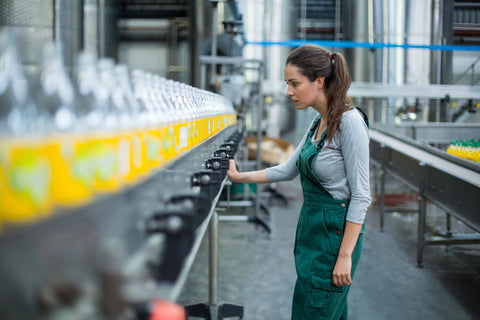
Our juices are all treated bottled individually - this makes them last even longer, as after treatment they no longer come into contact with the outside world and potential sources of contamination. Because of the treatment with enormous pressure, the juice has to be bottled in plastic bottles. A glass bottle wouldn't withstand this pressure and would burst.
High-pressure treatment of juices has gained popularity in recent years because it is a gentle yet extremely effective method of preserving food. It allows consumers to enjoy fresh and nutrient-rich juices without the downsides of preservatives or high temperatures.

What are the advantages of the HPP process?
High pressure processing (HPP) offers a number of advantages in juice production that make it an attractive method.
Unlike conventional pasteurisation and sterilisation methods, in which heat is used to kill microorganisms such as germs and bacteria, HPP uses high pressures that leave the heat-sensitive vitamins and natural taste of the juice largely intact. This results in a juice that is not only safe but also tastes fresh and nutrient-rich, and the naturalness of the fruit and vegetables is retained.
High pressure processing eliminates potentially present harmful microorganisms such as bacteria and yeasts without the need for preservatives or chemical additives. This considerably extends the shelf life of the juice so that it can be stored longer without losing quality.
Unlike the heating method (pasteurisation by heat), which heats the juice and its temperature and thereby may destroy important nutrients , high-pressure treatment, as one of the common preservation methods, takes place at low temperatures. This protects sensitive nutrients and prevents loss of flavour through heating.

The HPP process meets demands for product freshness and food safety
HPP is extremely effective at killing pathogenic microorganisms such as E. coli, salmonella and listeria, which leads to improved food safety. This is particularly important because juice can be raw and there is a risk of contamination for the consumer.
Since no chemical preservatives or high-temperature preservation processes are required in production, the juice stays free of artificial additives and retains its natural character.
HPP has valuable properties and enables better consistency and texture of the juice, as it leaves the cell structure of the fruit and vegetables intact. This leads to a more pleasant mouthfeel and a high-quality product.
HPP contributes to reducing food waste in the industry, as the longer shelf life of the juice means less food is wasted.
Overall, high pressure processing offers a gentle but highly effective method for producing juices that improves both the quality and safety of the products and offers consumers fresh, nutrient-rich options.
Are there disadvantages to the HPP process?
Although high pressure processing (HPP) offers many advantages in the food industry, it also has some potential disadvantages and limitations.
Buying and maintaining high-pressure machines can be expensive, which raises the barrier to entry for smaller food producers. This can affect the cost of the products.
HPP is not suitable for all foods. Some products, especially those with solid components or those that require high temperatures, cannot benefit from high pressure processing.
In some cases, high pressure processing can change the texture of food, especially in products with a delicate structure, such as certain types of fruit or vegetables.
Although shelf life is extended by HPP, the end product remains perishable and requires refrigeration and has a limited shelf life.
High pressure processing requires specialised equipment and trained staff to ensure the process is carried out properly.

Juice production with the HPP process at frank.
Almost all our juices and therefore also the juice cleanses are cold-pressed using the HPP process... Cold-pressed? What's that supposed to mean now?
Cold-pressed juices
Cold-pressed means that we press the fruit and vegetables from which we make our juices and shots at a maximum of 2-7°C to protect all nutrients during processing. In our entire production process, heat is never used, not even in the subsequent preservation.
What many don't know: most smoothies and juices are pasteurised, i.e. preserved with heat! This loses most of the vitamins and nutrients. We at frank. of course don't want that, so we decided against this kind of preservation and instead work with the particularly nutrient-preserving pressure process called "HPP”.
The HPP process at frank.
HPP stands for "High Pressure Processing" and is by far the gentlest, most natural and most nutrient-friendly way of keeping food, and juice in particular, fresh and shelf-stable for longer. And with pressure alone! By using up to 6,000 bar - that is roughly six times the pressure found at the deepest point of the ocean - the shelf life of food is gently extended. This high pressure ensures that inner and outer zones of the product are treated evenly and germs and bacteria are killed. While, for example, with one of the conventional methods of preserving food, pasteurisation, i.e. heating a product, structures and nutrients are attacked, with high-pressure treatment nutrients and the fresh taste of the product are retained.
We explain what of this must be on the label in Juice label: these mandatory details must be on it.

What is the difference between the HPP process and pasteurisation?
Fresh products must always be stored chilled and last only a few days. If products last longer than a few days, there are only 2 possibilities:
HPP process: these products are gently made to last up to 6 weeks longer with the HPP process, without heat. HPP-treated products must also always be kept chilled.
Pasteurisation: these products are treated with heat and have a shelf life of several months. Pasteurised products partly keep without refrigeration too.
Glass bottles and a long shelf life always point to heat treatment (pasteurisation), because plastic bottles (PET) are a basic requirement for the HPP process with pressure and a glass bottle would burst.
At frank. we chose the HPP process for our fruit and vegetable juices because it lets us make fresh juice last a little longer without destroying the heat-sensitive nutrients. Our shots, by contrast, like our Nut M*lk Mister White and Lemonade Indian Sundaze, are pasteurised.
Because HPP juices and pasteurised shots have different shelf lives and need to be stored differently, we maintain the details for each variety in a label management systemso that the right date and the right chilling instruction appear on every bottle.