Stress at work, trouble with your partner, or maybe loneliness? The reasons for emotional eating are many! Do you cope with moments like these by ordering in or reaching for certain "soul food" like pizza, fries and chocolate cookies? Do you also get the feeling you eat loads of it and just never feel full? Here we are: emotional eating at its finest.
Emotional eating is no longer a foreign word for most people. A full 30% of Germans are emotional eaters! Even so, people are often unaware of the mechanisms and serious consequences. In this blog post, we shed light on what emotional eating means and what's behind it.
What is emotional eating?
Emotional eating means you're not eating primarily because of real hunger, but because your emotions give you an appetite. Certain feelings trigger cravings for certain foods. These are typically very energy-dense and contain fast-acting carbohydrates and fats. Want examples? Fries, pizza, gummy bears, chocolate, ice cream,...you name it! Because it isn't "real" hunger, you can't really satisfy it either, so you may end up eating far more fast food and sweets than your body actually needs.
What's the difference between normal and emotional hunger?
We distinguish between normal hunger and emotional hunger, which can trigger emotional eating. What exactly are the differences?
You feel normal hunger when your body needs fresh energy from food. The two hormones leptin and ghrelin play a key role here: they are opposites and regulate your hunger and your fullness. If you've just eaten, your leptin level is high and your ghrelin level is low: you don't feel hungry. The longer you go without eating, the lower your leptin level gets and the higher your ghrelin level rises: you slowly get hungry! In fact, stress and dissatisfaction can affect your hormone balance and so change your leptin and ghrelin levels. That makes you feel hungry even though your body doesn't actually need new energy, and that's exactly what happens with emotional hunger.
On top of that, your brain associates certain foods with certain situations and feelings. Do you always eat popcorn at the cinema? Then you'll probably get hungry in the cinema even when your body is full. Do you eat chocolate when you're sad? Your brain quickly stores these behaviour patterns and wants to repeat them!
What do we compensate for with food?
Let's go back to our evolutionary roots. As babies, we're fed (sweet) breast milk by our mothers. So we learn early on that something sweet often has to do with security, comfort and refuge. When we feel alone, misunderstood or just generally not great, without being able to name a specific reason, we look for comfort in something sweet. After all, it gives us a certain feeling of security.
Reaching for something sweet is also driven by the fact that we link it to a comforting or simply lovely memory from the past. Who doesn't remember childhood, when a comforting word from Grandma was not all that rarely followed by a lollipop or a chocolate bar? So when we don't feel good, we step into the role of comforter ourselves and comfort ourselves with something sweet that makes us feel better right away. If it's an exception, that's no problem at first. It becomes a problem when this behaviour turns into a mechanism that can lead to addiction.
What can you do about emotional eating?
You can't avoid stressful situations and days when you don't feel so good! We all know that. That's why it's important to develop your own strategies so you don't look for comfort in emotional eating. Often this is even the start of a negative spiral: if you eat in a way that isn't good for you, or too much, you may feel even worse than before. And your actual problems are still far from solved!
Strategies
The first step is to become aware of your subconscious behaviour patterns. Think back to when in the past you reached for something energy-dense without feeling real hunger, to cope better with certain situations and/or emotions.
Once you know your own trigger points and which situations bring them on, you can think of sensible ways to counter them. A little frank tip: a (food) diary can tell you a lot about your behaviour. Do you already know our Frank Feel Good Diary? It's perfect for this! Note down when you eat what, how you feel while doing it and what the circumstances were like at those moments.
Were you stressed because an important deadline was coming up? Did you have a row with someone you love, or were you home alone and thinking back to your grandma's hearty home cooking and the good times you shared? Whatever it was, and however simple this tip may sound, make yourself aware of your own trigger points. You'll definitely spot a pattern! Once you've identified these patterns and can put them into words, you've already achieved a lot. You've brought the subconscious into the conscious, or rather into your awareness! Now that you know your trigger points and the resulting behaviour patterns (eating out of frustration or stress), you can actively do something about them.
Think of alternatives that will make you feel better in the medium term and above all in the long term. Feeling lonely? Don't reach for the chocolate, reach for the phone and call someone. Stressed and not sure how to get through the tasks ahead? Write down all your to-dos, take a few deep breaths or even go out for some fresh air. Bet you'll feel much better afterwards and can work through your tasks one after another with focus? Whatever your own strategy looks like, remind yourself at all times: only you are responsible for your actions and can influence the results! Make the best of it.
Emotional eating: you're not alone
Our comfort for you at the end: you're not alone with this! We've all lived through many moments when things didn't go the way we imagined. And our reaction was anything but rational or well thought out. But the past doesn't determine what you do here and now. It will certainly take time to overcome old behaviour patterns like emotional eating. It's also quite possible that you'll slip back into your old patterns from time to time! That's part of the process, completely natural and not bad at all. Always keep in mind that every process and every path has its ups and downs.
Stress at work, arguments with your partner or maybe loneliness? The reasons for emotional eating are many! Do you make up for such situations with delivery-service offers or very specific "soul food" like pizza, chips and chocolate cookies? Do you also have the impression that you eat a lot of it and just never feel full? Here we are: emotional eating at its finest.
Basically, emotional eating is no longer a foreign term for most people. A full 30% of Germans are emotional eaters! Even so, people are often unaware of the mechanisms and serious consequences. In the following blog post, we'll look at what exactly emotional eating means and what's behind it.
What is emotional eating?
Emotional eating means that you don't eat primarily because of real hunger, but because your emotions make you feel an appetite. Certain feelings trigger your cravings for certain foods. These are characterised by being particularly energy-dense and containing short-chain carbohydrates as well as fats. Want examples? Chips, pizza, gummy bears, chocolate, ice cream,...you name it! Because it isn't "real" hunger, you can't really satisfy it either - so you may end up eating far more fast food and sweets than your body actually needs.
What's the difference between normal and emotional hunger?
We distinguish between normal hunger and emotional hunger, which can trigger emotional eating. What exactly are the differences?
You feel normal hunger when your body asks for new food energy. The two hormones leptin and ghrelin play a decisive role here: they are opposites and regulate your hunger and satiety. If you've just eaten, your leptin level is high and your ghrelin level low: you feel no hunger. The longer you go without eating, the more your leptin level falls and your ghrelin level rises: you slowly get hungry! In fact, stress and dissatisfaction can influence your hormone balance and thereby also change your leptin and ghrelin levels. So you feel hungry even though your body doesn't actually need new energy - and that is exactly the case with emotional hunger.
On top of that, your brain associates certain foods with certain situations and feelings. Do you always eat popcorn at the cinema? Then you'll probably get hungry in the cinema even when your body is full. Do you eat chocolate when you're sad? Your brain quickly stores these behaviour patterns and wants to repeat them!

What do we compensate for with food?
Let's go back to evolution: as babies, we are fed (sweet) breast milk by our mother. So we learn early on that something sweet is often linked to security, comfort and refuge. When we feel alone, misunderstood or just generally not great, without being able to name a specific reason, we look for comfort in something sweet. After all, it gives us a certain feeling of security.
Reaching for something sweet is also driven by the fact that we associate it with a comforting or simply lovely memory from the past. Who doesn't remember their childhood, when a comforting word from grandma was not infrequently followed by a lollipop or a chocolate bar? So when we don't feel good, we take on the role of the comforter ourselves and comfort ourselves with something sweet that makes us feel better straight away. If this is an exception, it isn't a problem at first. It becomes problematic, though, when this behaviour develops into a mechanism that can lead to addiction.
What can you do about emotional eating?
You can't avoid stressful situations and days when you don't feel so good! Everyone knows that. That's why it's important to develop individual strategies so you don't seek comfort in emotional eating. Often this is even the start of a negative spiral: if you eat in a way that isn't good for your health, or simply too much, you may feel even worse than before. Your actual problems are still far from solved!
Strategies
The first step is to make yourself aware of your unconscious behaviour patterns. Think about when in the past you reached for something energy-dense without feeling real hunger, to cope better with certain situations and/or emotions.
Once you know your own trigger points and which situations encourage them, you can think of sensible ways to counteract them. A little frank tip: a (food) diary can also tell you a lot about your behaviour. Do you already know our Frank Feel Good Diary? It's perfect for this! Note down when you eat what, how you feel while doing it, and what the circumstances around you were like in those moments.

Were you stressed because an important deadline was coming up? Did you have an argument with a loved one, or were you home alone and remembered your grandma's hearty home cooking and the good times you spent together? Whatever it was, and however simple this tip may sound: make yourself aware of your own trigger points. You will be able to spot a pattern in any case! Once you have identified these patterns and can put them into words, you've already achieved a lot. You've brought the unconscious into the conscious, or rather into your awareness! Now that you're aware of your trigger points and the resulting behaviour patterns (eating out of frustration or stress), you can actively take action against them.
Think of alternatives that will make you feel better in the medium and especially the long term. Feeling lonely? Don't reach for chocolate, reach for the phone and call someone. Stressed and don't know how to get through the tasks ahead? Write down all your to-dos, take a few deep breaths or even step outside into the fresh air. Bet you'll feel much better afterwards and can work through your tasks one after another with focus? Whatever your own strategy looks like, keep the following in mind at all times: only you are responsible for your actions and can influence the results! Make the best of it.
Emotional eating - you are not alone
Our comfort for you to finish: let us tell you, you're not alone with this topic! We have all surely experienced many moments in our lives when things didn't go the way we imagined. Our reaction to them was also anything but rational or well thought out. But the past doesn't determine what you do in the here and now. It will certainly take time to overcome old behaviour patterns like emotional eating. It's also quite possible that you'll slip back into your old patterns from time to time! That's part of the process, completely natural and not bad at all. Always keep in mind that every process and every path has its ups and downs.
Juice cleanse as a start for changing your diet
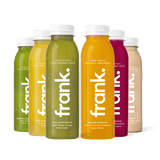
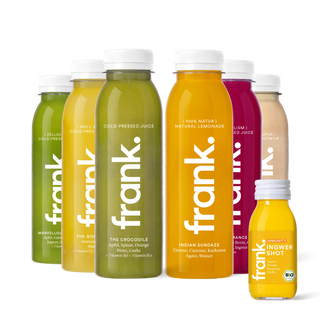
The juice cleanses from frank. are tailored to all your needs. Choose a 1-day juice cleanse, or maybe rather the 7-day juice cleanse. You can also extend our cleanses with the food supplements from BIOGENA into a gut cleanse, beauty cleanse or energy cleanse.
Start your juice cleanse now and start changing your diet.