


























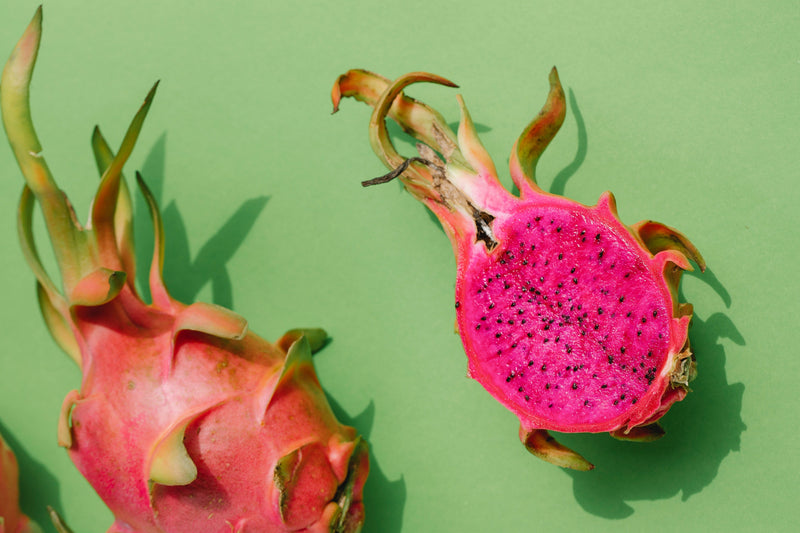
In short: Dragon fruit (pitaya) is low in calories and provides fibre, vitamin C, magnesium and antioxidants such as betalains. It is known as a refreshing, lightly sweet fruit when it comes to digestion and the immune system. As a juice or fresh, it is a good addition to a varied diet, and the tiny black seeds are edible and provide extra fibre.
Exotic fruits like physalis, starfruit and dragon fruit are conquering the world. We in the frank. editorial team love these summery fruits too.
Dragon fruit, also known as pitaya or pitahaya, is an exotic fruit that has become more and more popular in recent years. The juice from this fruit is not only delicious but also looks beautiful. For some time now the cactus fruit has been used in all sorts of recipes for smoothies, bowls or juices and, thanks to its sweet pink or white flesh, is the ultimate flavour showstopper.
In this article we'll take a closer look at where dragon fruit comes from and what it looks like. We'll also look at the average nutrients it contains and work out a few more facts, such as the origin of pitahaya.

Dragon fruit - where does it come from and what does it look like?
Dragon fruit is an exotic fruit that is mainly grown in the tropical regions of South America and Asia. The fruit originates in Central and South America, but is now grown in many countries around the world, including Thailand, Vietnam, Colombia, Mexico, Ecuador, Nicaragua and China.
The plant that bears dragon fruit is a climbing plant that grows on trees, rocks or other supporting structures and is part of the cactus family. Pitaya has a striking and unique appearance. The fruit is usually oval or elongated and has a thick, leathery skin that usually comes in pink, red or yellow. The skin has a surface that looks like scales and has green leaves or blossoms.
Inside, the fruit has juicy, pink or white flesh dotted with tiny black seeds. The flesh is soft and sweet with a slight tang and has a texture reminiscent of kiwi.
All in all, dragon fruit is a spectacular fruit with an amazing appearance and a unique taste, and it is winning more and more fans around the world.
Why is dragon fruit called dragon fruit?
Dragon fruit got its name because of how it looks. The scaly skin and the pronounced tip on the fruit are reminiscent of a dragon's head. In some Asian cultures the fruit is also called "fire fruit", which also points to its exotic and unusual look. The origin of the name isn't entirely clear, but the idea of dragons has historically carried strong symbolic meaning in Asian culture and was often linked with luck and prosperity.

What is the difference between yellow and pink dragon fruit?
There are two main types of dragon fruit: the yellow and the pink variety. The main difference lies in their outer appearance and their taste:
Outer appearance
Yellow dragon fruit has a yellowish skin with green scales, while pink dragon fruit has a pink skin with green scales. The shape of the two varieties is similar, as both are elongated and oval.
Taste
Yellow dragon fruit usually has a milder and sweeter flavour than pink dragon fruit, which tastes more intense and refreshingly tart.
The choice between yellow and pink dragon fruit often depends on personal preference and availability.
How do you tell if a dragon fruit is ripe?
The colour of dragon fruit changes when it is ripe. A ripe pitahaya usually has a strong, bright colour that can range from red to pink or yellow. A ripe pitahaya should also be slightly springy, but not too soft. If it is too soft or mushy, this can indicate that it is overripe or even spoiled. The spikes on the skin of the dragon fruit can also be an indicator of ripeness. If the spikes come off easily or turn brown and dry, this can be a sign that the fruit is ripe. A ripe fruit should also have a pleasant, sweet scent. If the fruit has no smell or an unpleasant smell, this can indicate that it is no longer fresh.
Can you eat dragon fruit raw?
Yes, dragon fruit can be eaten raw and is often eaten this way. In fact, it is the most common way to eat this exotic fruit.
To eat a dragon fruit, you cut it in half lengthways, remove the skin, and the flesh can be scooped out with a spoon and eaten straight away. The small edible black seeds in the middle can be eaten too.
Dragon fruit has a refreshing, lightly sweet flavour and works well as a snack or as an ingredient in smoothies, fruit salads and other culinary creations. It is important, though, to make sure the fruit is ripe to get the best taste and texture.

How much dragon fruit juice should I drink?
The recommended amount of dragon fruit juice that can be consumed daily depends on various factors, such as your age, sex, weight, state of health and your overall diet.
In general, it is recommended to consume fruit juices in moderation and to keep a balanced diet that includes plenty of fruit and vegetables. It's also important to note that dragon fruit juice, like many other fruit juices, can contain a relatively large amount of sugar.
What does dragon fruit taste like?
The taste of dragon fruit is often described as mild and sweet, with a hint of refreshing tartness. The intensity of the flavour can vary depending on the ripeness and variety of the fruit. The outer skin of dragon fruit is usually not edible, while the flesh is juicy and slightly crunchy, a bit like a mix of kiwi and pear. Some people describe the taste of dragon fruit as subtle and mild, while others find it striking and intense. In the end, the taste impression also depends on personal preference.
Why is dragon fruit often so expensive?
Dragon fruit may be more expensive than some other fruits for several reasons:
Growing conditions
Dragon fruit grows best in a tropical climate with warm temperatures and high humidity. It also needs plenty of sunlight and water to thrive. Most dragon fruit is grown in Asia and Central and South America and often has to be imported, which can raise the cost.
Harvest
Harvesting dragon fruit is laborious and takes careful manual work. The fruits have to be picked by hand, as they can't be harvested by machine. This raises labour costs and makes dragon fruit more expensive than some other fruits.
Transport and storage
Dragon fruits are delicate and have to be handled carefully during transport and storage to avoid damage and spoilage. This raises delivery costs and can push up prices for the end consumer.
Popularity
The growing popularity of exotic fruits has led to higher demand, which can cause prices to rise when supply is limited.
Overall, the production costs and transport of pitahaya are higher compared with some other fruits, which can make it more expensive.
Does dragon fruit contain healthy nutrients?
Pitaya can contain nutrients, although these can vary due to numerous factors, such as the growing region, climate, nutrients in the soil, or the freshness of the fruit. No food, including dragon fruit, can simply be sorted into healthy or unhealthy. We are sure, though, that it would fit into a balanced diet.
What are the average nutritional values of dragon fruit?
The nutritional values of dragon fruit can vary depending on the variety and size, but here are some average values for a 100 gram portion of pitahaya:
- Calories: 60
- Carbohydrates: 13 grams
- Fibre: 1 gram
- Sugar: 9 grams
- Protein: 1 gram
- Fat: 0.4 grams
- Vitamin C: 34% of the recommended daily intake
- Iron: 10% of the recommended daily intake
- Magnesium: 6% of the recommended daily intake
- Calcium: 1% of the recommended daily intake

Summer feeling with our Hotel Paradiso with dragon fruit juice
Lychee, dragon fruit and yuzu: that sounds like sandy beaches and crystal-clear sea, aromatic fruit straight from the plantation and pure relaxation.
Our juice, a pink lemonade style, has been part of our frank. family for some time now and is also loved by our customers!
"Hotel Paradiso is something I can't imagine my everyday life without. The juice is fantastic, especially for sport! It tastes intensely of lychee, yet it's totally natural. It's not as sickly sweet as juices like this normally are. I drink it neat - that way it's totally refreshing. On top of that, the colour is a real eye-catcher. I only know this kind of quality from frank." - one of our customers
So what are you waiting for? Head to your nearest supermarket or simply visit our online shop and see for yourself!
Hotel Paradiso alone isn't enough for you? You can also order a juice cleanse from us and do up to 7 days of juice fasting!
Is dragon fruit healthy?
Dragon fruit, also called pitaya, is not only eye-catching but also nutrient-rich and low in calories. It provides vitamin C, fibre, magnesium and iron as well as secondary plant compounds such as betalains and flavonoids, which are described as antioxidants in studies. Its mild, sweet taste and high water content make it a refreshing addition to a varied diet, whether on its own, in a smoothie or as dragon fruit juice.
How does dragon fruit work?
The value of dragon fruit lies mainly in its fibre and antioxidants. Fibre supports healthy digestion and a longer-lasting feeling of fullness, while the plant compounds it contains help protect cells from oxidative stress. Vitamin C also contributes to the normal function of the immune system. As part of a balanced diet, pitaya is a light, vitamin-rich choice.
Possible side effects of dragon fruit
Dragon fruit is very well tolerated. A harmless effect can occur with the red-fleshed variety: the pigments can temporarily turn urine or stool reddish, similar to beetroot. This is nothing to worry about and goes away by itself. If you eat very large amounts, you may notice a slightly laxative effect from the fibre content. In normal portions, pitaya stays a worry-free treat.
Nutritional values of dragon fruit (per 100 g)
| Nutrient | per 100 g |
|---|---|
| Calories | approx. 50 kcal |
| Carbohydrates | approx. 11 g |
| Fibre | approx. 3 g |
| Protein | approx. 1.2 g |
| Vitamin C | approx. 9 mg |
| Magnesium | approx. 40 mg |
Prefer your dragon fruit ready to drink? Our Hotel Paradiso combines dragon fruit and lychee, cold-pressed and with no added sugar.