Updated: October 2026
In short: Yes, avocado is healthy if you eat avocado in moderation. The fruit has about 160 kcal per 100 g because the flesh contains around 15 g of fat, mostly unsaturated fatty acids. It also provides plenty of fibre, potassium and folate. Half an avocado a day fits well into a balanced diet for most people. As of: October 2026.
Avocado is the fat among fruits, and that's exactly what makes it appealing: creamy, filling and versatile. Whether the high fat is a problem and how much per day fits is clarified in this post with concrete numbers.
Is avocado healthy?
Yes. Avocado provides mainly monounsaturated fatty acids (oleic acid), plus fibre, potassium, folate, vitamin E and vitamin K. It contains hardly any sugar.
Putting it in context is important: healthy doesn't mean you should eat unlimited amounts of it. The fruit is energy-dense, so portion size counts. Why fat is not the same as fat is explained in Differences between saturated and unsaturated fatty acids.
How many calories does an avocado have?
Around 160 kcal per 100 g of flesh. A medium avocado weighs about 200 to 250 g with skin and stone, of which the edible flesh makes up roughly 120 to 150 g. That gives roughly 200 to 240 kcal per whole fruit and 100 to 120 kcal per half.
That's more than with most other fruits, but the calories come from valuable fats and are accompanied by fibre, which keeps you full for a long time.
What nutritional values does avocado have?
Rounded guide values per 100 g of flesh (varying slightly depending on variety and ripeness):
| Nutrient | per 100 g |
|---|---|
| Energy | approx. 160 kcal |
| Fat | approx. 15 g |
| of which saturated | approx. 2 to 3 g |
| Carbohydrates | approx. 2 g |
| Fibre | approx. 6 to 7 g |
| Protein | approx. 2 g |
| Potassium | approx. 480 mg |
| Folate | approx. 80 µg |
| Vitamin E | approx. 2 mg |
With its high fibre content, avocado supports regular digestion. How much fibre you need in total is covered in Fibre: why eat a high-fibre diet.
How much avocado a day is okay?
Half to one whole avocado a day is unproblematic for most healthy adults, as long as the fruit replaces other fat sources and doesn't come on top.
- For losing weight: Half an avocado (approx. 70 g) is often enough, for example as a spread instead of butter.
- At normal weight: Half or a whole fruit one to three times a week is a good rule of thumb.
- With lipid metabolism disorders or gallbladder problems: Please ask your doctor about the right amount.
Also pay attention to origin. Avocados have a large ecological footprint due to water needs and transport, a reason to enjoy avocado more consciously than daily.
How do you recognise a ripe avocado?
A ripe avocado yields slightly to gentle pressure without being mushy. With the Hass variety, the skin turns from green to dark brown to black as it ripens.
- Press the fruit gently with your whole palm, not with your fingertips (that causes bruises).
- Remove the small stem end: if the flesh underneath is green, the avocado is ripe. Brown means overripe, yellow means too early.
- Unripe fruit ripens at room temperature in 2 to 5 days, faster in a paper bag with an apple or banana.
- Ripe fruit keeps in the fridge for another 2 to 3 days.
Cut avocado turns brown. A little lemon juice and an airtight container delay this.
What can you cook with avocado?
Avocado is much more than guacamole. Here are a few simple ideas:
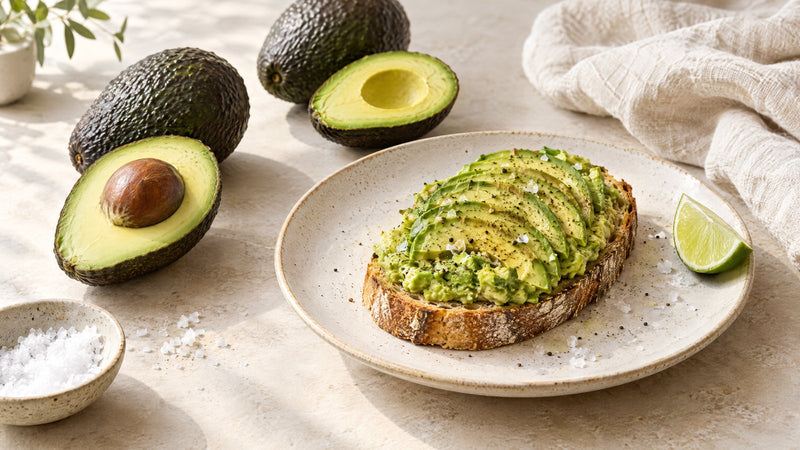
- Avocado toast: mashed on wholegrain bread with salt, pepper, lemon and chilli flakes.
- Bowl: sliced on rice, vegetables, beans or lentils.
- Smoothie: half an avocado makes green smoothies creamy without dairy.
- Dessert: blend with cocoa, a little maple syrup and banana into a chocolate cream.
- As a topping: on a warm soup, such as the ginger carrot soup, the fruit brings creaminess and healthy fats.
Don't heat avocado for too long, as avocado can turn bitter when cooked. Better add avocado at the end.
Is avocado good for the heart and cholesterol?
Swapping saturated fats (e.g. butter, sausage) for unsaturated fats such as those in avocado is classed by professional societies as favourable for blood lipids. This applies to the replacement, not to additional calories on top.
So avocado is not medicine, but a sensible building block if you partly replace spreadable fat, mayonnaise or cream in your dishes. Together with wholegrain, vegetables, nuts and legumes it makes a coherent overall picture.
- Instead of butter on bread: mashed avocado.
- Instead of mayonnaise in dressing: puréed avocado with yoghurt and lemon.
- Instead of cream in cold soup: avocado with cucumber and herbs.
Are there disadvantages or risks?
Few, but there are a few points you should know. Because of the high potassium content, people with kidney disease should have the amount checked by a doctor. Anyone taking blood thinners such as warfarin should note that vitamin K can influence their effect; here too: consistent amounts and consulting your doctor.
With a latex allergy, cross-reactions can occur. Avocado is also high in calories; anyone who eats very large amounts quickly takes in more energy than expected. With a sensitive stomach, the large amount of fat can also cause a feeling of fullness. In that case, ease in with small portions and observe what agrees with you.
And one more shopping tip: rather buy avocados firm and let them ripen at home, then you'll have ripe avocados exactly when you need one.
Matching from frank.
Avocado goes well with warm meals. With the tomato soup Pomodoro Pronto from frank., for example, a few avocado cubes add creaminess and satiety. You'll find more varieties in the Soup collection.
You might also be interested in
- Fat is not the same as fat. Differences between saturated and unsaturated fatty acids
- Fibre - why eat a high-fibre diet
- Healthy snacks to go - 5 quick and tasty snacks
Frequently asked questions about: Is avocado healthy? Fat, calories, nutritional values
Is avocado a fruit or a vegetable?
Botanically, avocado is a berry and therefore a fruit. In the kitchen avocado is usually used like a vegetable.
Does avocado make you fat?
Not on its own. Avocado has lots of calories but also fibre, which fills you up. What matters is that the fruit replaces other fats and the portion stays reasonable.
Can you eat avocado raw?
Yes, avocado is usually eaten raw. The skin and stone are not meant to be eaten.
How do I store an avocado properly?
Unripe fruit at room temperature, ripe fruit for 2 to 3 days in the fridge. Drizzle cut halves with lemon juice and pack airtight.
Is avocado too fatty for losing weight?
No, avocado fits well in small portions. Plan around half a fruit and make sure the total calories fit your goal.
Note: This article is for general information and does not replace medical or therapeutic advice. If you have complaints, pre-existing conditions, are pregnant or take medication, please talk to your doctor first.