Vitamin E is an essential vitamin that the body needs for cell protection. By getting enough vitamin E, you make a real contribution to your health. The body can't make vitamin E itself and depends on getting it from outside.
In this post we take a close look at what vitamin E does and give you pointers on how to cover your daily requirement through food and food supplements.
What does vitamin E do?
There are plenty of bold claims about what vitamin E does. The claim that vitamin E protects against cancer, heart attacks and cardiovascular disease is especially persistent. None of these effects has been scientifically proven though.
The only proven, and therefore most important, effect: vitamin E as an antioxidant
As a maker of food supplements and fasting cleanses, we want to give accurate information about vitamins and other nutrients, so we stick to the facts: in the Health Claims Regulation (HCVO), the European Union has permitted only one health claim for vitamin E: "Vitamin E contributes to the protection of cells from oxidative stress."
Protection from oxidative stress is an important function for human health. As an antioxidant, vitamin E fulfils this function and so can contribute to guarding against all sorts of damage in the body. What oxidative stress is and how exactly an antioxidant works against it, we explain in the section after next. First, we'll look at a confusing article from the consumer advice centre (Verbraucherzentrale) about the effect of vitamin E.
Unapproved health claims: the confusing game of the consumer advice centre
As the Verbraucherzentrale explains, websites, social media and personal conversations with sellers still sometimes claim that vitamin E protects against heart attacks and cancer. This is questionable, as this effect of the vitamin hasn't been scientifically proven. That's why we at frank. distance ourselves from these advertising claims. In connection with the Verbraucherzentrale article, though, we noticed something interesting:
-
The Verbraucherzentrale does point out the lack of scientific evidence for protection against heart attacks and cancer.
-
But in the same article it writes that vitamin E makes "a great contribution to protecting the blood vessels and against arteriosclerosis".
-
That's almost the same as saying that vitamin E protects against heart attacks. After all, a heart attack arises, among other things, from arteriosclerotic changes in the blood vessels.
The Verbraucherzentrale's health claim, which doesn't conform to EU rules, probably stems from the fact that the presumably positive effect of the vitamin on cardiovascular health can't simply be dismissed, even without scientific evidence.
What is oxidative stress, and how does vitamin E counter it?
Oxidative stress occurs when pro-oxidants and antioxidants are out of balance. Pro-oxidants are also known as free radicals. They're naturally important for metabolic processes and other workings of the body, but an excess of free radicals is harmful. If there aren't enough antioxidants to slow down the reactivity of the free radicals, the body's cells come under a kind of fire and can't defend themselves.
The result of this attack is that the radicals, which naturally lack an electron, take that electron from intact biomolecules in the body. This changes those biomolecules, and they turn into radicals themselves, as they now lack an electron too. The increasing attack by free radicals can change cells and organs, body tissue and other components of the organism in harmful ways. An excess of free radicals is associated, for example, with a higher risk of cancer.

There are several ways to reduce oxidative stress and lower the amount of free radicals. First, it's important to avoid the causes of oxidative stress: everyday stress (e.g. at work or in the family, long and frequent travel), alcohol and smoking, environmental toxins, UV radiation. These are just a few examples of the causes of an imbalance between pro- and antioxidants.
Besides avoiding the causes of oxidative stress, there are proactive measures that help reduce the share of free radicals. These include stress prevention and diet. Through food, and possibly food supplements too, you take in not only nutrients but also active substances. The effect of some vitamins and minerals supports cell protection.
The European Union has approved corresponding health claims for the following vitamins and minerals:
-
Vitamin B2 (riboflavin)
-
Vitamin C
-
Vitamin E
-
Zinc
-
Selenium
-
Copper
-
Manganese
For all these vitamins and minerals, it's permitted to say they protect cells from oxidative stress. Other vitamins and minerals also influence the health of your cells. For example, iron, folate and magnesium have functions in cell division. In the end, diet plays a comprehensive role in cell protection. That includes the vitamin E described in this post.
How can you cover the requirement of 10 mg of vitamin E per day?
According to the European Union, 10 mg of vitamin E per day corresponds to the needs of an adult. To cover your daily requirement of vitamin E, you should first shape your diet accordingly. Taking food supplements can also be an option. We'll come to supplements shortly. First, let's look at good sources of vitamin E:
-
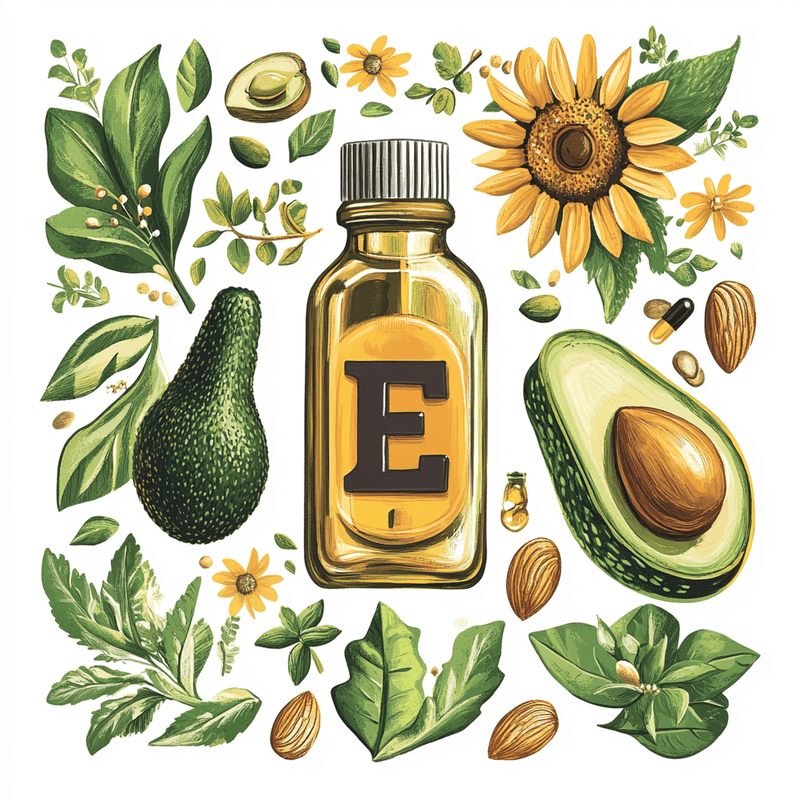
Nuts (e.g. hazelnuts, almonds)
-
Seeds (e.g. sunflower seeds, wheat germ)
-
Chickpeas
-
Sweet potatoes
-
Bell peppers
Products made from these foods are suitable sources of vitamin E too. These include, for example, wheat germ oil, sunflower oil, safflower oil and other oils. Since vitamin E is made only by plants, plant-based sources of vitamin E are by far the best. Suitable animal sources are at most eel, seafood and salmon.
As a rule, vitamin E intake is well covered by daily food. Nevertheless, a vitamin E deficiency is possible, because a plant-based diet can get neglected in a fast-paced everyday life and with the huge fast-food offering. On top of that, many people avoid nuts and seeds, the most important suppliers of vitamin E, because these foods are seen as a risk for weight gain per se due to their high fat content.
To cover your vitamin E needs in a fast-paced everyday life, and also if you skip nuts and seeds, food supplements are helpful. At frank., as lovers of good taste and natural variety, we take a very special approach. Our products are juices, shots and soups made from natural vegetables and fruit, with no unnecessary additives. Thanks to their content of various nutrients, our juices support not only your vitamin E supply but also your needs for vitamin B12 and other vitamins.
Getting enough vitamin E is ensured by the 6.6 mg of vitamin E per fasting day in our juices. You'll certainly get the rest of the vitamin E that's missing from the recommended daily dose of 10 mg per day through food. Thanks to the moderate vitamin E content, there's no risk of an overdose with us, as could well happen with high-dose vitamin E capsules or pills.
Feel free to take a look at our 3-day juice cleanse! You can use our juices as part of a fasting cleanse to detox your body. They also work long term as a tasty, varied food supplement or, now and then on stressful days, as a replacement for a meal. In the long run, though, our juices by no means replace food. A balanced diet with natural foods remains essential for everyone's health.
Mainly for reasons of taste, our juices are a popular alternative to vitamin E capsules and other food supplements. In our 3-day juice cleanse, for example, you'll find a range of 18 fruit and vegetable juices in different flavours. Our starter juice cleanse includes the juices "Marvellous Greens", "The Good Life", "The Crocodile", "Indian Sundaze", "True Romance" and "Mister White". Not only are the names of our juices creative, so are the varied blends of different fruits and vegetables inside them.
What are the effects of a vitamin E deficiency?
An emerging vitamin E deficiency first shows up as slight nervousness and irritability. A longer-lasting lack of the vitamin can lead to problems with the nerves and muscles. The most common of these is loss of sensation in the arms and legs. Vision problems can also occur with a vitamin E deficiency.
With a more severe vitamin E deficiency, the immune system eventually becomes weakened. In the worst case, circulatory problems in the brain and heart are conceivable, with the deficiency of vitamin E reaching life-threatening proportions. Mental slowing and delayed reflexes can also result from a lack of vitamin E.
The logical conclusion: cover your daily vitamin E requirement and support your health
Protection against free radicals is one of the most important health aspects for the human body. Through its contribution against free radicals, vitamin E protects, and should therefore be taken in sufficient amounts.
Plant-based foods (especially nuts, seeds and oils) contain plenty of vitamin E. A varied diet including these foods should already be enough to cover your daily requirement. Since nuts, seeds and oils are high in fat, though, they're often missing from the diet. For this reason, taking vitamin E through supplements is a perfectly sensible measure.
As an alternative to vitamin E capsules and other products, we at frank. offer creative, varied juices with vitamin E and other micronutrients. The juices are made from 100% natural ingredients, vegan, organic-certified and gluten-free, and win you over with their other qualities too. With the juices from frank., supplementing becomes a pleasure.