







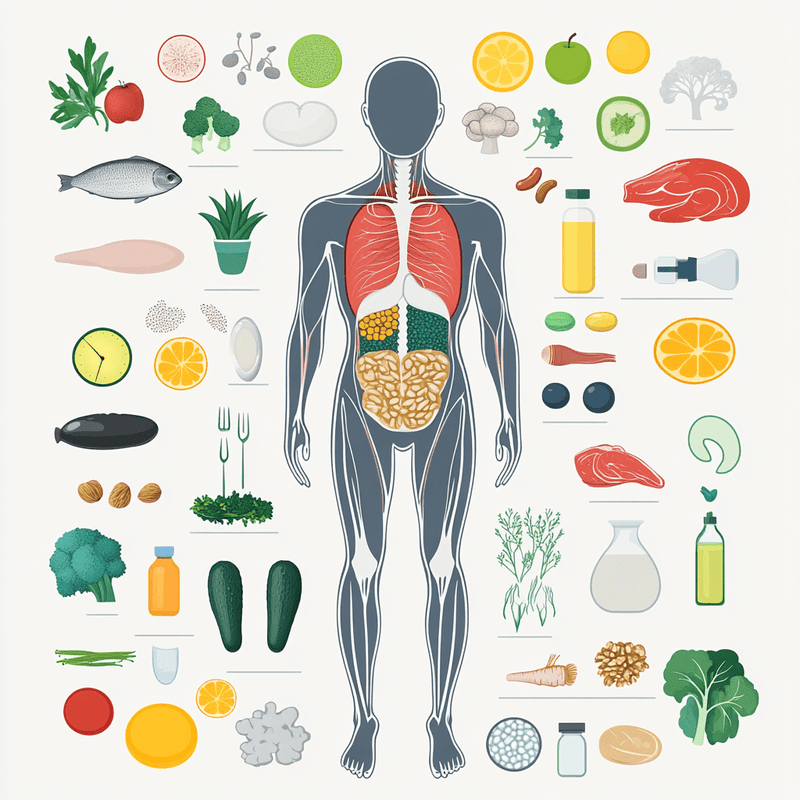
A nutrient deficiency occurs when the body doesn't get enough nutrients. Even the lack of a single nutrient counts as a nutrient deficiency. Some people don't notice the deficiency at all until the first symptoms reduce their wellbeing or even cause serious problems in the body.
In this article we show you when a nutrient deficiency is present, how it shows itself and how you can avoid or correct it.
What is nutrient deficiency?
Nutrients fall into two groups: macronutrients and micronutrients. While macronutrients contain calories and supply the body with energy, micronutrients contain no calories. Even so, micronutrients perform vital tasks in the body. They need to be taken in at the recommended daily amounts so that the body can keep all its internal processes running and you stay healthy. There is no recommended daily amount for macronutrients, but there are a few rules to bear in mind when you eat them.
Macronutrients: energy suppliers with further jobs
Fats, proteins and carbohydrates are macronutrients. They supply the body with energy in the form of calories. If you take in more calories than you burn, you put on weight. If your calorie intake is lower than your calorie consumption, you lose weight. Diets make use of this. If your calorie balance is neutral, you maintain your body weight. Here is the calorie content of the macronutrients at a glance:
-
Fat: 9.3 kcal per g
-
Carbohydrates: 4.1 kcal per g
-
Protein: 4.1 kcal per g
It is generally recommended to cover your nutrient needs with 55% carbohydrates, 30% fat and 15% protein. Minor percentage deviations between these nutrients are nothing to worry about. On the question of how many calories you should give your body each day, the German Nutrition Society (DGE) has published an informative article.
Now, when it comes to nutrient deficiency, it's important to know this: a lack of macronutrients doesn't occur just because you cover your calorie needs with, say, 30% carbohydrates instead of the recommended 55%. There are special ways of eating where even less than 5% of the calorie requirement comes from carbohydrates, such as the ketogenic diet. A deficiency in macronutrients only occurs when you neglect them completely.
Completely neglecting them is especially bad for the macronutrients protein and fat. Unlike carbohydrates, proteins and fats have far-reaching functions in the body. Proteins, for example, play an important role in building muscles, connective tissue and cartilage and in absorbing the mineral iron, while fats are indispensable components of cell membranes and are needed to absorb fat-soluble vitamins.
Carbohydrates are primarily suppliers of energy. But after switching to fat metabolism, the body can also get energy from fats. So carbohydrates play a less important role in the body than fats and proteins. There are even certain kinds of carbohydrates you should avoid. These include sugar, for example, which only fills you up for a short time. After sugar is metabolised quickly, cravings set in. Foods with a high sugar content contain hardly any nutrients, so apart from the short-lived energy kick you get no benefit from them.
A lack of macronutrients almost never occurs in Germany and other industrialised nations. Even people living at the subsistence level can at least secure an adequate calorie intake through state benefits. That's why at frank., in our products as well as in this article, we focus on micronutrients, where deficiencies are far more common. You can find out more about macronutrients in this blog post.
Micronutrients: a key role in many processes in the body
When a nutrient deficiency occurs here, it is down to insufficient intake of micronutrients. Micronutrients include vitamins and minerals. The latter are further divided into bulk elements and trace elements. There are clear daily amounts for vitamins and minerals. If the recommended daily requirement of even a single vitamin or mineral isn't met, this can have far-reaching consequences for your health.
While a lack of carbohydrates, proteins or fats can partly be substituted and the body can synthesise these nutrients itself in certain cases, vitamins and minerals are irreplaceable. The body definitely needs them. If it doesn't get them, there is a nutrient deficiency. The effects of a nutrient deficiency can vary from nutrient to nutrient. For example, a lack of iron makes itself felt very strongly:
-
At first, headaches and circulation problems often occur.
-
After that, hair loss, cracked corners of the mouth and brittle nails can follow.
-
In an advanced stage, anaemia with dangerous effects on the cardiovascular system is likely.
Women in particular tend towards an iron deficiency because of their period, as they also lose iron through the blood loss during monthly menstruation. Another particularity in women: during pregnancy there is an increased need for folic acid. A deficiency of this vitamin can lead to serious malformations in children, such as spina bifida.
Not only gender but also certain ways of eating can lead to more frequent nutrient deficiencies. One example is a vegan diet, where particular attention must be paid to the intake of iodine and iron.
How does a nutrient deficiency show itself?
The symptoms of a nutrient deficiency are varied, because there are dozens of vitamins and minerals that influence all kinds of processes in the body. And if you consider that a single vitamin or mineral sometimes performs five or more vital tasks, the range of possible symptoms of a nutrient deficiency is enormous. Here are a few symptoms, as an excerpt:
-
Anyone who doesn't get enough iron, vitamin B2 and vitamin B12 often feels tired and worn out.
-
Other symptoms of a vitamin B12 deficiency are sensory disturbances and poorer absorption of other nutrients.
-
Brittle nails and increased hair loss can be due to a lack of iron. A lack of vitamin B12 and zinc can just as well be responsible for these symptoms.
-
A lack of fibre (important indigestible substances from the carbohydrate group), vitamin A and the whole range of B vitamins can cause digestive problems.
-
Magnesium and many other micronutrients are involved in the healthy build-up of cells. Magnesium levels only drop in a severe deficiency. That's why many people don't notice the deficiency at all until strong signs of deficiency appear. Muscle tension, muscle twitches, seizures, high blood pressure and many other serious symptoms are conceivable.
-
Vitamin E and vitamin C are antioxidants. While vitamin E [internal link to the new blog post] contributes to cell protection, vitamin C is essential above all for defence against and prevention of infections and illness. A weakened immune system and increased susceptibility to infection are the result of a vitamin C deficiency.
-
The trace element iodine can be taken in with a natural diet almost only through fatty sea fish. A deficiency is therefore quite widespread. This nutrient deficiency usually shows up as difficulty concentrating and as breathing and swallowing problems. Skin changes also occur.
-
The symptoms of a vitamin D3 deficiency are bone, joint and muscle pain. A deficiency can also result in a low irritation threshold and low mood.
There are plenty of reasons why the body doesn't work the way it should. Every now and then people are overcome by the fear that it could be a serious illness. But often it is "just" a lack of nutrients behind it. For all processes in the body to run smoothly, the body has to be supplied with enough nutrients.
You've seen from the list of symptoms: so that none of the functions in the body are impaired, we need a wide range of different nutrients, and in huge variety. The sheer range of nutrients needed is the reason why, even in well-developed industrialised countries, a nutrient deficiency occurs every now and then. But what causes it, and how can you correct a nutrient deficiency?
Causes of a nutrient deficiency
Although a nutrient deficiency is fairly rare in developed countries, it still happens. Luckily, it is mostly just a temporary deficiency that is noticed quickly and dealt with accordingly. But sometimes, in the fast pace of everyday life, we neglect our own wellbeing while the first symptoms of a nutrient deficiency creep in and develop. A first cause of nutrient deficiency affecting people in developed countries is therefore a lack of mindfulness. Listening to your own body and taking the first signs of discomfort seriously should be a matter of course.
Here in Germany there is another problem too: vitamin D3 deficiency. People with a vitamin D3 deficiency suffer from low mood and lack of drive. Why is this nutrient so often lacking in Germany? Because the sun rarely shines here! The sun plays a special role in preventing nutrient deficiency. After all, the body preferably makes vitamin D itself through sunlight on the skin. Since the sun rarely shines here outside of summer, we often feel less energetic and more tired.
Apart from the possible lack of mindfulness and the low sunlight in many countries, the causes of a nutrient deficiency are in the end the usual suspects: poor eating habits.
-
The many vitamins, minerals and trace elements are spread across a wide variety of foods.
-
Anyone who eats a one-sided diet will regularly struggle with a lack of certain nutrients, even if the foods are healthy in principle.
-
Poor eating habits also include fast food. It contains hardly any nutrients. Above all, there are hardly any vitamins and minerals in fast food.
A nutrient deficiency can also go hand in hand with stomach and bowel complaints. There is a risk that nutrients aren't used properly when there are digestive problems. Frequent diarrhoea, for example, causes a nutrient deficiency. Medication, especially antibiotics, are also possible causes of a nutrient deficiency.
What can you do about a nutrient deficiency?
If you notice symptoms of a nutrient deficiency in yourself, you should take countermeasures right away. If the signs are serious, it makes sense to get medical advice. If you spot the symptoms early, following our 5 rules should be perfectly sufficient. With these rules you should have the best chance of correcting the nutrient deficiency:
-
Anyone who eats a varied and healthy diet runs into a nutrient deficiency less often. So our most important tip for you is to eat different fruit and vegetables every day. Also, swap meat for fatty sea fish now and then, to get healthy fatty acids and, on top of that, enough of the nutrient iodine.
-
Cut back on alcohol and cigarettes! Stimulants have a negative effect on how some nutrients are used.
-
Use dietary supplements! Sooner or later even the toughest critic develops a soft spot for supplements. At the latest when serious symptoms of a deficiency appear and can't be fixed, people go desperately searching for supplements in the drugstore. At frank. we offer a perfect, high-quality solution with our Daily Complete [internal link].
-
Seek out the sun! In summer you should have the courage to soak up the sun for 10 to 15 minutes without sunscreen now and then. Vitamin D production through the skin is limited when sunscreen is applied. Apart from spending time outdoors in the summer months, you might have the chance to take a trip to a sunny country in autumn or spring.
-
Take your time! The fast pace of everyday life is a core reason why people often don't properly notice a nutrient deficiency. So plan plenty of time to put a varied and balanced diet into practice, to question physical symptoms and to react to them in good time.
Variety is the key
You now know how to recognise a nutrient deficiency and what you can do about it. A general nutrient deficiency is luckily rare in developed countries like Germany. But a temporary lack of certain nutrients is more common than you might think. To prevent it, you should make your diet varied. This is the most important factor, because a balanced and diverse diet is a very effective way to prevent nutrient deficiency.
Even so, on top of your diet you should, to be on the safe side, use all-round dietary supplements like our Daily Complete to make sure you cover the most important nutrients. Alongside supplements, juices with a high nutrient content, such as our juice cleanses, are a good way to sensibly top up your diet and nutrient supply.