In short: Matcha is finely ground green tea made from shade-grown tea leaves, where you drink the whole leaf. A serving of about 2 g delivers roughly 30 to 70 mg of caffeine, plus the amino acid L-theanine and plant compounds such as EGCG. Many people find the effect calmer and steadier than with coffee. Health claims are only partly proven. As of October 2026.
Matcha is long past being just a trend from Japan. We explain what's in the green powder, how to whisk it properly and when a latte is the better choice.
What is matcha and how does it differ from green tea?
For matcha, the tea plants are shaded about three to four weeks before harvest. This makes the leaves produce more chlorophyll and more L-theanine. After harvest, the leaves are steamed, dried, de-stemmed and ground into a fine powder. With classic green tea, the leaves only steep in water and are then removed.
| Feature | Matcha | Green tea (infusion) |
|---|---|---|
| Preparation | Powder is whisked until frothy | Leaves steep in water |
| What you drink | The whole leaf | Only the infusion |
| Caffeine per cup (approx.) | 30 to 70 mg | 20 to 40 mg |
| Taste | Strong, grassy, slightly sweet | Milder, often more astringent |
| Price | Higher | Lower |
You can learn more about the green pigments in our article on chlorophyll and its effects.
There are also quality grades: ceremonial grade comes from the young, tender leaves and tastes milder. Culinary grade is stronger and suited to lattes, smoothies and baking. You can recognise real quality by the vivid green colour; a yellowish-brown powder points to age or inferior leaves.
What are the effects of matcha: caffeine and L-theanine?
The caffeine in matcha is stimulating but comes with L-theanine. This amino acid is suspected of smoothing out the effect and softening jitteriness. Studies point to an effect on attention and concentration, but the studies are mostly small and short.
Matcha also contains polyphenols such as EGCG, which are considered antioxidants. Whether the amounts in a cup bring a noticeable health benefit is uncertain. You can read how tea is used during fasting and in everyday life in the article Tea for Fasting.
In practice that means: matcha is no miracle drink, but it is a calmer alternative to coffee if you like the effect. The same applies for sleep and stomach as with all caffeinated drinks: not too late, and not on an empty stomach if you're sensitive.
How do you prepare matcha properly?
Never pour boiling water onto the powder, as that makes the taste bitter. 70 to 80 °C is ideal.
- Sift 1 to 2 g of matcha (half to one teaspoon) into a bowl to prevent lumps.
- Add about 60 to 80 ml of hot water.
- Whisk the powder with a bamboo whisk in a W or M motion for 15 to 20 seconds until frothy.
- Drink the matcha right away, while it's still frothy.
Without a bamboo whisk, a small milk frother or a shaker bottle also works.
Store the powder airtight, dark and cool, ideally in the fridge. Once opened, matcha loses colour and aroma within a few weeks. It's better to buy small 30 g tins.
How do you make a matcha latte?
For a matcha latte, the whisked matcha concentrate is topped up with warm or cold milk.
- Stir 1 teaspoon of matcha (about 2 g) smooth with 50 ml of hot water (no more than 80 °C).
- Warm 150 to 200 ml of milk or a plant-based alternative and froth it.
- Slowly pour the milk into the bowl or glass.
- Sweeten to taste, for example with a little date syrup or maple syrup.
For the iced version, whisk the matcha with water, pour it over ice cubes and top up with cold milk. Plant-based drinks differ a lot in taste; oat and almond go well. You'll find an overview in the article Plant-Based Milk Tested.
If you like, add a dash of vanilla or a pinch of cinnamon. Matcha clumps easily when mixed cold, so always stir it smooth with a little water first. Alternatively, you can shake the mixture in a shaker with ice cubes. You'll find more teas for different occasions in our selection of organic teas.
How much matcha a day is okay?
For adults, the EFSA considers up to 400 mg of caffeine per day, spread across the day, to be safe. Depending on quality, that equals several servings of matcha. In practice, one to two cups a day is a good guide. According to the EFSA, pregnant and breastfeeding women should limit caffeine to 200 mg per day.
The amount of caffeine varies a lot by variety, so it's worth checking the packaging. If you're sensitive to caffeine, it's better to skip it in the evening.
Are there side effects or risks?
Too much matcha can cause palpitations, restlessness, sleep problems or stomach discomfort. Tea can also reduce the absorption of iron from plant-based foods. So if you're prone to iron deficiency, avoid drinking matcha directly with meals. Because you consume the whole leaf with matcha, origin and contaminant testing matter. It's best to go for organic quality with clear origin details.
Matching picks from frank.
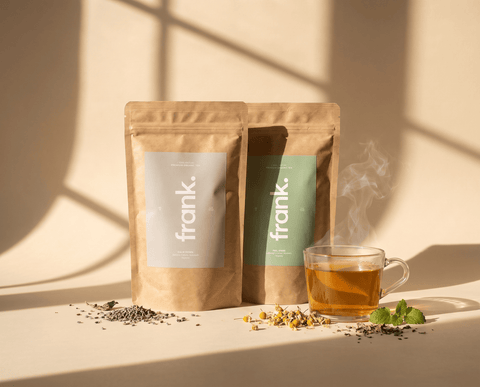
If you like tea without powder and whisking: our Re-Charge Tea is an organic green tea for everyday life that you can drink hot or cold. The exact ingredients and preparation are on the product page.
You might also like
Frequently asked questions about matcha
How much caffeine does matcha have?
A serving of 1 to 2 g contains about 30 to 70 mg of caffeine. The amount depends on variety, quality and the amount of powder.
Can I drink matcha in the evening?
Because of the caffeine, better not, especially if you're sensitive. Midday or early afternoon is usually better.
Is matcha better than coffee?
That's a matter of taste. Matcha often contains less caffeine plus L-theanine, which is why many people find it gentler.
Why does my matcha taste bitter?
Usually the water is too hot or the quality is low. Use water at 70 to 80 °C and a matcha grade made for drinking.
Which matcha is suitable for lattes?
For lattes and baking, the cheaper culinary grade is usually enough. The more expensive ceremonial grade is better enjoyed on its own.
Note: This article is for general information and is not a substitute for medical or therapeutic advice. If you have complaints, pre-existing conditions, are pregnant or take medication, please talk to your doctor first.