Updated: October 2026
In short: Therapeutic fasting at home means a few days without solid food, with water, tea, vegetable broth and diluted juices, usually at 200 to 500 kcal a day. The consumer advice centre (Verbraucherzentrale) advises fasting for a week at most, talking to a doctor beforehand and planning 2 to 3 preparation days and 2 to 3 refeeding days.
Want to take it really easy for once and put your eating on pause for a few days? Then above all you need a clear routine, enough fluid and honest information about what therapeutic fasting can and can't do. Here's the plan we'd recommend to friends ourselves, including the warning signs.
How does therapeutic fasting at home work?
In three phases: preparation, fasting days, refeeding. Without the phases before and after, you put unnecessary strain on your digestive tract.
| Phase | Duration | What you eat and drink |
|---|---|---|
| Preparation | 2 to 3 days | light food: vegetables, fruit, rice, potatoes, lots of water and tea |
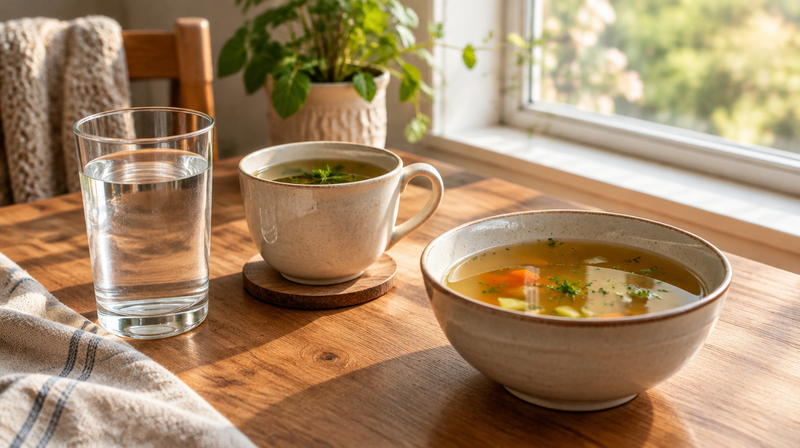
| Fasting days | 3 to 7 days | water, herbal tea, vegetable broth, diluted juices, at least 2.5 litres calorie-free |
| Refeeding | 2 to 3 days | breaking the fast with soup or a steamed apple, then normal food step by step |
The numbers for the preparation and refeeding days come from the Verbraucherzentrale's fasting guide. You'll find details on the refeeding days in our guide to breaking a fast.
How long can you do therapeutic fasting at home?
Healthy adults should fast for a week at most without medical supervision. That's the Verbraucherzentrale's recommendation. To get started, 3 to 5 days are often enough, and if you've never fasted, it's best to start with a single day.
Longer cleanses of two to three weeks belong in the hands of trained professionals, for example in a fasting clinic. You'll find an overview of how long each method usually lasts in the article Fasting Duration.
What does a 9-day plan look like?
The plan below consists of 2 preparation days, 5 fasting days and 2 refeeding days. Adjust the number of fasting days to your experience.
| Day | Phase | Example for the day |
|---|---|---|
| 1 to 2 | Preparation | Oat porridge, vegetable soup, rice with vegetables, no coffee, no alcohol |
| 3 to 7 | Fasting | Tea in the morning, vegetable broth at midday, diluted juice in the afternoon, broth or herbal tea in the evening, water in between |
| 8 | Breaking the fast | a steamed apple or a light soup, eat slowly |
| 9 | Refeeding | Vegetables, potatoes, oats, small portions, still no meat and nothing deep-fried |
Light exercise such as walking does you good; it's better to leave out intense training during this time. Plan in rest, warmth (hot water bottle, warm socks) and an early night.
How do you prepare for therapeutic fasting?
With a bit of planning beforehand. The Verbraucherzentrale recommends 2 to 3 preparation days in which you gradually cut back on portions and treats. This makes the first fasting days much easier.
- Talk to your doctor beforehand, especially if you take medication or have pre-existing conditions.
- Choose a quiet period, ideally a weekend or holiday.
- Cut back on coffee, alcohol, sugar and meat already during the preparation days.
- Get tea, vegetable broth, water, juices if needed and a hot water bottle in advance so you don't go shopping hungry.
- Let the people around you know so nobody plans meals with you.
What to do about hunger, headaches and tiredness?
Hunger and temporary weakness are common with fasting methods; Healthline also names this as a typical side effect. Often a glass of water or warm tea, a short break in the fresh air or a cup of broth is enough.
Headaches often occur in the first few days, especially if you've been drinking a lot of coffee. Drink enough and take it easy. If symptoms are severe or persist, stop fasting and seek medical advice. More tips are in our article on Fasting Symptoms.
How do you manage everyday life during the fasting days?
With a rhythm that does you good. Drink throughout the day instead of all at once. A fixed plan helps replace mealtimes:
| Time | Idea |
|---|---|
| Morning | warm water or tea, a short walk |
| Mid-morning | herbal tea, a bit of reading or stretching |
| Midday | clear vegetable broth, then a rest |
| Afternoon | diluted juice or tea, light movement |
| Evening | broth or tea, hot water bottle, early to bed |
Tasks that need a lot of concentration are better put off until later.
What can you drink during therapeutic fasting?
Water, unsweetened herbal and fruit teas, vegetable broth and diluted juices. The Verbraucherzentrale names at least 2.5 litres of calorie-free drinks per day. You should also leave out chewing gum, because it can stimulate appetite.
If you use juices, the calorie amount is decisive. Classic Buchinger therapeutic fasting is at about 150 to 300 kcal; the Verbraucherzentrale gives around 500 kcal as the upper limit. A frank. Juice Cleanse contains, depending on the level, 650 (Pro), 736 (Medium) or 845 kcal (Starter) per day, so it's a milder juice cleanse approach and not therapeutic fasting in the strict sense. That's not a drawback, but you shouldn't confuse the two.
Who shouldn't do therapeutic fasting?
Pregnant and breastfeeding women, children, people with eating disorders and people with serious organ diseases should not fast. With diabetes (especially on insulin), gout or regular medication, you need medical advice beforehand. That's how the Gesundheits-Lexikon lists it for the Buchinger method.
If you're underweight, have low blood pressure or already feel exhausted before you start, talk to your doctor first. Stop if you feel dizzy, get a racing heart or feel seriously unwell.
What does therapeutic fasting really bring?
Many fasters report a feeling of lightness and a clear head, and in an observational study by the Buchinger Wilhelmi clinic with 1,422 participants, weight, waist circumference and blood pressure fell. Important: the study comes from the clinic itself and had no comparison group.
The Gesundheits-Lexikon points out that therapeutic fasting is not a proven treatment concept and does not supply the body with nutrients to meet its needs. Without a change of diet afterwards, the disadvantages outweigh the benefits. So see therapeutic fasting as a conscious time out and a starting point, not a shortcut to better health.
Matching picks from frank.
If you'd rather start with a fixed plan and selected products, take a look at our Juice Cleanses: 3, 5 or 7 days, cold-pressed juices and a guide with preparation and refeeding. You'll find more on preparation in our article Juice Cleanse Preparation.
You might also like
- Types of Fasting: Which One Is Right for Me?
- What Is the Optimal Fasting Duration?
- Our Guide to Breaking a Fast - Some Tips & Tricks
Frequently asked questions about therapeutic fasting at home
Can I work during therapeutic fasting?
Many manage a quiet office day; physically demanding work is difficult. It's best to start on a weekend or on holiday and plan breaks.
How much weight do you lose with therapeutic fasting?
That depends on duration and starting weight, and part of it is water. The weight often comes back after fasting if you return to your old habits.
Can I drink coffee during therapeutic fasting?
The Buchinger concept doesn't include coffee. If you drink coffee regularly, cut it back already during the preparation days to avoid headaches.
Do I have to exercise during therapeutic fasting?
No. Walks and gentle stretching make sense; it's better to leave out intense training.
What's the difference between therapeutic fasting and juice fasting?
Classic therapeutic fasting includes tea, broth and small amounts of diluted juice on very few calories. With juice fasting, juices are the focus and calorie intake is usually somewhat higher.
Note: This article is for general information and is not a substitute for medical or therapeutic advice. If you have complaints, pre-existing conditions, are pregnant or take medication, please talk to your doctor first.