Updated: October 2026
In short: A Ginger Shot can be pleasant when you have a cold, but an effect on colds is not proven. Ginger is traditionally used for colds; the NCCIH names nausea and pain as better-studied areas. The NHS sees little evidence that vitamin C, echinacea or garlic prevent or shorten colds. What seems to help is mainly rest, fluids and time. As of October 2026.
When your throat is scratchy, many people reach for a shot. Here you'll see what speaks in its favour, what isn't proven and what really helps with a cold.
Does a Ginger Shot help with a cold?
That can't be proven. The NCCIH mentions that ginger has traditionally been used for flu and respiratory complaints, among other things. It is well studied, however, mainly for nausea, period pain and knee osteoarthritis, not for colds.
A warm ginger tea or a spicy shot can still feel good with a scratchy throat. That is a feel-good effect and not a proven healing effect. So we don't promise you that a shot shortens or prevents a cold.
What you can realistically expect from a shot: a warm, spicy feeling in the throat, a fresh taste and maybe a small ritual that does you good in a tough week. Nothing more. If your body needs rest, it doesn't get it from a bottle but from finishing work earlier, enough sleep and a few days without time pressure.
Especially in winter this is easily forgotten, because colds often hit in the middle of full weeks. So consciously plan in a buffer, even if it's hard for you.
What does the NHS say about home remedies for colds?
The NHS explains that colds clear up in most people after about one to two weeks and that antibiotics don't help because they are viruses. There is little evidence that supplements such as vitamin C, echinacea or garlic prevent colds or speed up recovery.
| Measure | Assessment |
|---|---|
| Rest and sleep | recommended by the NHS |
| Drinking plenty | recommended by the NHS |
| Gargling salt water, hot lemon and honey drink | named by the NHS for sore throats |
| Steam inhalation | can help with a blocked nose |
| Vitamin C, echinacea, garlic | little evidence according to the NHS |
| Antibiotics | do not help with colds |
Ginger doesn't appear in this NHS list. It doesn't replace the basics mentioned.
What about echinacea in the Immunity Shot?
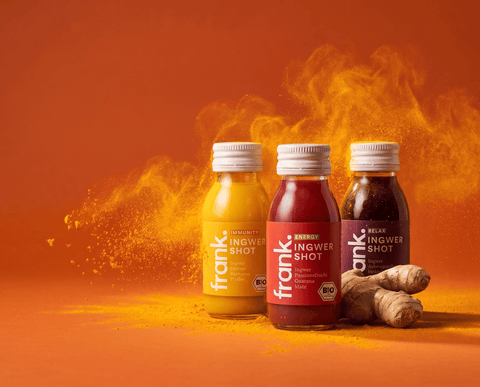
Our Organic Ginger Shot Immunity contains ginger, turmeric, pepper, orange, echinacea and acerola. On echinacea, the NCCIH writes that taking it might slightly lower the risk of catching a cold. Whether it shortens the duration of a cold is not settled, and more studies are needed. The NHS, on the other hand, rates the evidence for echinacea as low.
Honestly: the evidence is inconsistent. That's why we don't call the shot a cold remedy. It's a drink you either like or you don't. If you take medication or are immunosuppressed, ask first, because with echinacea, interactions and allergic reactions are possible.
Which shot suits you in winter?
If you like shots, decide by taste and tolerance, not by promises. The frank. flavours differ in ingredients and heat.
| Flavour | Ingredients (according to frank.) | Feature |
|---|---|---|
| Immunity | Ginger, turmeric, pepper, orange, echinacea, acerola | 95 ml, shelf life about 7 days chilled |
| Energy | Ginger, guarana, mate, aronia, passion fruit | 60 ml, contains natural caffeine, shelf-stable unchilled |
| Relax | Ginger, ashwagandha, lavender, blueberry, curry leaf extract | mildest heat |
With a sore throat, some people may prefer the milder Relax shot, because too much heat can further irritate the mucous membrane. The NCCIH names irritation of the mouth and throat as a possible side effect of ginger.
Can a Ginger Shot prevent colds?
There is no robust evidence for that, and we don't promise it. A cold can only be prevented to a limited extent. Helpful are handwashing, enough sleep, exercise in the fresh air and a varied diet. More in the article Strengthening Your Immune System: 5 Simple Tips.
If you like reaching for a shot in winter, you can do so, but shouldn't rely on it. You can read more everyday knowledge on the topic in the article Ginger Shots for Winter.
Which cold myths persist stubbornly?
Lots of claims circulate around colds. Here's a fact check using the statements from the sources we checked.
| Myth | What the sources say |
|---|---|
| Antibiotics help faster | NHS: No, colds are viral infections. |
| Vitamin C prevents colds | NHS: little evidence. |
| Echinacea works reliably | NCCIH: may slightly lower the risk of colds, effect on duration unclear. |
| Ginger is a cold remedy | NCCIH: traditionally used, well supported mainly for nausea and pain. |
| Eating spicy food "burns" the infection out | There is no evidence for that. |
The pattern is always the same: individual ingredients promise a lot, and the studies show small or no effects. That's no reason to give up ginger, but it is a reason for realistic expectations.
If you want to know why spiciness has that effect in the body, read the article Is Spicy Food Good for the Body?
When is a doctor's visit necessary?
The NHS advises seeking medical advice if symptoms last longer than 10 days, fever lasts more than three days, chest pain or shortness of breath occur, or if you have pre-existing conditions or a weakened immune system. That applies regardless of whether you drink shots.
Important for pregnant women: always check ginger products first; see Ginger Shot During Pregnancy.
What can you do at the first symptoms?
When your throat is scratchy, a simple plan based on the NHS recommendations helps. It needs no special ingredients.
- Sleep more than usual and plan in breaks.
- Drink water or warm tea throughout the day.
- Gargle with salt water for a sore throat.
- A warm drink with lemon and honey can soothe the throat.
- Inhale steam if your nose is blocked.
If you'd like to drink a shot too, drink it with a meal so it doesn't irritate the stomach. According to the NCCIH, possible complaints from ginger are stomach pain, heartburn and diarrhoea. With acute symptoms the stomach is often sensitive anyway.
What does a day with a cold and a shot look like?
An example: warm water and some porridge in the morning, then half a shot. A light vegetable soup at lunchtime, tea with lemon in the afternoon, early to bed in the evening. You treat the shot as part of a quiet day, not as a remedy against viruses.
Practical tip: keep a thermometer and note temperature and symptoms. That helps at a doctor's visit if it doesn't get better.
Matching picks from frank.
If you like drinking ginger in winter, the Organic Ginger Shot Immunity is a blend of ginger, turmeric, pepper, orange, echinacea and acerola. The 95 ml bottle is available from €2.50 per shot (as of October 2026), with a shelf life of about 7 days after delivery when chilled. It is a drink, not a medicine.
You might also like
- Strengthen Your Immune System & Stay Healthy: 5 Simple Tips
- Ginger Shots for Winter
- The Ginger Turmeric Shot
Frequently asked questions about Ginger Shots for colds
Does ginger help with colds?
That's not proven. Ginger is traditionally used for colds; according to the NCCIH it is well studied mainly for nausea and pain.
Can a Ginger Shot end a cold?
No, we don't claim that. A cold usually clears up by itself after one to two weeks; rest and fluids help.
Can I prevent a cold with Ginger Shots?
There is no robust evidence for that. Handwashing, sleep and a varied diet are better foundations.
Does echinacea help with colds?
The NCCIH sees a slight lowering of the risk of colds; whether the duration is shortened is unclear. The NHS sees little evidence.
When should I see a doctor with a cold?
With symptoms over 10 days, fever over three days, chest pain, shortness of breath or a weakened immune system.
Note: This article is for general information and is not a substitute for medical or therapeutic advice. If you have complaints, pre-existing conditions, are pregnant or take medication, please talk to your doctor first.