When our customers tell us about their experiences with our juice cleanse, we often read the same thing: our juice cleanses lead to more well-being, freshness and lightness, both mentally and physically.
We have summed up the benefits a juice cleanse or fasting cleanse can bring in the post: "What does a juice cleanse do for me".
But are there also certain situations where a juice cleanse doesn't make sense? You'll find out in the following article!
Quick check: what is a juice cleanse?
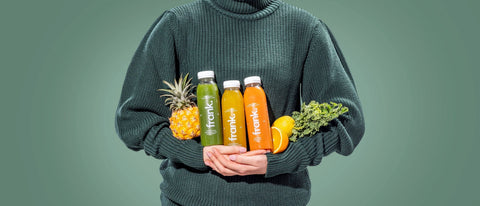
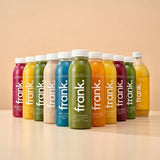
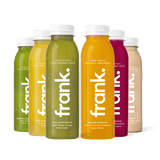
With a juice cleanse from frank., for a set period you treat yourself several times a day to high-quality, cold-pressed, never heated fruit and veg juices made from up to 2 kg of field-fresh fruit and vegetables. On top of that you can drink herbal teas, vegetable broths and water. This means you consciously give up your usual solid foods for that time. That includes stimulants and indulgences such as nicotine and alcohol! With a cleanse you train your mindfulness and take a step back from your diet. That way, after your juice cleanse you can establish new, health-supporting routines with a conscious mindset and let go of less helpful habits. Your body can benefit from a juice cleanse too: your digestive organs get some relief and the body can carry out autophagy, the processes of cell renewal, particularly well.
Curious and want to learn more about fasting? Then we have the article "What is fasting?" for you.
Because you give up solid food and have a big calorie deficit, a juice cleanse isn't suitable for everyone. Here's who it's not for!

Why a juice cleanse doesn't make sense during pregnancy and breastfeeding
In general, you should skip juice cleanses during pregnancy and while breastfeeding, as they could have negative effects on the health of you as a mother and of your baby. In the next section we explain the most important reasons.
No juice cleanse during pregnancy and breastfeeding because of increased energy needs
During a juice cleanse you take in a much smaller amount of calories. That's intended, can bring plenty of positive effects, and is the key point of a fasting cleanse! But both during pregnancy and while breastfeeding you especially need food energy, because you need extra energy to meet the needs of the growing foetus and to produce breast milk. Fasting can potentially lead to a drop in milk production and should therefore not be practised during pregnancy.
No juice cleanse during pregnancy and breastfeeding because of increased nutrient needs
During pregnancy, the need for vitamins and minerals rises alongside the need for food energy. In fact, it rises disproportionately! Your challenge as an expectant or new mother is to get significantly more nutrients while calories don't rise nearly as much. In concrete terms, that means: more nutrient-rich and less heavily processed foods. Special attention goes to the nutrients folate, iodine, iron, vitamin D and omega-3 fatty acids.
On top of that, however high-quality the fruit and veg juices from frank. are, they can't cover the increased vitamin and mineral needs of pregnant and breastfeeding women on their own. Reduced nutrient intake can negatively affect the child's development. That's why a wholesome diet with enough calories is the be-all and end-all during pregnancy and breastfeeding!
Adding frank. juices or soups to your everyday life, on the other hand, is perfectly fine and can even enrich your diet! We recommend our Juices sample set and Soups sample set to try your way through our range.

Increased need for folate during pregnancy and breastfeeding
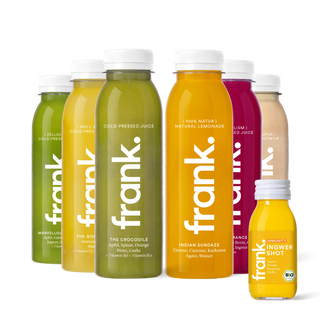
According to the German Nutrition Society, adults should take in a daily amount of 400 µg of folate. During pregnancy, folate intake should even be increased by 50%, which means 600 µg is recommended at this time. For this reason, if you are pregnant or breastfeeding, you should especially include foods with a high folate content in your meals. Where is folate found? There's a very simple rule of thumb for folate: the darker green, the more it contains! Top foods include spinach, kale, broccoli and leek. Various fruits also contribute to a higher amount of folate in your diet, including oranges and bananas. You'll find oranges and spinach in our tasty juice "The Crocodile", which you are welcome to drink in your everyday life.
Increased need for iodine during pregnancy and breastfeeding
Alongside a good folate supply, you shouldn't neglect your iodine supply during pregnancy or while breastfeeding. Iodine is essential for the healthy mental and physical development of the growing child. That's why pregnant women are advised to eat sea fish as well as dairy products. Do you eat a purely plant-based diet? Then reach for a high-quality nutrient supplement to conveniently cover the recommended daily amounts. There are plant-based sources of iodine too, such as fortified milk alternatives and algae, but the amounts often vary, so with supplements you're on the safe side. Do you already know our 24/7 basic micronutrient supply "Daily Complete"? Combined with a specific nutrient complex for pregnant and breastfeeding women, you are well supplied.
Increased need for iron during pregnancy and breastfeeding
Last but not least, as a pregnant or breastfeeding woman you should keep iron-rich foods ready in your kitchen. Iron is essential for oxygen transport in the blood, cell formation and the whole energy metabolism! That's why an iron deficiency is usually suspected when you tell your doctor about tiredness, exhaustion and paleness. Women should take in around 15 milligrams of iron per day. During pregnancy this amount doubles! So which foods contain iron? Meat is most often associated with the mineral iron. And that's right! Compared to plant-based iron sources, meat often actually contains less, but its bioavailability is higher.
That means your body can absorb and use the iron from animal foods better. To use just as much iron from plant foods, you should eat double the amount. Plant foods with especially high iron content include pulses of all kinds, quinoa, wheat bran and oats. Here, too, we recommend our "Daily Complete".

No juice cleanse during pregnancy and breastfeeding because of hormonal changes
Besides the increased need for energy and micronutrients, the hormonal system also changes during pregnancy and breastfeeding. Fasting may negatively affect hormone regulation, which is especially sensitive at this time. We want to avoid that!
Why a juice cleanse doesn't make sense with an eating disorder
You shouldn't do a juice cleanse if you have had an eating disorder in the past or still have one. Since solid food is given up completely during a juice cleanse, calorie intake also drops drastically. In an already weakened body, this can make symptoms that often occur with eating disorders, such as electrolyte imbalances, heart rhythm disturbances and organ damage, worse.
On top of that, this (deliberately) restrictive eating behaviour can trigger and worsen eating disorders. People with an eating disorder can develop heightened stress, anxiety and depression, which in turn raises the risk of relapse. A "healthy" attitude towards your own eating behaviour is therefore indispensable as a basis for doing a fasting cleanse.
Please note that eating disorders are complex mental and physical illnesses that require professional treatment. Juice cleanses are not a suitable treatment for eating disorders and can make the situation worse. Please accept professional help from a doctor, therapist or nutrition specialist to get appropriate support and treatment.

Why a juice cleanse may not make sense with diabetes
There is no blanket answer here! In some cases a juice cleanse can make sense, but it should only be done under medical supervision, with appropriate adjustment of insulin and medication doses. The doctor can professionally monitor blood sugar levels and make sure they stay within a healthy range. A juice cleanse may help people with diabetes manage their weight and eat more mindfully. That in turn can contribute to better control of blood sugar levels. Here we recommend our food cleanse with balanced meals, or our frank. juice cleanse or soup cleanse in the intensities Medium and Pro for a higher proportion of vegetables.
We do not recommend a juice cleanse with diabetes if blood sugar levels are hard to control.
Our alternatives if a juice cleanse isn't recommended for you
Luckily we don't just offer our products as cleanses, but for your everyday life too! So you can enjoy delicious, cold-pressed, never heated juices made from fruit and veg as a dessert or a snack. Our soups are perfect as a light lunch, ready in just a few minutes, easy and convenient in the microwave. Our teas are perfect for the cold season and are a real treat as iced tea in summer, too. Do you already know all four flavours?