Updated: October 2026
In short: Turmeric tea is brewed from turmeric root or powder and has traditional use. The pigment curcumin is poorly absorbed on its own; black pepper (piperine) and a little fat may improve absorption. Studies are looking at curcumin for joint complaints and inflammation, but according to the NCCIH the benefit has not yet been proven. As of: October 2026.
Turmeric tea glows yellow and tastes earthy and warm. Here you'll find a simple recipe, the difference from golden milk and honest notes on benefits and risks.
What is turmeric tea?
Turmeric tea is an infusion made from fresh turmeric root or turmeric powder. Turmeric (Curcuma longa) has been used in Indian cooking and tradition for centuries. The yellow pigment curcumin is the most studied compound.
Healthline describes turmeric tea as low in calories (around 10 to 30 calories per cup without additions) and caffeine-free. According to Healthline, each teaspoon of powder contains, among other things, manganese (26 percent of the daily requirement), iron (9 percent) and copper (4 percent). But only a fraction of that ends up in a cup of tea. You can read more about the root in Turmeric: How Healthy Is the Root Really?.
What effects does turmeric tea have?
Turmeric is traditionally used for digestive complaints and inflammation. Studies are looking at curcumin for osteoarthritis, fatty liver and inflammation in the mouth. The NCCIH sums it up soberly: not enough is known yet to say whether turmeric or curcumin is useful for any health purpose. There are first indications, for example in knee osteoarthritis.
Healthline adds that most studies use concentrated supplements. A tea is therefore likely to deliver less active compound than the studies suggest. So think of turmeric tea as a warming drink with tradition, not as a therapy.
| Topic | Status according to the NCCIH |
|---|---|
| Knee osteoarthritis | first indications, better studies needed |
| Fatty liver | a few positive indications, unclear |
| Inflammation in the mouth (mucositis) | early data on mouthwashes |
| General benefit | not proven |
Good to know: the fact that turmeric has long been part of everyday life in India doesn't mean that the amounts used in studies are found in a tea. There it is mostly eaten as a spice in dishes, in small amounts and over many years. That's different from a supplement with a high-dose extract.
Why do pepper and fat belong in turmeric tea?
The body absorbs curcumin poorly. The CSS writes that absorption can increase by up to 2000 percent together with piperine from black pepper. Curcumin is also fat-soluble, which is why oil or milk and heat help. Healthline confirms that fats such as coconut oil or milk can improve absorption.
In practice, that means: add a pinch of freshly ground black pepper and a splash of plant-based drink, milk or half a teaspoon of coconut oil. The CSS advises starting with small amounts, because oil and pepper in tea take some getting used to.
A worked example: a pinch of pepper is about 0.3 grams. That's enough for a cup and still tastes fine. More pepper doesn't automatically make the tea more effective, only spicier. If you have a sensitive stomach, less is enough too.
How do you make turmeric tea and golden milk?
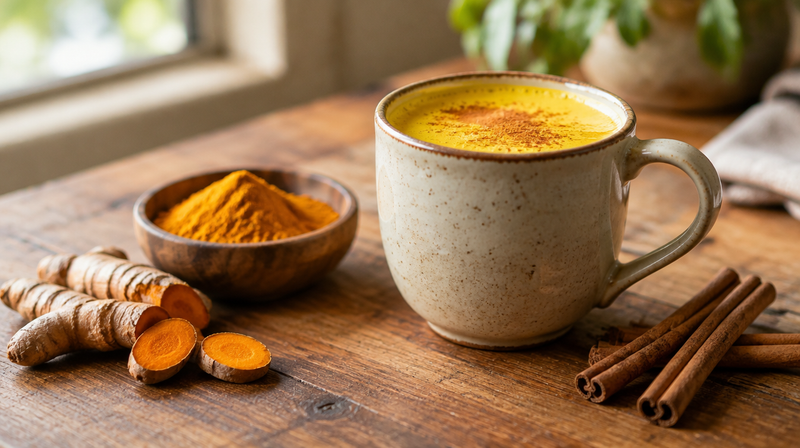
Golden milk is the version with milk or plant-based drink. The tea is the simple version with water. Both are made in a few minutes.
| Ingredient | Turmeric tea (1 cup) | Golden milk (1 cup) |
|---|---|---|
| Turmeric | 1/2 tsp powder or 2 cm fresh root | 1/2 to 1 tsp powder |
| Liquid | 250 ml water | 250 ml milk or plant-based drink |
| Pepper | 1 pinch | 1 pinch |
| Fat | 1/2 tsp coconut oil (optional) | comes with the milk |
| Extras | Lemon, ginger | Cinnamon, ginger, a little honey |
Heat everything over a low flame for 5 to 10 minutes, don't let it boil, then strain. The quantities are rules of thumb from recipes, not tested doses. The CSS cites a WHO guideline of up to 3 grams of turmeric per day; half a teaspoon of powder is about one gram.
Practical tip: briefly toast the powder in a teaspoon of oil before you add the liquid. That helps the fat-soluble pigment dissolve better, and the flavour becomes rounder. Add fresh ginger in thin slices if you like it spicier. And watch out for stains: turmeric turns cups, worktops and clothes yellow.
Who should drink turmeric tea with caution?
Healthline lists blood thinners, antidepressants, antibiotics and cancer medication as possible interactions, as well as diabetes medication, whose effect could be increased. If you take such medicines, you should ask your doctor's practice or pharmacy first. If you have gallbladder conditions, such as gallstones, it also makes sense to get medical advice before regular consumption.
According to the NCCIH and Healthline, pregnant and breastfeeding women should only consume amounts found in food. Liver damage has been reported with supplements with increased absorption (for example with piperine). That applies to dietary supplements, not tea with a pinch of pepper, but it shows that more isn't automatically better.
What side effects are possible?
According to the NCCIH, standard preparations in recommended amounts are considered likely safe for two to three months, but can cause nausea, heartburn, diarrhoea or constipation. At high amounts, Healthline also lists headaches and skin rashes.
Pay attention to quality too: Healthline points out that cheap powders can be extended with fillers such as starch or flour and, in individual cases, contaminated with lead or dyes. So buy organic turmeric from a producer that tests its products, and start with small amounts.
Before an operation or planned treatment, you should tell your doctor's practice that you regularly consume turmeric, especially in capsule form. That way possible interactions can be checked early.
How does turmeric tea fit into your day?
A warm tea in the evening is a simple ritual, and for many people golden milk replaces hot chocolate. If you like it fresh, grate turmeric and ginger together into hot water.
An example day: water with lemon in the morning, a turmeric tea with pepper in the afternoon, golden milk with cinnamon in the evening. That's two cups with about a teaspoon of powder in total. You'll find more background on the ginger-turmeric duo in the article The Ginger Turmeric Shot.
If you don't want to make the tea yourself, turmeric is also an option as a shot or juice. If you have complaints that last longer, a tea won't help. In that case, have the cause checked out.
Pairs well with frank.
You'll find turmeric and pepper in the organic Ginger Shot Immunity: ginger, turmeric, pepper, orange, echinacea and acerola, cold-pressed in a 95 ml bottle. From 2.50 EUR per shot (as of October 2026), keeps for about 7 days when chilled. If you'd prefer it as a juice: Indian Sundaze, box of 8 for 36 EUR. Both are drinks, not medicines.
You might also like
Frequently asked questions about turmeric tea
What does turmeric tea do?
Turmeric is traditionally used for digestive complaints and inflammation. Studies are looking at curcumin, but the NCCIH says a benefit has not yet been proven.
Why add pepper to turmeric tea?
According to the CSS, piperine from black pepper can greatly increase the absorption of curcumin. Fat and heat help too.
How much turmeric per day is okay?
The CSS cites a WHO guideline of up to 3 grams per day. For tea, 1/2 to 1 teaspoon of powder is usually enough.
Who shouldn't drink turmeric tea?
Caution applies with blood thinners, diabetes medication, gallbladder conditions, and during pregnancy and breastfeeding. Ask your doctor first.
What's the difference between turmeric tea and golden milk?
Turmeric tea is made with water, golden milk with milk or plant-based drink. The fat it contains may improve the absorption of curcumin.
Can turmeric have side effects?
Nausea, heartburn, diarrhoea or constipation are possible. Liver damage has been reported with high-dose supplements.
Note: This article is for general information and does not replace medical or therapeutic advice. If you have symptoms or pre-existing conditions, are pregnant or take medication, please speak to your doctor first.