In short: Collagen is the most common structural protein in the body and is found in skin, tendons, cartilage and bone. Collagen powder usually consists of peptides that are digested into amino acids. Some studies show slight effects on skin elasticity and joint complaints, but the evidence is mixed. Around 5 to 15 g per day is typical. As of October 2026.
Collagen powder is one of the most searched-for supplements. We take a sober look at what is known and at what advertising often leaves open.
What actually is collagen?
Collagen is a protein that gives tissue structure and tensile strength. Around a third of the body's protein is made up of it. It is particularly rich in the amino acids glycine, proline and hydroxyproline. With age, the body produces less of it, and UV radiation, smoking and lots of sugar also contribute to its breakdown.
In food, collagen usually comes from beef, pork or fish. There is no true plant-based collagen. Vegan products instead contain building blocks such as vitamin C or individual amino acids that are meant to support the body's own production.
There are several types of collagen. Type I is found mainly in skin, tendons and bone, type II in cartilage and type III in blood vessels and organs. Beef collagen powder contains mostly types I and III, fish collagen also type I, and joint products often advertise type II. Whether the types actually reach the matching spot in the body is not proven.
Collagen powder or collagen peptides: what's the difference?
On the market, "collagen powder" and "collagen peptides" usually mean the same thing. The collagen has been enzymatically broken into small fragments (hydrolysed) so that it dissolves in water and is digested more easily. Gelatine, by contrast, is only partly broken down and gels.
| Form | Property | Typical use |
|---|---|---|
| Collagen peptides (powder) | Soluble, neutral taste | In coffee, smoothies or water |
| Gelatine | Gels as it cools | Desserts, gummy bears, jellies |
| Capsules or tablets | Usually low-dose | If you don't like powder |
| Drinking ampoules | Often with additives | Convenient, but usually pricier |
Important: During digestion, the protein is broken down into amino acids and short peptides anyway. It is not proven that a peptide arrives in the skin in a targeted way.
What does collagen do for skin and joints?
Several small studies and analyses report that collagen peptides may slightly improve skin moisture and elasticity. For joint complaints, such as osteoarthritis, some studies point to slight relief. The results are inconsistent, however, the studies are mostly small, and many are paid for by manufacturers.
To be honest: collagen is no substitute for sun protection, enough protein and exercise. If you have joint pain, have the cause checked by a doctor. You can read more about how digestion and skin work together in our article on the connection between gut and skin.
- Skin: possible slight effects on elasticity after eight to twelve weeks
- Joints: partly slight relief, especially combined with exercise
- Hair and nails: evidence so far is thin
- Muscles: no clear advantage over other protein sources
So set realistic expectations and honestly check after a few weeks whether you notice a difference. Photos of your skin under the same light or a simple joint check on the stairs help you spot placebo effects.
How much collagen per day makes sense?
Studies mostly used 2.5 to 15 g of collagen peptides daily for at least eight to twelve weeks. 5 to 10 g is often recommended. There is no officially set daily amount. More is not automatically better, as any excess is metabolised like other protein.
In practice: stir the powder into coffee, tea or a smoothie in the morning. It tolerates heat well. If the effect you were hoping for doesn't show up after three months, the money is probably not worth spending any longer.
When buying, look for short ingredient lists, clear origin details and an amount per serving. Sweeteners and flavourings are mostly unnecessary in powders for everyday use. Expensive blends with lots of additives rarely offer a proven advantage over plain collagen peptides.
What role does vitamin C play for collagen?
Vitamin C is involved in the body's collagen formation: it's needed so that proline can be converted into hydroxyproline. In extreme cases, a deficiency shows up as scurvy with brittle connective tissue. With a normal diet, the need is generally covered; the German Nutrition Society (DGE) gives roughly 95 to 110 mg per day for adults.
Good sources are bell peppers, broccoli, kiwi, citrus fruit and sea buckthorn. A selection of Functionals and fresh fruit and vegetables are often enough to combine the two.
Can you get collagen through food?
Yes, indirectly. Protein-rich foods supply the amino acids the body uses to build its collagen. These include meat, fish, eggs, dairy, legumes and nuts. Bone broth contains some collagen, but the amount varies a lot. What turns into collagen is decided by the body itself.
If you eat plant-based, legumes, soy and whole grains can give you enough building blocks. You'll find more on the basics in the article Protein Shakes and Why Protein Is So Important
Are there side effects?
Collagen peptides are generally considered well tolerated. Occasionally, a feeling of fullness, burping or an unpleasant aftertaste are reported. If you have a fish or beef allergy, check the origin. People with kidney disease or special dietary requirements should ask their doctor first. Collagen also contains hardly any tryptophan, so it is not a complete protein source.
Pregnant and breastfeeding women should always discuss supplements with their doctor. The same applies if you take medication regularly or have a pre-existing condition. Also choose only products whose manufacturers check the raw material.
Matching picks from frank.
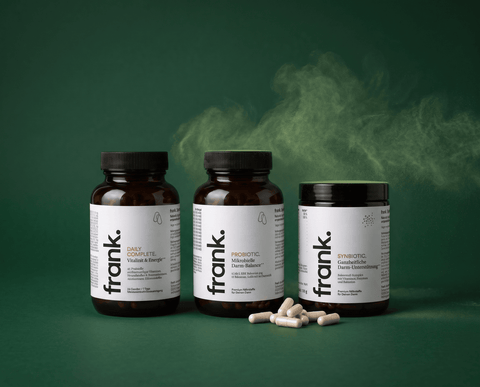
If you'd like to top up your diet in a targeted way, take a look at our Functionals collection. Vitamin C plays a role in the body's own collagen formation, and you also get it from fruit and vegetables. Supplements do not replace a varied diet.
You might also like
- The Connection Between Gut and Skin
- Protein Shakes - Why Is Protein So Important + 3 Recipes
- Which Nutrients Does the Body Need Daily?
Frequently asked questions about collagen
When do you see an effect from collagen?
In studies, possible effects usually showed up after eight to twelve weeks of daily intake. The effect varies greatly from person to person.
Is collagen vegan?
No, real collagen comes from animals. Vegan products usually contain vitamin C and individual amino acids, but no collagen.
Can I stir collagen into hot coffee?
Yes, collagen peptides are heat-stable and dissolve well in warm drinks.
Is collagen good for the joints?
Some studies show slight relief, others no benefit. If joint pain persists, the cause should be checked by a doctor.
Do I need to take extra vitamin C?
A diet with fruit and vegetables is usually enough. Vitamin C is needed for the body's own collagen formation; high-dose supplements are generally not necessary.
Note: This article is for general information and is not a substitute for medical or therapeutic advice. If you have complaints, pre-existing conditions, are pregnant or take medication, please talk to your doctor first.