Updated: October 2026
In short: With intermittent fasting, eating and fasting periods alternate. The most common methods are the daily eating-window versions (12/12, 14/10, 16/8, 18/6, 20/4) and the weekly 5:2 rhythm. Which one suits you depends less on the number than on your daily life: the best method is the one you can keep up without a constant struggle. As of: October 2026.
Between 12/12 and 20/4 there are eight hours of difference and a completely different way of living. Here you can see all the methods side by side and find out which one fits your day.
Which intermittent fasting methods are there?
There are two families: with daily time-window eating, you fast a fixed number of hours every day. With the weekly rhythm, individual days stay heavily calorie-reduced or without food altogether. Healthline names the best-known variants as the 16/8 method, 5:2 and Eat-Stop-Eat (a 24-hour pause, once or twice a week). The Cleveland Clinic lists 16/8 and 14/10 as the time-window variant, plus 5:2, alternate-day fasting and Eat-Stop-Eat.
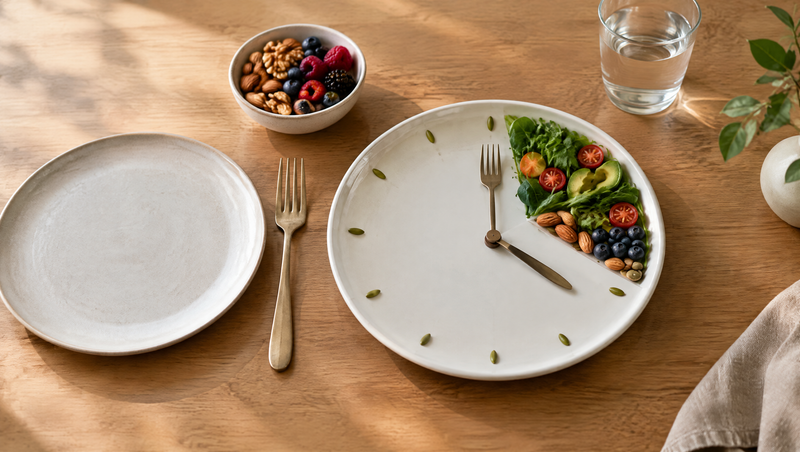
The numbers before the slash are fasting hours, the ones after are eating hours. If you do 16/8, you eat for eight hours and fast for 16, for example eating from 12 to 8 pm and then nothing with calories until the next lunchtime. Water and unsweetened tea are usual during the fasting period.
You'll find an overview of the basic rules in the article What Is Intermittent Fasting and What Are the Rules?
How do 12/12, 14/10, 16/8, 18/6, 20/4 and 5:2 differ?
The longer the fasting window, the fewer meals fit into the day and the bigger the change. The table shows what's behind it and who it suits. The example times are suggestions, not a standard.
| Method | Fasting / eating | Example | Suits |
|---|---|---|---|
| 12/12 | 12 h / 12 h | Eat 8 am to 8 pm | Beginners, shift work with fixed times |
| 14/10 | 14 h / 10 h | Eat 8 am to 6 pm | Women to start with, people who eat early in the evening |
| 16/8 | 16 h / 8 h | Eat 11 am to 7 pm | Breakfast skippers, office routine |
| 18/6 | 18 h / 6 h | Eat 12 to 6 pm | Experienced people who want 2 meals |
| 20/4 | 20 h / 4 h | Eat 3 to 7 pm | Experienced people; most likely one big meal plus a snack |
| 5:2 | 2 days approx. 500 to 600 kcal, 5 days normal | Light on Monday and Thursday | People who prefer to plan weekdays rather than clock times |
The 20/4 variant is the most demanding daily form. The window leaves little room for a balanced nutrient supply. With only four hours of eating time, it's hard to fit in protein, vegetables and fibre. That's why you shouldn't aim for it without experience, and not long term.
Which method is best for beginners?
Start with 12/12 or 14/10 and only step up to 16/8 after two to three weeks. Healthline explicitly recommends that women begin with 14 hours and slowly work up to 16.
A practical trick: begin with the evening, not the morning. If you eat nothing after dinner at 7 pm and only have breakfast at 7 am, you've already reached 12 hours without changing anything. Then push breakfast back by 30 to 60 minutes every week. That turns 12/12 into 14/10 without drama.
If you're not hungry in the morning anyway, you'll get along with 16/8 quickly. If you start the day with breakfast and feel uncomfortable without food, you're better off staying with 14/10 and eating earlier in the evening.
Who shouldn't do intermittent fasting?
Intermittent fasting isn't suitable for everyone. Healthline and the Cleveland Clinic name the same groups who should seek medical advice first or skip it altogether:
- Pregnant and breastfeeding women
- Children and teenagers
- People with a history of eating disorders or who are underweight
- People with diabetes or a tendency towards low blood sugar
- Anyone who takes medication that has to be taken with food at fixed times
- Women trying to conceive or whose period has stopped
In women, according to Healthline, severe calorie reduction can affect hormone balance. If your period stops, end it and talk to your doctor. That applies to every method, not just long fasting windows. Dizziness, palpitations or persistent headaches are also a reason to shorten the pause.
Does one particular method help more with weight loss?
According to current evidence, not clearly. A Cochrane analysis of 22 studies with 1,995 adults with overweight found no clinically meaningful advantage over usual nutrition counselling. The authors write that intermittent fasting is a reasonable option for some people, but doesn't justify the enthusiasm on social media.
That doesn't mean it does nothing. It means: in the end, what's decisive is the energy balance and whether you can stick with the method for months. You can read why it still stalls in Intermittent Fasting and Weight Loss: Why Isn't It Working?
So choosing a method is above all a question of fitting into daily life. If you have a family dinner in the evening, you lose quality of life with 18/6. If you're constantly on the move, fixed weekdays with 5:2 often give you more peace than clock times.
How do I plan a method into my daily life?
First match your method to the appointments you can't move. Start with these questions:
- When is my most important shared meal (family, team, partner)?
- When do I train, and what do I eat before and after?
- Do I sleep badly if I eat late?
- Do I need coffee with milk in the morning? Then it counts as a meal.
Example for 16/8 with training: training at 5 pm, first meal at 12 noon, snack at 3:30 pm, dinner at 7 pm, then finished. For exercise while fasting, the notes from Exercise While Fasting: What You Should Know.
You can work out a personal schedule with the intermittent fasting calculator. On the page Intermittent Fasting you'll also find free guides.
What can I drink during the fasting period?
Water, unsweetened tea and coffee without sugar and milk are generally considered unproblematic. Drinks with calories break the fast. These include juices, smoothies and coffee with milk.
A tip for fasting days on 5:2 or in the first weeks: plan drinks in firmly so hunger isn't confused with thirst. Herbal teas help in the evening. How tea works while fasting is covered in Tea for Fasting.
Pairs well with frank.
If you prefer to plan by the week, you'll find our Cleanse Overview. All fasting guides are free; the products don't replace medical advice.
You might also like
- What Is Intermittent Fasting and What Are the Rules?
- Types of Fasting: Which Is Right for Me?
- Free Intermittent Fasting Plan: Daily Plan for 16/8, 18/6, 14/10 and 5:2
Frequently asked questions about intermittent fasting methods compared
Which intermittent fasting method is the best?
There's no generally best method. The Cochrane analysis sees no clear advantage of any variant for weight loss. Choose the one you can keep up in everyday life, usually 14/10 or 16/8.
How long does it take for 16/8 to work?
That can't be said across the board. Many people need two to three weeks for hunger to settle into the new times. That's an experience-based figure, not a study value.
Can I drink coffee during intermittent fasting?
Black coffee without sugar and milk is considered unproblematic during the fasting period. Coffee with milk contains calories and counts as a meal.
Is 5:2 better than 16/8?
Not demonstrably. 5:2 with about 500 to 600 kcal on two days suits people who plan weekdays, 16/8 those who like clock times.
Can women do intermittent fasting just like men?
Yes, but Healthline advises women to start with shorter windows of around 14 hours. If your period stops, the fast should be ended and medically checked.
Note: This article is for general information and does not replace medical or therapeutic advice. If you have symptoms or pre-existing conditions, are pregnant or take medication, please speak to your doctor first.