Updated: October 2026
In short: Hibiscus tea made from the flowers of Hibiscus sabdariffa is caffeine-free and low in calories. Studies examine its influence on blood pressure, and reviews see a reduction with slightly raised values. If you have low blood pressure, take medication or are pregnant, you should check with a doctor first. As of October 2026.
The ruby-red tea is tart and refreshing. Here's what research says about blood pressure, how to prepare it and who it doesn't suit.
What is hibiscus tea?
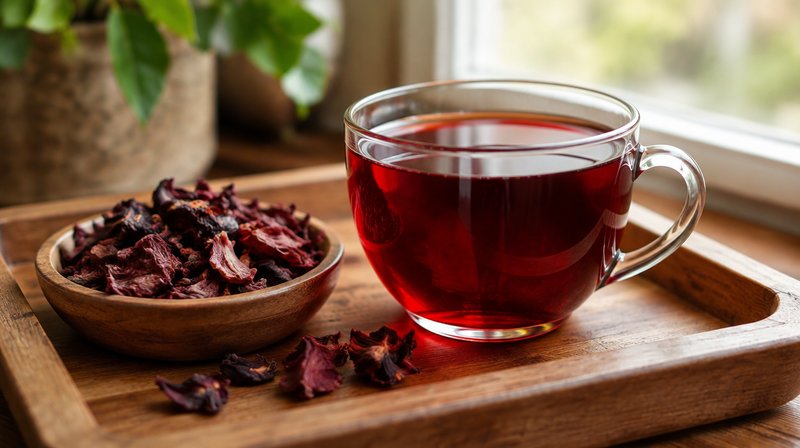
Hibiscus tea is brewed from the dried calyces of Hibiscus sabdariffa, also called roselle or karkade. It is naturally free of caffeine and calories. Its taste is fruity and tart, similar to cranberry, and the colour deep red.
Important: the sabdariffa variety is what's meant. Ornamental hibiscus from the garden centre is not. Most studies explicitly refer to Hibiscus sabdariffa.
Traditionally, hibiscus is drunk in Egypt, Sudan and West Africa, hot or chilled and often sweetened. Here you may know it from fruit tea blends, where it provides the red colour and the acidity. Pure hibiscus flowers are much more intense than these blends.
Can hibiscus tea lower blood pressure?
Studies examine exactly that. Medical News Today points to a 2020 review according to which hibiscus tea was able to lower systolic and diastolic blood pressure. PeaceHealth describes an analysis of five randomised studies with a total of 390 participants: hibiscus lowered raised blood pressure, especially with slightly raised values. In direct comparisons, it was comparable to individual blood pressure medications.
That sounds good but is not a free pass. The studies are small and short, and the amounts and preparations differ. Hibiscus tea is not suitable as a replacement for prescribed medication. If you have raised blood pressure, discuss changes with your doctor.
| Source | What was studied |
|---|---|
| Medical News Today | 2020 review: systolic and diastolic blood pressure lowered |
| PeaceHealth | 5 studies, 390 participants, mainly with slightly raised blood pressure |
What should you bear in mind about blood pressure in daily life?
If you drink hibiscus tea regularly and want to measure your blood pressure at the same time, there are a few simple rules. That helps you assess changes cleanly and discuss them with your doctor.
| Situation | What makes sense |
|---|---|
| Normal blood pressure | Enjoy the tea as a drink, nothing special |
| Slightly raised blood pressure | Studies examine the tea here; check with your practice |
| Medication for high blood pressure | discuss with a doctor beforehand, monitor your values |
| Low blood pressure or dizziness | better to avoid it |
Always measure at the same time of day after sitting for five minutes and note the values. That way you recognise patterns instead of interpreting random readings. And remember: persistently high values belong in medical treatment, even if you drink tea.
What other effects are being studied?
Medical News Today also names indications of lower LDL cholesterol and lower fasting glucose, as well as first data on weight, in combination with other plant extracts. All of these are preliminary findings. Statements like "lowers cholesterol" would be too strong on the basis of this data.
It makes sense to see hibiscus tea as a low-calorie, caffeine-free drink you can have instead of soft drinks. The added health benefit is a bonus, not the goal.
Good to know: hibiscus tea slightly stains cups, clothes and teeth. Rinse the cup promptly and don't drink it over your favourite white blouse. That's trivial but saves annoyance.
How do you prepare hibiscus tea?
PeaceHealth names 1 to 2 teaspoons of dried flowers, 2 to 3 times a day, as the usual amount. Pour 250 ml of hot water over them and let the tea steep for 5 to 10 minutes, then strain.
- Hot: with cinnamon or orange peel.
- Cold: let it cool, add ice cubes and mint.
- Too sour? Mix with a little apple juice or dilute with water.
Worked example: with 3 cups and 1.5 teaspoons each (about 1.5 grams), you use around 4.5 grams a day. A 100-gram pack therefore lasts about 3 weeks. That makes the tea suitable as an everyday drink without getting expensive.
In practice that means: if you take a medication for high blood pressure and suddenly also drink several cups of hibiscus daily, your overall effect may change without you noticing. So the rule is: tell your practice before you make it a habit.
Who shouldn't drink hibiscus tea?
With low blood pressure, caution is advised, as the tea could lower it further. That also applies if you take blood-pressure-lowering medication or diuretics. Medical News Today also names possible interactions with paracetamol and diuretics. PeaceHealth mentions hydrochlorothiazide: taken together, effects and side effects might be strengthened.
During pregnancy, safety is not established. Hibiscus contains plant oestrogens that could influence hormone balance. So ask your doctor beforehand. The same goes for breastfeeding and hormone-dependent conditions.
A note on quality: better to buy loose flowers or pure hibiscus tea than blends with lots of added sugar or flavourings. The packaging should say Hibiscus sabdariffa. That way you know what you're drinking and can better judge the amount you take in over the day.
How many cups of hibiscus tea a day make sense?
There is no fixed, verified upper limit. A sensible guide is the 2 to 3 cups per day that are also named in the literature. If you get dizziness, headaches or stomach complaints, reduce the amount or pause.
If you're facing surgery, tell your doctor that you drink hibiscus tea. That applies in principle to all herbs and supplements. Served cold, the tea is also a good thirst quencher, as long as it isn't heavily sweetened.
Which other teas suit your day?
Hibiscus is a sour, fruity option. If you like it milder, herbal blends with fennel, chamomile or lemongrass fit. You'll find more on tea in everyday life and while fasting in Tea for Fasting. For background on plant compounds, Secondary Plant Compounds and Their Effects is worth a read.
A day example: water in the morning, coffee mid-morning, a glass of cold hibiscus tea in the afternoon, a mild herbal tea in the evening. That way you vary flavours and active compounds.
If you drink the tea cold and skip sugar, you save calories compared with lemonades. Unsweetened hibiscus tea contains practically no calories, whereas a sweetened ready-made drink often takes up a large part of your daily limit of free sugars.
Matching picks from frank.
We don't have a hibiscus tea in our range. If you're looking for variety in tea, take a look at our Organic Teas: loose herbal teas, 100 g pack from €15 (as of October 2026). Ingredients and notes are on the respective product pages.
You might also like
Frequently asked questions about hibiscus tea
Does hibiscus tea lower blood pressure?
Studies examine this and see a reduction with slightly raised blood pressure. The evidence is limited, and the tea is no replacement for medication.
How much hibiscus tea can I drink per day?
1 to 2 teaspoons of flowers per cup, 2 to 3 times a day, is usual. There is no verified upper limit.
Is hibiscus tea allowed during pregnancy?
Safety is not established. Talk to your doctor beforehand.
Can I drink hibiscus tea with low blood pressure?
Caution is advised here, because the tea could lower blood pressure further. Ask a doctor first.
Does hibiscus tea contain caffeine?
No, pure hibiscus tea is caffeine-free and practically calorie-free.
How long does hibiscus tea need to steep?
About 5 to 10 minutes. The longer, the stronger and more sour the taste. With cinnamon, orange peel or a little apple juice, the acidity can be softened.
Note: This article is for general information and is not a substitute for medical or therapeutic advice. If you have complaints, pre-existing conditions, are pregnant or take medication, please talk to your doctor first.