


























We humans are made up largely of water. More than half of us is fluid. If we drink too little, there isn't enough water in the body and the fluid balance gets thrown off.
That's harmful for the metabolism. Headaches are then just one of the possible signs. Today we're taking a look at the true importance of the fluid balance for the body.
How does the fluid balance work?
Water is found throughout the body, among other places inside the cells. The body needs fluid for all the essential processes that take place in cells and in the circulation. The body loses water through the kidneys, the gut, breathing and sweating.
The water that's lost has to be replaced by drinking or by the fluid in food. Normally a person loses around 5 percent of fluid a day, which has to be replaced. With adequate fluid intake, the fluid balance regulates itself. What matters is that there is always enough fluid in the body.
Water is vital: consequences of too little fluid

If you're very thirsty, you've already waited too long. Thirst is a sign of an existing water deficit, so ideally you should prevent it. But if you are thirsty, you should act straight away. A lack of water comes with various consequences that shouldn't be underestimated.
Dizziness, headaches and general circulation problems are a sign of acute dehydration. A dry mouth is also considered a sign of a lack of water. Concentration drops, tiredness increases and we are no longer as productive.
A lack of water or an unbalanced fluid balance therefore causes various physical symptoms. One thing is certain: we need water to function properly. Enough water is vital for the body.
How is the body's water balance regulated?
Water is absorbed via the gut and excreted via the kidneys. Water that isn't needed is excreted. The entire metabolism is involved in the body's fluid balance. It's worth noting that the body can absorb a maximum of 800 ml of fluid per hour. Larger amounts of water are excreted.
Various hormones are responsible for the fluid balance, as are metabolism and the blood circulation. Too little fluid in the body leads to various symptoms that shouldn't be underestimated. Most of the water is contained in the cells, but fluid plays a role throughout the body.
Which hormone is responsible for the water balance?
The water balance, just like blood pressure, is controlled by the hormone aldosterone. This hormone therefore controls not only the fluid balance but also which minerals are retained and excreted in the kidney. An imbalance of this hormone therefore also leads to an unbalanced water balance.
Regardless of the fluid balance itself, it's worth noting that the proportion of water in the body falls over the course of life. In infants it is still around 75 percent. In old age the proportion is around 55 percent. Despite a smaller amount of fluid, fluid is important at every age, and dehydration should always be avoided.
How you can regulate your fluid balance
First and foremost it's about taking in enough fluid. Especially when sweating heavily, in high temperatures or during sport, you need more fluid than usual. Breastfeeding mothers also have an increased fluid requirement because of breastfeeding. Drink enough water to regulate your fluid intake. Is plain water too boring for you? Spice it up with frozen fruit! That way the water is slightly chilled and gets a fruity aroma.
As an alternative to water, you can also balance your fluids with unsweetened teas. In summer, our frank Feel Good Tea is especially good for a tasty drink in the afternoon. Our tip: enjoy it over ice and, for a special note, add a splash of our ginger shot Yellow. Truly refreshing!
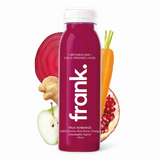
During fasting, our juices help you regulate your fluid balance. Spread across the day, during our juice cleanse you drink up to 7 juices of 330 ml. This extra fluid is packed with vitamins, is absorbed very well by the body and keeps your performance levels high throughout the day.
It's very important that extra fluid is needed when you drink alcohol. Alcohol stimulates greater excretion of fluid. Alcohol also flushes out minerals, so care is needed to prevent a lack of fluid. To a certain extent the same applies to coffee and energy drinks.

Getting water from food and extra fluids
First and foremost, you can balance your fluid levels with sufficient fluid intake. It should be at least 1.5 litres of water or unsweetened herbal teas: day after day. It's also important that we take in water from food. As a rule of thumb, you should take in between 20 and 40 ML of water per kilogram of body weight. At a higher weight, a larger amount of fluid is therefore important.
Salads, soups or fresh juices like those in our Juice Cleanse are therefore especially interesting. They let you take in even more fluid. That's part of the reason why our juices help make sure your body is supplied with enough fluid. But watermelon or cucumbers, for example, also contain large amounts of fluid. Good reasons for more fruit, vegetables and salads!
Water and unsweetened teas are the easiest for the body to absorb. Spritzers made with heavily diluted juice are also an option. Lemonades and soft drinks are not well suited. Coffee and energy drinks count as stimulants and normally don't contribute to a better water supply.
Conclusion: recognising the importance of water for the body
The fluid balance is complex and at the same time vital for the body. After all, it's not only our planet that consists of a very large share of water. The same goes for the human body, which needs water for all metabolic processes. Ideally, you take in the same amount of water through fluid intake or food as you excrete.
Our juices help you keep your water balance at a stable level. Do you already know our natural Lemonades? Pink tastes like a mini holiday in Bali thanks to lychee juice and Blue is wonderfully lemony and pleasantly sweet thanks to lemongrass and agave syrup. Always make sure, though, to take in enough fluid to prevent a deficiency straight away. The importance of enough fluid for the body is underestimated again and again, which can lead to dizziness, headaches and reduced performance.