We all know them: the prejudices about a vegan diet. While some just roll their eyes, others throw prejudices around. But which of them are actually true? In this post, frank juice sets the record straight on 3 well-known myths about a vegan diet.
"Vegans all end up with a nutrient deficiency sooner or later!"
We all know the claim: on a vegan diet you can't meet your nutrient needs. Against that stands the claim that a vegan diet is the healthiest of all diets. The fact is, nobody has to eat purely vegan for health reasons. Many people choose to give up animal foods for moral and environmental reasons. But are they even taking a health risk by doing so? As always in nutrition science, there's only this unsatisfying answer: it depends.
It's not just your eating habits that play a role! Your amount of exercise, your stress level and other factors, such as taking oral contraceptives (the "pill"), also affect your nutrient needs. Critical nutrients to keep an eye on in general are vitamin D, iron, zinc, iodine, selenium and choline. Above all vitamin B12, which hardly occurs naturally in a plant-based diet and therefore has to be supplemented by vegans as a rule. The higher complexity of a vegan diet can be explained using creatine, for example: omnivores eat meat and so get the amounts they need. Vegans have to rely on the body's own production. From the 3 amino acids methionine, arginine and glycine, plus vitamin B12 and folate, the body can produce creatine itself. The prerequisite, though, is that all these individual building blocks are present in sufficient amounts. On top of that, the body's own production takes energy. So it's easier and more energy-efficient for the body to regularly eat high-quality meat!
Long story short: vegans have to pay closer attention to getting enough of all nutrients than omnivores. That's because animal products automatically cover a wide range of nutrients and also have very high bioavailability. In general, though, whatever your diet, it's essential to keep an eye on vitamins and minerals. That's why blood tests, as well as additional nutrient supplements alongside a balanced diet, make sense for everyone. Remember: if you can already feel a nutrient deficiency through symptoms, you're already too late with supplementing!
"A vegan diet is super high in carbs. You can't lose weight on that, can you?!"
The claim: you can't really lose weight on a vegan diet because it's very high in carbohydrates. Basically, your calorie balance decides your weight: if you take in fewer calories than you burn, you'll lose weight sooner or later. If you eat more calories, you gain. This happens regardless of macronutrients. That means you can lose weight on a high-carb diet too.
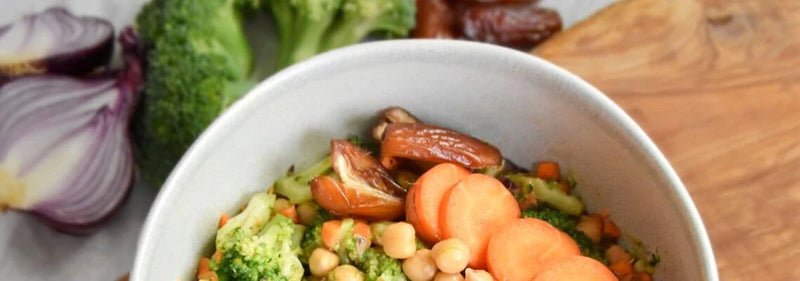
Guess what: you can even eat carbs in the evening if your calorie balance is negative overall. It is true, though, that carbohydrates, especially quickly available simple sugars, don't fill you up much on their own. So it's important that you, firstly, include multi-chain carbohydrate sources in your meals, such as rice. Secondly, make sure you add protein-rich and fat-rich components to your rice. That gives you, for example, rice with broccoli and tempeh. Easy, right? While there are many high-quality plant fats, such as coconut or linseed oil, as well as nuts, protein gets trickier. That's why, especially on a vegan diet, it often makes sense to take protein powder as well.
"So what do you actually eat as a vegan?"
The claim: a vegan diet is boring and not varied. Vegans can only laugh at that statement! Vegetables are incredibly versatile and should always be the base of your meals. That should be the case not only on a plant-based diet but on an omnivorous one too! Did you know there are 7 different types of grain alone that you can use to jazz up your vegetables? They include wheat, rye, barley, oats, corn, rice and millet. Pulses range from beans and peas to lentils: more than 18,000 species have already been researched! If you're looking for tasty vegan recipes that are also gut-friendly, feel free to check out here.
Vegan? - Go for it?
Vegans unfortunately often have to justify themselves. But all of these objections can be disproved. Anyone who takes on a vegan diet knows what to do to avoid a nutrient deficiency, for example, or knows countless tasty, varied dishes. If you do run out of ideas, we have a solution. Our selection of soups is probably the best example: they're super tasty, all different, easy to take with you and totally vegan on top of that - any other wishes?
We all know them: the prejudices about a vegan diet. While some just roll their eyes, others throw prejudices around. But which of them are really true? In this article, Frank Juice clears up 3 well-known myths about a vegan diet.
Vegans all end up with a nutrient deficiency sooner or later!
We all know the claim: with a vegan diet you can't meet your nutrient needs. Against that stands the claim that a vegan diet is the healthiest of all diets. Fact is, nobody has to eat purely vegan for health reasons. Many people are led to give up animal foods for moral and ecological reasons. But are they even taking a health risk by doing so? As always in nutrition science, there is only this unsatisfying answer: it depends.
It's not just your eating habits that play a role! Your amount of exercise, your stress level and other factors, for example taking oral contraceptives (the “pill”), also influence your nutrient needs. Critical nutrients that you should generally keep an eye on are vitamin D, iron, zinc, iodine, selenium and choline. Above all vitamin B12, which hardly occurs naturally in a plant-based diet and therefore has to be supplemented by vegans as a matter of course. The higher complexity of a vegan diet can be explained using creatine, for example: omnivores eat meat and so get the amounts they need. Vegans have to rely on the body's own production. From the 3 amino acids methionine, arginine and glycine, as well as vitamin B12 and folate, the body can make creatine itself. The prerequisite is that all of these individual building blocks are available in sufficient amounts. On top of that comes the production itself, which in turn takes energy. So it is easier and more energy-efficient for the body to regularly eat high-quality meat!
Long story short: vegans have to pay closer attention to getting enough of all nutrients than omnivores. This is because animal products automatically cover a large number of nutrients and also have very high bioavailability. In general, though, whatever your way of eating, it is essential to keep an eye on vitamins and minerals. That is why blood tests, as well as additional nutrient supplements to complement a balanced diet, make sense for everyone. Remember: if you already feel a nutrient deficiency through symptoms, you are already too late with supplementing!
A vegan diet is full of carbs. You can't lose weight like that, right?!
Claim: you can't really lose weight on a vegan diet because it is very high in carbohydrates. Basically, your calorie balance decides your weight: if you take in fewer calories than you burn, you will lose weight sooner or later. If you eat more calories, you gain. This happens regardless of the macronutrients. That means you can lose weight on a high-carb diet too.
Guess what: you can even eat the carbs in the evening, as long as your overall calorie balance is negative. It is true, though, that carbohydrates, especially quickly available simple sugars, are not very filling on their own. So it is important, on the one hand, that you include long-chain carbohydrate sources in your meals, for example rice. On the other hand, make sure you add protein-rich and fat-rich components to your rice. That gives you rice with broccoli and tempeh, for example. Easy, right? While there are many high-quality plant fats, such as coconut oil or linseed oil, as well as nuts, protein gets trickier. That is why, especially with a vegan diet, it often makes sense to take protein powder as well.
“So what do you actually eat as a vegan?”
Claim: a vegan diet is boring and not varied. Vegans can only laugh at this statement! Vegetables are incredibly versatile and always form the base of your meals. That should be the case with an omnivorous diet as well, not just a plant-based one! Did you know that there are 7 different types of grain alone that you can use to jazz up your vegetables? They include wheat, rye, barley, oats, maize, rice and millet. Pulses range from beans and peas to lentils: more than 18,000 varieties have already been researched! If you are looking for tasty vegan recipes that are also gut-friendly, feel free to take a look here.

Vegan? - Go for it?
Vegans unfortunately often have to justify themselves. But all of those objections can be weakened. Anyone who takes on a vegan diet knows what to do, for example to avoid a nutrient deficiency, or knows countless tasty and varied dishes. If you do run out of ideas, we have a solution. Our selection of soups is probably the best example: they are super tasty, all different, easy to take with you and totally vegan on top of that - what more could you want?
All of our juices are vegan too, so they are perfect for in between meals, or suitable for vegans as a juice cleanse!