Updated: October 2026
In short: Your body takes care of this itself around the clock: the liver and kidneys break down substances and excrete them, and the lungs, gut and skin help too. For cleanses, foot baths, teas or powders that additionally cleanse the body, evidence is lacking in the sources we checked. What can help you most is drinking little alcohol, moving, sleeping enough and eating a varied diet.
"Cleanse your body" is among the most searched health topics. The offers are varied: cleanses, teas, foot baths, powders. Ironically, your body already has its own system for this, and it runs without a subscription. This article explains how the body's own cleansing really works, what to make of home remedies, symptoms and duration, and what you can specifically do. It doesn't replace medical advice.
How does the body cleanse itself?
The consumer advice centre (Verbraucherzentrale) names the liver and kidneys as the main metabolic and excretory organs. In healthy people they work so reliably that hardly any harmful substances remain in the body. ÖKO-TEST sums it up like this: the body excretes breakdown products via the liver, kidneys and also breathing. In another article, the Verbraucherzentrale also counts the lungs among the main metabolic and excretory organs.
| Organ | Role in metabolism and excretion |
|---|---|
| Liver | Converts foreign substances, alcohol and many medicines |
| Kidneys | Filter the blood and excrete soluble substances via urine |
| Lungs | Breathe out volatile substances |
| Gut | Excretes indigestible matter and converted substances via stool |
| Skin | Releases water via sweat, but plays a minor role |
You can read more about the structure of the liver in The Liver: How Does Our Metabolic Organ Actually Work?.
Are there "harmful substances" or waste in the body?
Terms like waste products, over-acidification or deposits have appeared in advertising copy for decades. The Verbraucherzentrale quotes the German Nutrition Society on this: in a healthy human body there is no accumulation of waste and deposition of metabolic products. The Verbraucherzentrale information on fad diets also says that the often-cited waste in the body can't be detected.
If a product promises to eliminate exactly this waste, it has promised something that can't exist. It makes sense to stay critical of such advertising claims.
Legally, too, the matter is clear: in 2017, in several cases (case numbers I ZR 71/16 and I ZR 167/16), the Federal Court of Justice ruled that consumers associate such advertising wording with a purifying effect. Because there is no approved EU health claim for it, advertising with it for foods and dietary supplements is, according to the Verbraucherzentrale, not permitted.
That explains why manufacturers resort to paraphrases. For you it means: if a product advertises a cleansing effect, it's worth a second look at the ingredient list and price. Many of these products, according to the Verbraucherzentrale, act mainly as diuretics and not as cleansers.
What does a cleanse do for the body?
A 2015 review by Klein and Kiat finds that there is very little clinical evidence for cleansing diets. Individual small studies show effects but are methodologically weak, and the authors know of no randomised controlled trials in humans on commercial cleansing diets. The US institute NCCIH likewise sees no convincing research for eliminating harmful substances through cleansing diets.
What a cleanse looks like in everyday life and what it can do is covered in the article Body Cleanse: What a Cleanse Really Does. For the question of what Juice Cleanses have to do with the topic, read Juice Cleanse: What's Behind It?.
Cleanse your body and lose weight: are they connected?
No, not in the sense of a purifying effect. If you lose weight on a cleanse, that's down to the low energy intake. The NCCIH describes an initial weight loss through few calories and a tendency to regain weight when people eat normally again. The Verbraucherzentrale sees no evidence for long-term fat reduction through cleansing diets.
If you want to lose weight sustainably, you're better off with a moderate calorie deficit. You'll find the way in in the article Calorie Needs for Weight Loss.
What are cleanse symptoms and do they really exist?
Many people describe headaches, tiredness or cravings during cleanses and interpret them as a sign that "waste" is leaving the body. In the sources we checked, we find no evidence for that. The Verbraucherzentrale lists tiredness, poor concentration and reduced performance as side effects of cleansing diets, and that fits low energy, little sleep or caffeine withdrawal better than elimination.
If you get symptoms on a diet or while fasting, take them seriously and listen to your body. You'll find context and tips in Fasting Symptoms: Where Do They Come From and What to Do?. With severe or persistent symptoms, see a doctor.
How long does the body's own cleansing take?
There is no fixed duration, because the liver and kidneys work continuously and not in phases that a cleanse could shorten. How quickly the body breaks down a substance depends on the substance, such as alcohol or a medicine.
Medical withdrawal treatment for alcohol, drug or medication dependence is a completely different matter. It belongs in the hands of doctors or addiction medicine, because withdrawal can become dangerous. In that case, turn to your GP or an addiction counselling service. The notes in this article apply only to healthy adults.
When should you see a doctor rather than reach for home remedies?
If you suspect that your liver or kidneys aren't working properly, cleanses don't help; blood tests and an examination do. Warning signs are, for example, yellowing of skin or eyes, noticeably dark urine, persistent tiredness or pain in the upper abdomen. If you drink alcohol regularly or take medication, check-ups also make sense. The notes in this article don't replace a doctor's visit.
Which home remedies for cleansing the body make sense?
The most effective is unspectacular. Instead of cleansing products, the Verbraucherzentrale recommends avoiding nicotine and alcohol, eating plenty of vegetables, drinking enough and moving. That makes for an everyday life that doesn't put extra strain on the liver and kidneys.
- Drink water and unsweetened tea
- Reduce or pause alcohol
- Eat plenty of vegetables, wholegrain and legumes
- Exercise in the fresh air
- On foot baths, zeolite, activated charcoal and the like: we found no evidence that the body is cleansed this way. ÖKO-TEST also warns that activated charcoal doesn't distinguish between "good" and "bad" and can interfere with vitamins, minerals and the action of medication
If you're interested in individual juices, you'll find, for example in the article Beetroot Juice: Effects and Side Effects a context. ÖKO-TEST points out that pure fruit and vegetable juices often contain as much sugar as soft drinks.
Pairs well with frank.
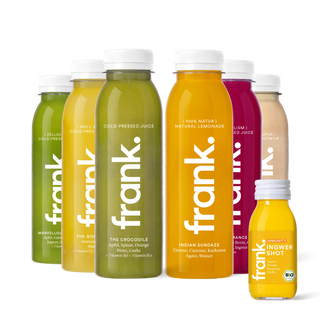
If you'd like to take a break with light meals, you'll find our Soup Cleanse and the Juice Cleanse. Both are a deliberate time out with a clear structure, not a remedy.
You might also like
- The Liver: How Does Our Metabolic Organ Actually Work?
- Juice Cleanse - What's Behind It?
- How Healthy Is Beetroot Juice - What Are the Possible Side Effects?
Frequently asked questions about cleansing the body
How can I cleanse my body?
Your body takes care of metabolism and excretion itself via the liver, kidneys, lungs, gut and skin. You support it with little alcohol, plenty of water, a balanced diet, exercise and sleep. Additional cleanses are not necessary according to the sources checked.
Which home remedies for cleansing the body are there?
We know of no home remedy that demonstrably cleanses the body. Helpful in everyday life are water, unsweetened tea, vegetable-rich food, less alcohol and exercise.
What are cleanse symptoms?
Tiredness, headaches or poor concentration during cleanses are often called that. A link with a cleansing process isn't documented in the sources we checked. With severe symptoms, see a doctor.
How long does the body's own cleansing take?
There is no fixed duration, because the liver and kidneys work constantly. Medical withdrawal treatment for alcohol or drugs belongs under medical care.
Can you cleanse and lose weight?
Weight loss on cleanses comes from few calories and not from a cleansing effect. According to the NCCIH, many people regain weight afterwards. A moderate calorie deficit is more sustainable.
What is waste in the body?
A term from advertising. According to the Verbraucherzentrale, the German Nutrition Society writes that no waste accumulates in a healthy body.
Note: This article is for general information and does not replace medical or therapeutic advice. If you have symptoms or pre-existing conditions, are pregnant or take medication, please speak to your doctor first.