Updated: October 2026
In short: Aronia (chokeberry) is rich in anthocyanins and other polyphenols. Studies examine aronia juice for blood pressure, cholesterol and urinary tract infections, but according to Healthline the human data are limited. Studies mostly used 89 to 156 ml of juice per day. The taste is tart and dries out the mouth, which is why many people mix the juice. As of October 2026.
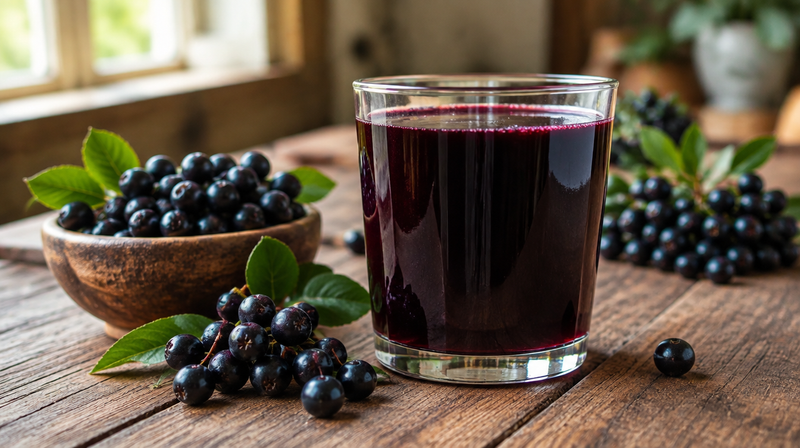
Aronia is the darkest berry on the shelf. Here's what's in it, what studies show and how much juice was studied.
What's in aronia berries?
Aronia berries are low in calories and contain fibre, vitamin C, manganese, vitamin K, folate and iron. Standing out are the anthocyanins, the pigments that give the berry its deep dark purple, as well as other polyphenols such as phenolic acids and flavanols.
Healthline cites studies in which aronia showed higher antioxidant activity than four other berries. That doesn't mean aronia works more strongly in the body, but that it contains lots of antioxidants in the lab. The step from test tube to human is a long one.
In practice: aronia can be bought as juice, dried, frozen or as a powder. The nutritional values differ; dried berries are higher in calories per gram because the water is missing. Read the packaging and, with juice, watch for added sugar.
A shopping example: choose not-from-concentrate juice with 100 percent aronia if you want the full berry character, or a mixed juice if the tart taste is too intense for you. Then mix to taste yourself.
What do studies show about aronia juice?
The studies examine different areas. The following table sums up what Healthline reports.
| Area | Finding according to Healthline | Assessment |
|---|---|---|
| Heart and blood pressure | After 6 to 8 weeks of daily supplements, cholesterol and systolic blood pressure fell | supplements, not a juice study |
| Urinary tract infections | In a care-home study, the number of infections fell by 38 to 55% with daily juice | special group, not transferable |
| Cancer cells | 50 mg of extract reduced the growth of colon cancer cells in a test tube by 60% in 24 hours | lab experiment, no evidence for humans |
| Gut | Polyphenols stimulate the growth of gut bacteria | indication, not a therapy |
Healthline stresses that studies in humans are limited and more research is needed. Aronia juice is therefore an interesting ingredient, not a medicine.
The numbers look impressive, but they are study results under particular conditions.
What are anthocyanins and why is everyone talking about them?
Anthocyanins are secondary plant compounds that give berries, cabbage and grapes their red to blue colour. Anthocyanins are polyphenols and are researched for their antioxidant properties. In the lab, antioxidants neutralise free radicals. Whether and how strongly this leads to a benefit in the human body is a subject of research.
Important for putting it in context: anthocyanins are in many foods, not just aronia. Blueberries, blackberries, red cabbage and red grapes provide them too. A varied diet with lots of colourful plants covers the variety better than a single juice. More on this in the article Secondary Plant Compounds and Their Effects.
| Food | Role |
|---|---|
| Aronia | very rich in polyphenols, tart |
| Blueberry | milder in taste, also anthocyanins |
| Red cabbage | anthocyanins and fibre |
Bottom line: aronia is an interesting ingredient, but not a must-do for your diet.
How much aronia juice per day makes sense?
In the studies Healthline names, 3 to 5.3 ounces of juice were drunk daily, which is about 89 to 156 ml. For supplements it was mostly 300 mg of extract per day. That is the amount used in research, not a recommendation for you.
As additional guidance: the NHS advises limiting fruit and vegetable juices plus smoothies together to 150 ml per day. The study amount of 89 to 156 ml therefore fits into this framework if you don't drink any other juice. If you also drink fruit juice or smoothies, add the amounts together.
| Amount | Assessment |
|---|---|
| approx. 90 ml | lower study amount |
| approx. 150 ml | upper study amount, NHS upper limit for juices overall |
| more than 150 ml | no study basis, more sugar and acidity |
Does aronia juice have side effects?
Healthline writes that aronia berries are generally safe and without serious side effects. The main thing is their astringent taste: the mouth feels dry, almost like sandpaper. If you have a sensitive stomach, you may react to the acidity.
We have no verified source on interactions with medications such as blood thinners, so we make no statement on this. If you take medication regularly, especially for blood clotting, diabetes or blood pressure, ask at the pharmacy or your doctor beforehand. The same goes for pregnancy and breastfeeding.
How do you make aronia juice palatable?
Neat, aronia is tart. With the right mix it becomes pleasant. Important: every ingredient brings sugar, so count it in your daily amount.
| Mix | Ratio | Effect on taste |
|---|---|---|
| with apple juice | 1 part aronia, 2 parts apple | mild and fruity |
| with water and lemon | 1 part aronia, 3 parts water | refreshing, little sugar |
| with yoghurt or plant-based drink | 50 ml juice to 150 g | creamy, less dry mouth |
| with tea | cold-brewed plus juice | tart iced tea note |
A tip: yoghurt can soften the dry feeling in the mouth. Drink the juice with a meal, which is also gentler on your teeth, as the NHS generally advises for juices.
Aronia juice or fresh berries: which is worthwhile?
Berries provide fibre, juice doesn't. Healthline points out that aronia berries themselves are among the antioxidant-rich fruits and that the fibre contributes to gut health. The juice, on the other hand, has less fibre and, depending on the product, added sugar.
If you only buy aronia as juice, look for 100 percent not-from-concentrate juice with no added sugar. Fresh berries are seasonal; dried or frozen berries are available all year. One example: a handful of frozen aronia berries in porridge replaces the juice and brings fibre with them.
You can read more on juice compared with whole fruit in the article Eating Fruit vs. Drinking Juice. For another dark berry drink, the article Elderberry Juice and Its Properties fits.
If you try aronia for longer, take a break and see whether you notice a difference. It's probably mainly the enjoyment that stays, and that's perfectly fine. For conditions like high blood pressure, medical monitoring is essential in any case.
Matching picks from frank.
Aronia is in frank.'s Re-Charge Tea, an organic tea made from green and white tea, guarana, lemongrass, elderflower, aronia, cranberry, goji, raspberry, acai and wheatgrass. The 100 g pack costs €15 for about 20 to 33 cups (as of October 2026). It contains guarana and therefore natural caffeine. The tea is an enjoyable drink, not a treatment.
You might also like
- Elderberry Juice and Its Effects on Health
- Eating Fruit vs. Drinking Juice - Which Is Healthier?
- The Ultimate Juice Guide: Everything You Need to Know About Fresh Juices!
Frequently asked questions about aronia juice effects
What does aronia juice do?
Studies look at effects on blood pressure, cholesterol and urinary tract infections. According to Healthline, human data are limited.
How much aronia juice per day makes sense?
In studies it was about 89 to 156 ml daily. The NHS names 150 ml as the upper limit for juices and smoothies combined.
Why does aronia juice taste so tart?
Aronia is rich in polyphenols, which dry out the mouth. With apple juice, water or yoghurt it becomes milder.
Does aronia juice have side effects?
According to Healthline, aronia berries are considered safe; the main drawback is the tart taste. We have no verified information on medications.
Is aronia better than blueberry?
Healthline cites a study in which aronia showed higher antioxidant activity than four other berries. That doesn't automatically mean more benefit for you.
Note: This article is for general information and is not a substitute for medical or therapeutic advice. If you have complaints, pre-existing conditions, are pregnant or take medication, please talk to your doctor first.