Easter, Mother's Day or just a relaxed Sunday. In our opinion, a leisurely brunch with tasty food and good company is always a good idea! To sweeten your next brunch, today we have a delicious paleo raw carrot cake recipe for you.
Wondering what the paleo diet is all about? We'll fill you in and tell you which foods are on the menu in the Stone Age diet and which ones are avoided.
What does paleo mean?
"What diet do you follow?" Have you ever been asked this question? These days our society is increasingly sorted by eating habits. Some skip lactose for health reasons, others give up animal products completely, and others prefer a low-carb or high-carb way of eating.
And of course there are also religiously motivated ways of eating, where care is taken, among other things, that the food is halal or kosher.
Ways of eating like those above come from the fact that we practise going without, want to do something good for our body or want to support our fitness through the right diet. So similar motives are named as for our fasting cleanses! But ethical and moral principles also often play a big part in the choice of your own way of eating.
Ethical, moral and health values also shape the paleo diet. Paleo originally comes from the Palaeolithic, the Old Stone Age, and is often also called the Stone Age diet.
But what is the Stone Age diet all about?
The paleo diet draws on the foods of the Stone Age. In earlier times, when people were still largely hunters and gatherers, fewer foods were available to them than today. So the paleo diet steers clear of sweets made from refined sugar, but also of grain, which only became available in a later era through farming. The focus is on high food quality, original products and sustainability.
Which foods can you eat on a paleo diet?
As already mentioned, supporters of the paleo diet draw on the foods that were on the menu more than 10,000 years ago and could be obtained by hunting and gathering nuts, berries, herbs and vegetables.
It was only with the Neolithic revolution, around 9000 to 8000 BC, that people began farming and keeping livestock. Foods such as milk, wheat and sugar took their place on the menu, which according to paleo is to people's detriment.
Opinions among scientists on the hunter-gatherer diet differ widely. How sensible the diet is cannot be answered conclusively. However, there are definitely a few arguments in favour of this way of eating: eating seasonal products is certainly welcome, and going without industrially made products containing refined sugar also makes sense in our opinion. We can only welcome the high consumption of fresh fruit and vegetables too.
Our infographics below give you a guide to which foods you can eat during your paleo diet and which are discouraged.

How can I start a paleo diet?
Whether and how strictly you should follow the paleo diet is something you have to find out for yourself. But as you can see from the infographic, the paleo diet can mean some restrictions and, in some cases, a radical change in how you eat.
To make the switch easier for you, we would recommend starting with a juice cleanse . As with the paleo diet, during your juice cleanse you go without refined sugar, carbohydrates and other treats that won't have a place on your shopping list in future either. During the days of fasting you can prepare your body for the future way of eating and say goodbye to old burdens, such as too much sugar or coffee and a diet built on wheat products.
After your juice cleanse you can start your new eating programme with a fresh mindset and make the most of the positive effects of fasting.
What matters during your juice cleanse and in your future diet is plenty of fluids. During fasting, stick to water, unsweetened teas or infused water (water with fresh fruit such as lemon, mint or berries). Later, when you start your paleo diet, besides water and unsweetened teas from frank. you can also have coffee, plant-based milk or, in small amounts, alcohol.
Paleo raw carrot cake
Even if paleo sounds like a major dietary change with lots of restrictions at first glance, it doesn't mean you'll be denied treats from now on. Nowadays there are plenty of creative and tasty recipes designed for individual ways of eating, making sure you don't have to go without any indulgence.
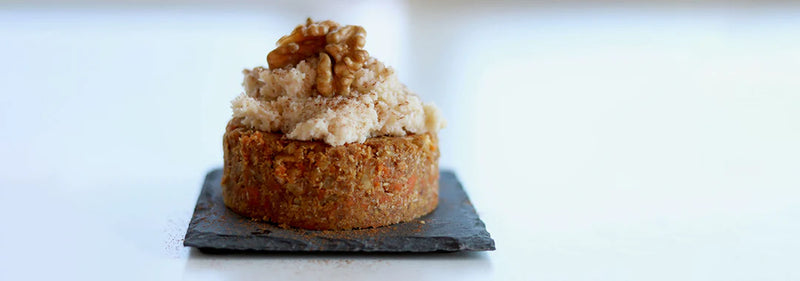
Like our delicious paleo raw carrot cake, which, especially at Easter, is an irresistible alternative to conventional recipes made with wheat and refined sugar!
And here's how our heavenly "paleo raw carrot cake" works

Paleo raw carrot cake recipe
Ingredients for the cake:
- 2 large carrots
- 120 g desiccated coconut
- 120 g whole walnuts
- 2 tsp cinnamon
- 180 g dates
- 60 ml coconut oil
Ingredients for the topping:
- 80g cashew nuts
80g desiccated coconut
56 ml coconut oil
1 lemon (juice)
1 tbsp honey
And here's how it works
Preparing the carrot cake:
Bring some water to the boil and let the dates soak over medium heat for 10-15 minutes. In the meantime you can peel and grate the carrots and chop the walnuts.
Mix the carrots, walnuts, desiccated coconut and cinnamon in a large bowl.
Then blend the soaked dates together with the coconut oil until you get a smooth mixture.
In the last step, mix both mixtures together, put them in a cake tin and press down firmly with a spoon. Then put it in the fridge for at least 15 minutes.
Preparing the topping:
For the topping, soak the cashews in water for at least 30 minutes (ideally overnight). Then you can put all the ingredients together and blend well.
Spread the topping over the cake and then decorate the cake with cinnamon and whole walnuts.