Vitamin D can lift your mood!
Vitamin D is essential for building and maintaining strong bones. It also has a huge influence on the production of serotonin in the brain: this key messenger can activate your reward system, gives you feelings of happiness and so puts you in a good mood.
In principle, our body can make vitamin D itself: when you let sunlight onto your skin, the sun's UV-B radiation converts provitamin D3 into previtamin D3 in your skin cells. After further metabolic processes, the active form of vitamin D is available to the body.
Vitamin D is given in IU (International Units) and can be converted into μg. The daily requirement for adults is 20 μg, infants need 10 μg. If you spend time in the sun between May and September with as much uncovered skin as possible, your body can produce and store 20,000 IU of vitamin D.
That's also the big advantage: your body can store vitamin D, so it can supply itself well even in the dark seasons with little sunshine.
Low vitamin D can get you down!
Full-time office job, stressful everyday life, little time for sunbathing: if you weren't able to fill up your stores enough, those of us in the middle latitudes often suffer from a vitamin D deficiency in winter. Absorption disorders are also not uncommon: despite sun exposure, your body has too little vitamin D available. People with kidney insufficiency and chronic inflammatory bowel diseases (IBD) are also among the risk groups for a deficiency. The consequences? Bone and muscle pain, osteomalacia, tiredness, sluggishness, a bad mood, and even low mood.
Vitamin D in food
Animal foods, including oily fish, egg yolk and, in very small amounts, mushrooms, also contain vitamin D. Vegans and vegetarians can hardly cover their needs this way, and even for meat eaters, getting enough through food is very difficult in everyday life. If you feel you recognise the symptoms above in yourself, check your vitamin D level with regular blood tests. That way you can supplement this important micronutrient in a targeted way, as needed.
Melatonin can dampen your mood and make you tired
Sunlight doesn't just play a key role in producing vitamin D: when it gets dark, the level of the sleep hormone melatonin in your brain rises automatically. You get tired and sluggish, and your mood hits rock bottom. In winter it's dark for longer, and up to 80% more melatonin is produced in us than in summer. Your energy drops, your need for sleep goes up. You're in a bad mood. End of the line: winter blues. Seasonal affective disorder is clinically recognised and shouldn't be taken lightly. Before it gets that far, frank juice can support you!
Eat yourself happy!
Chocolate and bananas for your bad mood? Too good to be true: individual foods seem to have hardly any influence on it. However, several studies have shown that an overall carbohydrate-rich and protein-conscious diet can make people more cheerful and balanced in the long run. If you combine protein with carbohydrates in your meals, our insulin level only rises slowly, which leads to an increase in the level of the amino acid tryptophan in the brain.
This is considered a precursor of the happiness hormone serotonin. If we take in too much protein, the disadvantaged amino acid tryptophan reaches the brain in much smaller amounts. The more colourful your meals of unprocessed, plant-based foods look, the better they are for your body! High levels of vitamins and minerals, as well as fibre and secondary plant compounds, strengthen your gut flora and boost your mood in the most natural and healthiest way.
Support your gut bacteria with your diet!
90% of the happiness hormone serotonin is produced in the gut. The type and amount of your gut bacteria, which you largely determine through your diet, produce metabolic products. This information is passed on by the lining of your gut via the vagus nerve to your brain and gut. This way, your gut bacteria influence your emotions, your memory and how you experience stress.
frank juice has your back!
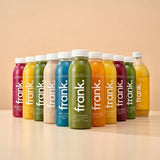
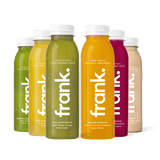
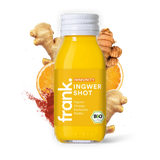
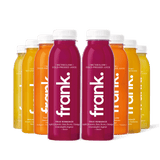
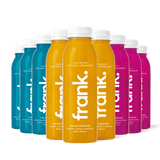
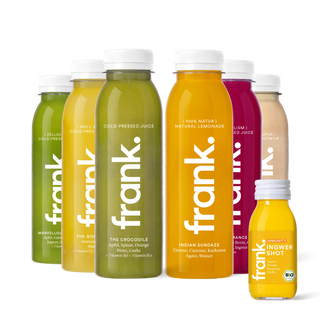
Colourful, more colourful, frank juice: with our nutrient-rich juices and soups you can't go wrong in winter. Did you know that our tea blends are multicoloured too? Red goji berries, pink raspberries and purple acai meet yellow lemongrass, orange marigold and white Mao Feng tea in our green Re-Charge tea . Bet it puts you in a good mood just looking at it?
Source: https://www.ugb.de/serotonin/serotonin-schokolade-fischoel-kohlenhydrate/
Vitamin D puts you in a good mood!
Vitamin D is essential for building and maintaining strong bones. On top of that, it has an enormous influence on the production of serotonin in the brain: this key messenger can activate your reward system, gives you feelings of happiness and so provides a good mood.
In principle, our body can make vitamin D itself: when you let sunlight onto your skin, the sun's UV-B radiation converts provitamin D3 into previtamin D3 in your skin cells. After further metabolic processes, the active form, vitamin D, is available to the body.
Vitamin D is stated in IU (international units) and can be converted into μg. The daily requirement for adults is 20 μg, infants need 10 μg. If you spend time in the sun between May and September with as much uncovered skin as possible, your body can produce and store 20,000 IU of vitamin D.
That's also the big advantage: your body has the ability to store vitamin D so that it can supply itself sufficiently even in the dark seasons with little sunlight.
Vitamin D deficiency makes you depressed!
Full-time office job, stressful everyday life, little time for sunbathing: if you haven't had the chance to fill your stores enough, we humans in the middle latitudes often suffer from a vitamin D deficiency in winter. Absorption disorders are also not uncommon: despite sun exposure, too little vitamin D is available to your body. People with kidney insufficiency and chronic inflammatory bowel diseases (IBD) are also among the risk groups for a deficiency. The consequences? Bone and muscle pain, osteomalacia, tiredness, sluggishness, bad mood, up to depressive moods.
Vitamin D in food
Animal foods, including fatty fish, egg yolk and, in very small amounts, mushrooms, also contain vitamin D. Vegans and vegetarians can hardly meet their needs this way, and even for meat eaters, getting it from food in everyday life is very difficult. If you feel you recognise the symptoms above in yourself, check your vitamin D level with regular blood tests. That way you can supplement this important micronutrient in a targeted way as needed.
Melatonin worsens your mood and makes you tired
Sunlight doesn't only play a key role in the production of vitamin D: when it gets dark, the level of the sleep hormone melatonin in your brain rises automatically. You get tired and limp, your mood hits rock bottom. In winter it's dark for longer, and up to 80% more melatonin is produced in us than in summer. Your energy drops, your need for sleep increases. You're in a bad mood. End of the line: winter depression. It is clinically recognised as seasonal affective depression and shouldn't be taken lightly. Before it gets that far, Frank Juice helps!
Eat yourself happy!

Chocolate and bananas to beat your bad mood? Too good to be true: individual foods seem to have hardly any influence on it. Several studies have shown, however, that an overall carbohydrate-rich and protein-conscious diet can make people happier and more balanced in the long term. If you combine protein with carbohydrates in your meals, our insulin level rises only slowly, which leads to a higher level of the amino acid tryptophan in the brain.
This is considered a precursor of the happiness hormone serotonin. If we take in too much protein, the disadvantaged amino acid tryptophan reaches the brain in much smaller amounts. The more colourful your meals of unprocessed and plant-based foods look, the better they are for your body! High levels of vitamins and minerals, as well as fibre and secondary plant compounds, strengthen your gut flora and boost your mood in the most natural and healthiest way.
Support your gut bacteria with your diet!
90% of the happiness hormone serotonin is made in the gut. The type and amount of your gut bacteria, which you largely determine through your diet, produce metabolic products. This information is passed from the lining of your gut via the vagus nerve to your brain and gut. This way, your gut bacteria influence your emotions, your memory and your sense of stress.
Frank Juice has your back!
Colourful, more colourful, Frank Juice: with our nutrient-rich juice cleanses, juices and soups in winter you can't go wrong. Did you know that our tea blends are multicoloured too? Red goji berries, pink raspberries and purple acai meet yellow lemongrass, orange marigold and white Mao Feng tea in our green frank. Re-Charge Tea. Bet it puts you in a good mood just looking at it?
Source: https://www.ugb.de/serotonin/serotonin-schokolade-fischoel-kohlenhydrate/